





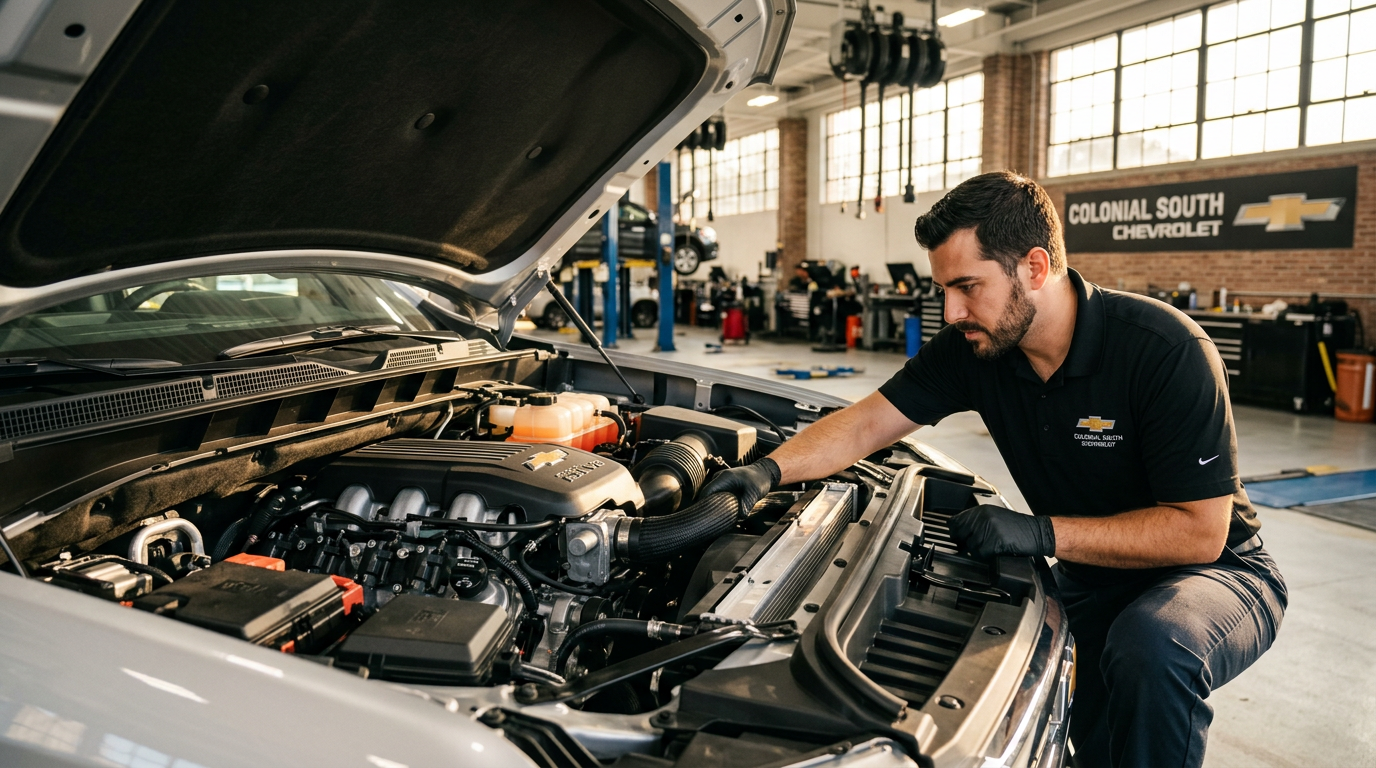
Navigating the details of manufacturer coverage ensures your vehicle remains in peak operating condition throughout its lifespan. When you drive a new vehicle off the lot, the factory protection plan serves as a safety net against unexpected mechanical issues. This comprehensive coverage is designed to address defects in materials or workmanship under normal operating conditions, meaning the manufacturer handles the cost of qualifying repairs. For owners who manage daily commutes or transport heavy agricultural equipment, keeping this coverage active is a matter of following the prescribed maintenance schedules and utilizing authorized service facilities.
The coverage period begins the moment the vehicle is delivered to its first owner or put into service. It applies to both the original buyer and any subsequent owners, making the factory warranty fully transferable. This transferability helps preserve the resale value of your car, truck, or SUV. To confirm the exact start date of your vehicle’s coverage or to check how much time remains on your policy, you can log into your owner account online. Entering your Vehicle Identification Number into the system allows you to access a personalized tracker that displays active coverage dates and expiration milestones.
If you suspect a component is failing and requires a diagnostic check, bringing your vehicle to an authorized facility is the required first step. Our team is fully equipped to analyze your vehicle, verify coverage, and complete the necessary repairs using approved components. To find our service department, you can easily get directions to our North Dartmouth location, where our technicians are ready to assist. If you prefer to speak directly with a service advisor regarding a specific mechanical symptom before driving in, feel free to give us a quick call to discuss your vehicle’s needs.
Table of Contents
- How Long is the Bumper-to-Bumper Warranty on a 2026 Chevrolet?
- What is the Powertrain Warranty Duration for 2026 Chevrolet Vehicles?
- Do Extended Service Contracts Have Deductibles While Standard Warranties Do Not?
- Why You Should Use a Certified Chevrolet Service Center for Warranty Repairs
- Common Questions About Chevrolet Factory Warranty Coverage
- How to Schedule Your Chevrolet Warranty Service Online with Colonial South Chevrolet
How Long is the Bumper-to-Bumper Warranty on a 2026 Chevrolet?
The foundational layer of your vehicle’s factory protection is the bumper-to-bumper limited warranty. For 2026 models, this coverage is active for 3 years or 36,000 miles, whichever occurs first. This policy is highly comprehensive, covering almost every component of the vehicle from the electrical systems to the cabin climate controls. It is specifically designed to cover repairs that correct defects in materials or workmanship.
While the bumper-to-bumper warranty is extensive, it does have specific exclusions that owners should keep in mind. Normal wear-and-tear items, regular maintenance, and cosmetic detailing are not covered under this policy. For example, the warranty does not cover:
- Brake pads and rotor wear
- Windshield wiper blade replacement
- Damage caused by lack of regular maintenance or improper fluids
- Cleaning, polishing, and cosmetic alterations
Additionally, the factory package includes corrosion protection for 3 years or 36,000 miles, which protects the sheet metal from surface rust. For deeper structural issues, the rust-through warranty extends to 6 years or 100,000 miles, ensuring the body panels remain structurally sound. This is particularly important for vehicles exposed to coastal air and road salt, which can accelerate metal degradation. To support your vehicle’s long-term health, the manufacturer also covers your first maintenance visit within 12 months or 12,000 miles, which includes a professional oil change, filter replacement, and tire rotation.
What is the Powertrain Warranty Duration for 2026 Chevrolet Vehicles?
The powertrain limited warranty is designed to protect the most complex and expensive mechanical systems in your vehicle. For the vast majority of 2026 gasoline and diesel passenger models, the powertrain warranty is active for 5 years or 60,000 miles. This coverage focuses specifically on the components that generate power and deliver it to the road, including the engine block, transmission, transfer case, and drive axles. If an internal component like a piston, torque converter, or constant-velocity joint experiences a defect in materials or workmanship, the repair is completed at no cost to the owner.
For certain commercial, government, and qualified fleet vehicles, the powertrain coverage is extended to 5 years or 100,000 miles. This longer duration reflects the demanding duty cycles of work trucks and commercial vans. Along with the mechanical coverage, the manufacturer provides roadside assistance for 5 years or 60,000 miles (or 5 years or 100,000 miles for qualified fleet vehicles). This program ensures you are never stranded, offering emergency towing to the nearest authorized service center, lockout assistance, flat tire changes, and fuel delivery.
To keep your powertrain warranty fully intact, adhering to the recommended service intervals is absolutely critical. Engine oil breaks down over time, and driving with old or low fluids can cause severe internal friction. If a major engine or transmission failure occurs and the service history shows that oil changes or fluid flushes were neglected, the manufacturer may deny the warranty claim. Keeping organized records of every service, even simple fluid top-offs, protects your coverage and ensures your vehicle remains reliable for years to come.
Do Extended Service Contracts Have Deductibles While Standard Warranties Do Not?
Understanding the financial differences between standard factory warranties and extended service contracts is essential for managing your long-term maintenance budget. Standard factory warranties, such as the bumper-to-bumper and powertrain coverages, do not require any deductible. If a covered part fails during the factory warranty period, the diagnosis, labor, and replacement parts are completely free of charge. You simply bring the vehicle to an authorized dealer, and the repair is handled under the manufacturer’s agreement.
In contrast, optional extended service contracts—which provide mechanical protection after the factory coverage expires—frequently utilize deductibles. These contracts are designed to mitigate the cost of major repairs on older vehicles. Depending on the specific plan you select, you may choose a $0, $100, or $200 deductible per service visit. Opting for a slightly higher deductible generally lowers the upfront cost of the contract, while a zero-dollar deductible means you pay nothing at the time of repair.
Managing your vehicle’s upkeep is much easier when you take advantage of promotional offers on routine maintenance. To keep your ownership costs predictable, you can browse our service and parts specials for discounts on oil changes, brake services, and wheel alignments. Regular maintenance is the most effective way to prevent major mechanical failures before they happen. When your vehicle is due for its next scheduled checkup, you can easily schedule service online to secure a convenient time slot with our diagnostic team.
Why You Should Use a Certified Chevrolet Service Center for Warranty Repairs
Entrusting your vehicle to a factory-certified service center is the only way to guarantee that warranty repairs are covered under the manufacturer’s policy. Independent repair shops do not have the authorization to perform factory warranty work, meaning any repairs completed at non-certified facilities must be paid for out of pocket. Furthermore, if an unauthorized mechanic installs aftermarket parts that subsequently cause damage to other vehicle systems, the manufacturer may void your remaining warranty coverage.
Certified service centers rely exclusively on approved parts, which include brand-new, remanufactured, or refurbished components that meet strict original equipment standards. These parts are engineered specifically for your vehicle’s make and model, ensuring a perfect fit and optimal performance. Additionally, factory-certified technicians undergo continuous, specialized training to stay updated on the latest diagnostic software and mechanical systems. This expertise allows them to identify issues quickly and accurately, reducing the time your vehicle spends in the shop.
Choosing a certified center also ensures you have access to specialized diagnostic equipment designed to communicate directly with your vehicle’s onboard computers. When a warning light appears on the dashboard, certified technicians use proprietary software to read the fault codes and perform targeted testing. This precise approach prevents unnecessary parts replacement and ensures the root cause of the issue is resolved on the first visit. Additionally, any safety recalls issued by the manufacturer are automatically identified and resolved free of charge during your visit.
Common Questions About Chevrolet Factory Warranty Coverage
Q: Does the factory warranty cover wheel alignments and tire balancing?
Standard wheel alignments, tire rotations, and wheel balancing are considered routine maintenance items and are not covered under the bumper-to-bumper warranty. These services are the owner’s responsibility as part of normal vehicle care, though your first scheduled maintenance visit is covered by the manufacturer within the first year.
Q: Will installing aftermarket accessories void my warranty?
Installing aftermarket parts does not automatically void your entire warranty, but any damage caused by those parts is not covered. If an aftermarket component causes an electrical short or mechanical failure, the repairs for those specific issues must be paid for out of pocket.
Q: How can I check if my vehicle has an active safety recall?
You can check for open recalls by entering your Vehicle Identification Number into the online owner portal or by contacting our service department. Recall repairs are always performed free of charge at authorized dealerships, regardless of the vehicle’s age or mileage.
Q: Is a loaner vehicle provided during warranty repairs?
Under the factory courtesy transportation program, alternative transportation or a loaner vehicle may be provided if your vehicle requires qualifying warranty repairs. Availability varies by location, so it is always best to discuss your transportation needs with your service advisor when booking your appointment.
How to Schedule Your Chevrolet Warranty Service Online with Colonial South Chevrolet
Taking care of your vehicle’s maintenance needs is simple and straightforward with our digital booking platform. Owners living in Rochester can easily coordinate their service visits around their daily routines, ensuring that farm trucks and family SUVs receive professional care without disrupting weekend outdoor activities. Our online scheduling tool allows you to input your vehicle’s year, model, and current mileage to view the exact services recommended by the manufacturer. You can select a specific repair, describe any unusual noises or performance changes, and choose an available date and time that fits your calendar.
For residents in Wareham, keeping up with regular brake inspections and fluid changes is key to protecting your vehicle from the demanding stop-and-go traffic associated with seasonal coastal travel. When you arrive for your appointment, our service advisors will scan your Vehicle Identification Number to instantly retrieve your active warranty status and service history. This streamlined process eliminates the need to carry stacks of paperwork, allowing our certified technicians to begin diagnostic testing immediately.
If you prefer to discuss your vehicle’s symptoms with a service advisor before booking, you can always give us a quick call to get immediate answers. For those driving in for an appointment, dropping off your vehicle is convenient. You can find our service bays by checking the map and getting directions to our facility at 361 State Rd Rte, 6, North Dartmouth, MA 02747. Let our factory-trained team handle your warranty repairs and maintenance so you can drive with total confidence.
© 2026 Colonial South Chevrolet. All rights reserved.
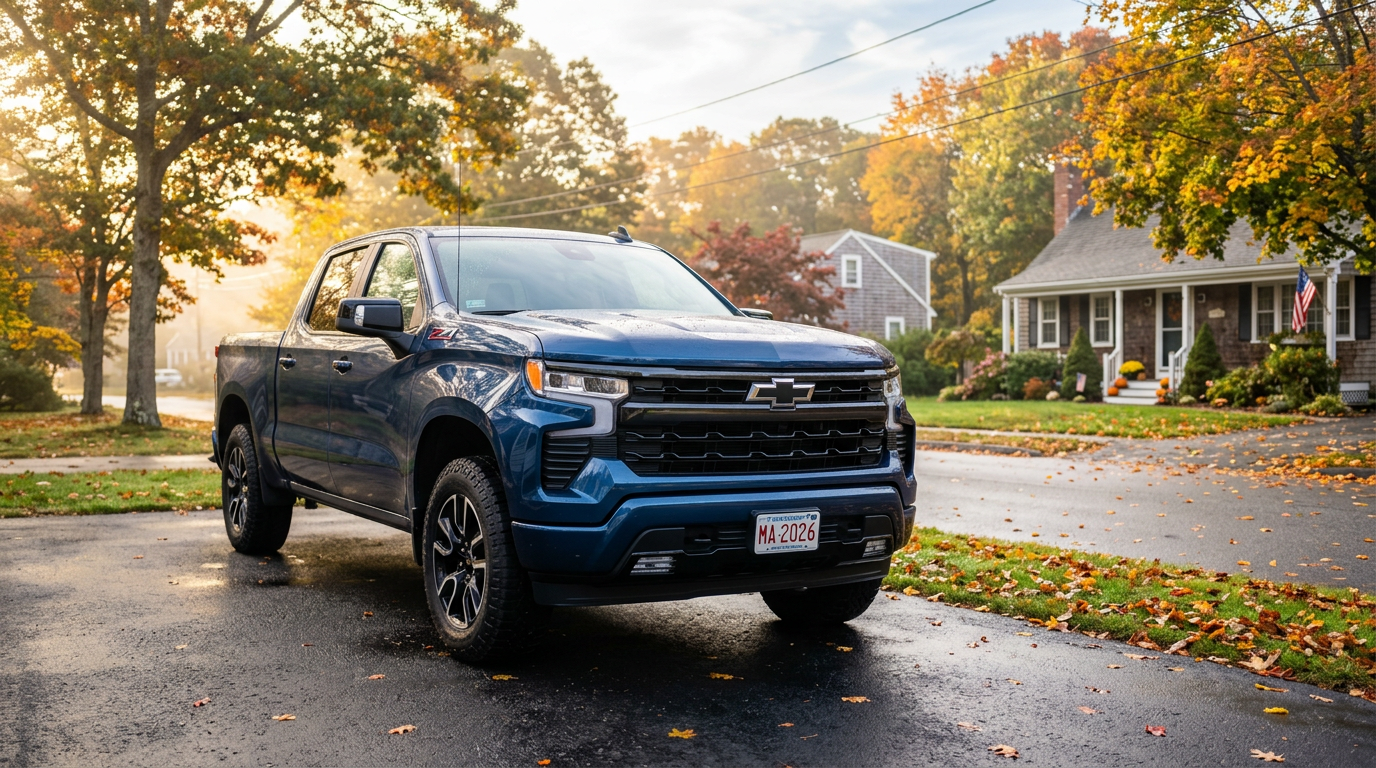
Maintaining a modern vehicle requires a structured approach to prevent mechanical wear and preserve long-term reliability. Chevrolet designs its vehicles with specific service intervals to ensure that every mechanical and electronic system functions optimally under varying driving conditions. For drivers operating in New England, adhering to these factory-recommended milestones is particularly critical due to regional environmental challenges.
Chevrolet structures its maintenance program around the advanced Oil Life Monitoring System. This technology does not rely strictly on a static mileage counter; instead, it analyzes engine temperature, operating hours, and driving habits to calculate exactly when the motor oil begins to degrade. Under normal operating conditions, this system typically prompts a service visit approximately every 7,500 miles or once a year, whichever occurs first. However, severe driving habits, such as frequent towing, prolonged idling, or short-trip commuting in sub-freezing winter temperatures, will cause the system to shorten this interval.
For those managing daily travel, keeping up with these intervals is straightforward. You can easily schedule service online to secure a timeslot that fits your weekly routine. If you need help coordinating your visit or want to confirm which service milestone your vehicle is approaching, you can reach our service department directly by calling (508) 996-6266. For drivers who prefer to plan their route ahead of time, finding the quickest path to our service bays is simple when you get directions to our North Dartmouth location, situated conveniently on Route 6.
Table of Contents
- What is Included in Factory Scheduled Maintenance for a 2026 Chevrolet?
- What Advantages Do Certified Dealership Technicians Offer for 2026 Chevy Maintenance?
- How is the Cost of a Factory Maintenance Visit Usually Broken Down?
- What Risks Do I Face If I Skip Factory Maintenance on My 2026 Chevrolet?
- What Factory Maintenance Items on a 2026 Chevy Are Realistic for a DIY Owner?
- Common Questions About 2026 Chevrolet Scheduled Maintenance
- Keep Your Chevrolet Running Like New with Factory Scheduled Maintenance
What is Included in Factory Scheduled Maintenance for a 2026 Chevrolet?
Each service milestone in the Chevrolet maintenance schedule targets specific wear items and mechanical systems. By understanding what happens during each visit, owners can better anticipate their vehicle’s needs over its operational lifespan. The factory schedule is divided into progressive tiers based on accumulated mileage:
- At 7,500 Miles: This initial service focuses on fundamental lubrication and safety. It includes a comprehensive engine oil and filter change using GM-approved dexos1 synthetic oil, a full tire rotation to promote even tread wear, and a detailed multi-point vehicle inspection. Technicians also verify fluid levels, check battery terminal connections, and inspect the braking system.
- At 15,000 Miles: Building upon the basic 7,500-mile services, this interval introduces cabin air filter replacement to keep the interior climate control system free of dust and allergens. Technicians perform a hands-on inspection of the steering, suspension, and exhaust systems to check for premature wear or physical damage.
- At 22,500 to 30,000 Miles: At this stage, the engine air filter is typically replaced to maintain optimal fuel economy and prevent debris from entering the combustion chamber. For vehicles equipped with passenger-cabin air filtration, another filter swap occurs. Technicians also perform a complete brake fluid exchange, flushing out moisture and contaminants that naturally accumulate in the hydraulic lines over time.
- At 45,000 to 60,000 Miles: This major milestone involves servicing the transmission fluid and filter. If your vehicle features four-wheel drive or all-wheel drive, the transfer case fluid is also exchanged. Spark plugs are inspected and replaced if necessary to prevent engine misfires and maintain smooth power delivery.
Local driving habits heavily influence how quickly these services are needed. For example, a family driving a 2026 Chevrolet Traverse around the coastal wetlands and sandy public areas in Wareham may subject their vehicle to increased salt air and moisture, which accelerates the breakdown of chassis lubricants and brake components. Keeping these environmental factors in mind helps prevent unexpected wear. To help manage the cost of these routine visits, owners can browse our current service and parts specials for discount coupons on common maintenance items like brake pads, cabin filters, and battery replacements.
What Advantages Do Certified Dealership Technicians Offer for 2026 Chevy Maintenance?
Entrusting a sophisticated modern vehicle to general repair shops can sometimes lead to diagnostic oversights. Certified Chevrolet dealership technicians undergo rigorous, factory-designed training programs that focus exclusively on GM engineering, electrical architecture, and mechanical systems. This specialized knowledge is critical for maintaining the complex systems found in newer models, such as the digital safety sensors, advanced driver-assist cameras, and specialized powertrain configurations.
Certified technicians utilize factory-grade diagnostic computers that interface directly with Chevrolet’s proprietary software databases. When a 2027 Chevrolet Equinox is brought in with a subtle performance issue, a certified technician can pull real-time sensor data and compare it against exact factory specifications. This eliminates the guesswork often associated with generic code readers. Furthermore, dealership technicians have direct access to technical service bulletins and software updates issued directly by the manufacturer, ensuring your vehicle’s onboard computers are running the latest calibrations.
Another primary benefit of dealership service is the exclusive use of Original Equipment Manufacturer (OEM) parts. These components are engineered to the exact tolerances of your specific vehicle, preserving the structural integrity and safety standards established during manufacturing. Using genuine GM parts also protects your factory warranty, as aftermarket components can sometimes compromise adjacent systems and lead to warranty claim denials.
How is the Cost of a Factory Maintenance Visit Usually Broken Down?
Understanding the structure of a service invoice helps demystify the maintenance process and allows owners to plan their ownership budgets accurately. Dealership service centers prioritize transparency by providing detailed estimates before any work begins. A standard factory maintenance bill is divided into several distinct categories:
- Labor Charges: This represents the time required for a certified technician to perform the scheduled tasks. Dealerships utilize industry-standard flat-rate manuals that assign specific time blocks to each job, ensuring consistency in billing regardless of minor real-time variations in the repair process.
- OEM Parts and Fluids: This portion covers the physical items used during the visit. It includes the cost of specialized fluids, such as dexos1 synthetic motor oil or Dex-Cool extended-life coolant, along with physical components like oil filters, cabin air filters, spark plugs, or brake pads.
- Shop Supplies and Environmental Fees: These nominal charges cover the cost of hazardous waste disposal, recycling fees for used motor oil and batteries, and consumable workshop materials like cleaning solvents, protective seat covers, and specialized lubricants.
Before any work is performed, your dedicated service advisor will walk you through the multi-point inspection report. If the inspection reveals any items requiring attention, the advisor will present an itemized estimate showing exactly what parts and labor are required. This collaborative communication process ensures that you retain complete control over what services are authorized during your visit.
What Risks Do I Face If I Skip Factory Maintenance on My 2026 Chevrolet?
Neglecting scheduled service milestones can set off a chain reaction of mechanical degradation that compromises both safety and vehicle value. Motor oil, transmission fluid, and engine coolant all lose their protective chemical properties over time, leading to increased friction, internal heat buildup, and accelerated wear on critical internal components.
For instance, skipping a recommended coolant flush can have severe consequences. The Dex-Cool extended-life coolant used in modern Chevrolet models is rated for replacement at 5 years or between 100,000 and 150,000 miles. If this fluid is ignored, it can become acidic, leading to internal corrosion that damages the water pump, degrades engine gaskets, and increases the risk of catastrophic engine overheating. Similarly, old brake fluid absorbs moisture from the atmosphere, which lowers its boiling point and can lead to a spongy brake pedal feel or reduced stopping power during sudden braking maneuvers.
Furthermore, skipped maintenance directly threatens your factory warranty coverage. If a major powertrain component fails and the manufacturer determines that the failure was caused by a lack of documented oil changes or fluid services, the repair claim may be denied. Keeping a complete, verified service history at a certified dealership is the most effective way to protect your warranty and preserve the vehicle’s resale value.
What Factory Maintenance Items on a 2026 Chevy Are Realistic for a DIY Owner?
While modern Chevrolet vehicles feature highly integrated electronic systems that require professional diagnostic tools, there are several basic maintenance tasks that an experienced DIY owner can safely perform at home. Engaging in these simple tasks helps owners stay connected to their vehicle’s physical condition while managing routine upkeep:
- Engine and Cabin Air Filters: Replacing these filters typically requires no specialized tools. The engine air filter housing is usually secured by easily accessible clips or screws, and the cabin air filter is generally located directly behind the glove compartment.
- Windshield Wiper Blades: Swapping out worn wiper blades takes only a few minutes and is vital for maintaining clear visibility during heavy rain or winter snowstorms.
- Fluid Level Monitoring: Regularly checking the engine oil dipstick, windshield washer fluid reservoir, and coolant expansion tank helps you spot slow leaks before they cause performance issues.
For more complex tasks, such as brake pad replacement, transmission fluid flushes, or diagnostic troubleshooting, professional intervention is highly recommended. Attempting these procedures without specialized equipment can lead to improper component installation or damage to delicate electronic sensors, ultimately costing more to correct than a standard dealership visit.
Common Questions About 2026 Chevrolet Scheduled Maintenance
Q: Is the first scheduled maintenance visit free for a new 2026 Chevrolet?
A: Yes, Chevrolet provides a complimentary first maintenance visit for newly purchased 2026 models. This initial service must be completed within the first 1 year or 12,000 miles of vehicle ownership and covers an engine oil and filter change, tire rotation, and a multi-point inspection.
Q: How often should I rotate the tires on my Chevrolet truck or SUV?
A: Tire rotations should be performed every 7,500 miles, which conveniently aligns with your scheduled oil change visits. Regular rotations are essential for ensuring even tread wear, preserving handling characteristics, and maximizing the overall lifespan of your tire set.
Q: What should I do if my Chevrolet’s Oil Life Monitoring System alerts me before 7,500 miles?
A: You should schedule a service appointment as soon as possible after the alert appears. The system monitors actual engine operating conditions, meaning frequent short trips, heavy towing, or extreme temperatures can degrade the oil faster than normal, requiring an earlier service.
Q: Does my Chevrolet roadside assistance cover towing for maintenance visits?
A: Chevrolet roadside assistance is designed for emergency situations, such as flat tires, lockouts, or mechanical breakdowns, rather than routine scheduled maintenance visits. If you experience an unexpected mechanical issue covered under your warranty, you can reach Chevrolet Roadside Assistance: 800-243-8872 for emergency towing to the nearest authorized service center.
Keep Your Chevrolet Running Like New with Factory Scheduled Maintenance
Staying proactive with your vehicle’s scheduled maintenance is the most effective way to ensure long-term safety, optimal fuel efficiency, and reliable performance on every journey. Whether you are navigating the agricultural back roads around Rochester or commuting daily along coastal highways, a well-maintained vehicle provides peace of mind in all driving conditions.
Our factory-trained technicians are committed to providing the highest level of care for your vehicle, utilizing specialized diagnostic equipment and genuine OEM parts. To keep your vehicle performing at its absolute best, reach out to our service team by calling (508) 996-6266, or stop by our service department at 361 State Rd Rte, 6, North Dartmouth, MA 02747 to discuss your upcoming service milestones.
© 2026 Colonial South Chevrolet. All rights reserved.
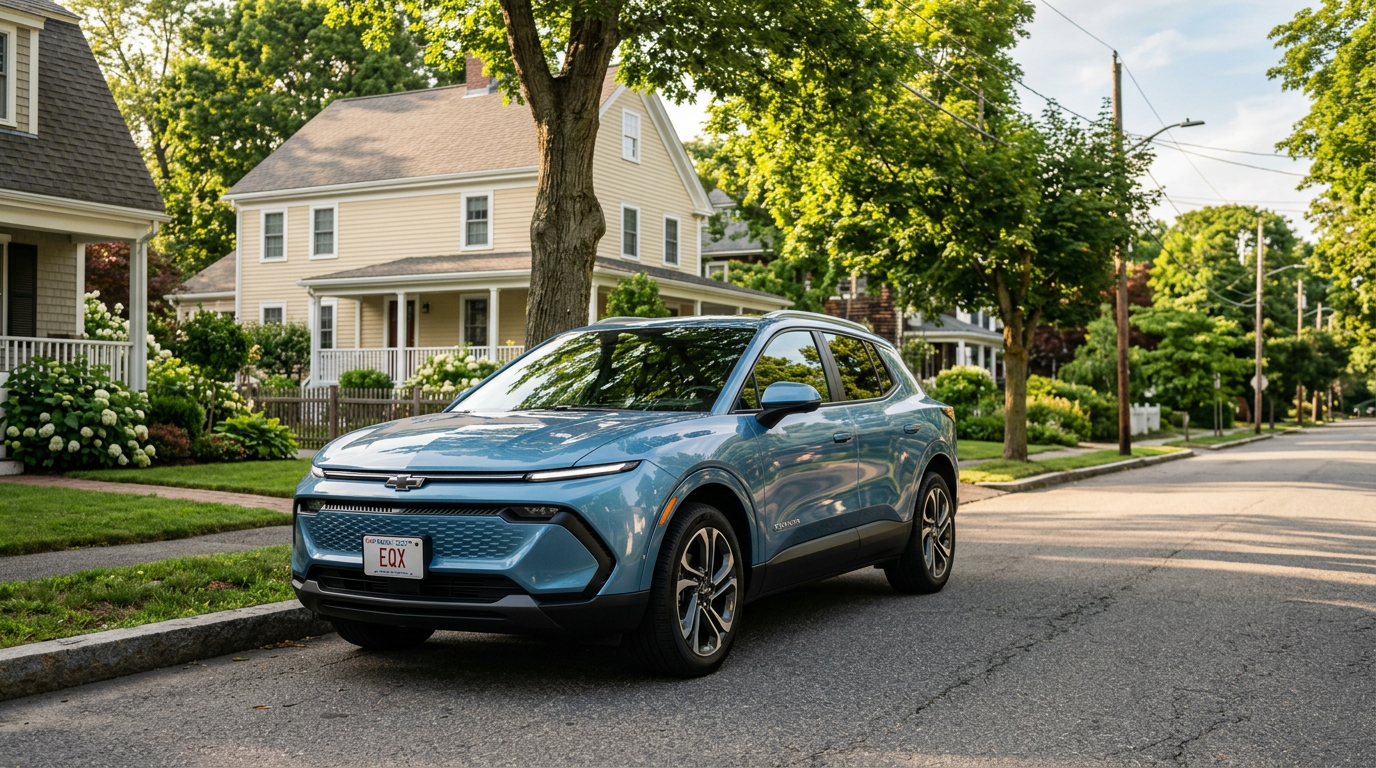
The 2027 Chevrolet Equinox earns its place as one of the most practical, well-rounded compact crossovers in its class, earning recognition as both Best Mid-Size 5-Passenger SUV and Best Value SUV from PARENTS magazine in 2025. This guide covers everything Massachusetts buyers need to know, from trim-by-trim pricing and cargo specs to safety technology and ownership costs across the ACTIV, LT, and RS configurations.
Table of Contents
- Exterior Styling That Matches Marion’s Coastal Lifestyle
- Power and Performance Tailored for Rolling Terrain
- Interior Comfort and Space Designed for Family Adventures
- Infotainment Features That Keep Drivers Connected on the Go
- Safety Technologies Built for Peace of Mind
- Breaking Down 2027 Chevrolet Equinox Pricing: ACTIV, LT, and RS Trims for Massachusetts Buyers
- Warranty and Maintenance Insights for Long-Term Ownership
- Awards and Expert Recognition Highlighting the 2027 Chevrolet Equinox’s Strengths
- Frequently Asked Questions from Chevrolet Equinox Shoppers
- What Makes the 2027 Chevrolet Equinox a Smart Choice for Massachusetts Drivers
Why Families Are Choosing the 2027 Chevrolet Equinox
Consider a household that needs one vehicle to handle Monday morning school drop-offs, a midweek supply run, and a Saturday trip to a wildlife sanctuary with a full trunk. The 2027 Chevrolet Equinox Dartmouth was built precisely for that kind of layered daily life, and it shows in every design decision Chevrolet made when structuring this lineup.
Chevrolet organizes the Equinox around three distinct personalities rather than a traditional trim ladder. The LT serves as the sensible, value-forward foundation, pairing everyday utility with a comfortable cabin and a modern technology suite that shoppers often expect at higher price points. The RS targets buyers who want a more athletic, street-tuned aesthetic, bringing a unique high-gloss black grille, 19-inch Carbon Flash metallic machined-face wheels, and Evotex synthetic leather seating with Torch Red stitching to the table. The ACTIV speaks to outdoor enthusiasts and active families, wearing a distinctive front fascia, all-terrain tires, and sueded microfiber seating surfaces that signal its adventure-ready character.
All three trims share a 1.5L turbocharged 4-cylinder engine producing 175 hp and 184 lb-ft of torque paired with an 8-speed automatic transmission, so the powertrain choice is never a trade-off between trims. What differs is how each configuration frames the driving experience and what equipment comes standard.
For growing families, the 5-passenger cabin and about 30 cu ft of cargo space behind the rear seats deliver genuine hauling capability without the bulk of a three-row SUV. The Equinox fits in a standard parking space, navigates narrow rural roads with ease, and still has room for strollers, hiking gear, or a week’s worth of groceries. That combination of practicality and approachability is precisely why this crossover continues to resonate with buyers who want a capable daily driver without overcommitting to a larger, more expensive vehicle.
Exterior Styling That Matches Marion’s Coastal Lifestyle
Car and Driver describes the redesigned Equinox as looking “like a Chevy Traverse that’s been shrunk in the wash,” a stocky, handsome crossover with a Silverado-inspired snout that gives it genuine visual presence at the curb. Edmunds adds that the truck-inspired styling makes it more noticeable on the road, a point that resonates for buyers who want their crossover to project confidence without tipping into oversized territory.
Each trim brings its own exterior identity. The ACTIV wears a unique front fascia and grille designed to telegraph its outdoor character, complemented by black roof rails and all-terrain tires that reinforce the adventure-ready stance. Standard LED headlamps and LED tail lamps sharpen the profile day and night, while rain-sensing wipers and a heated wiper park make New England weather less of a concern.
The RS takes a different visual path, leading with a high-gloss black grille and front fascia, high-gloss black mirror caps, and 19-inch Carbon Flash metallic machined-face wheels riding on 235/55R19 all-season tires. The result is a crossover that reads as genuinely sporty without relying on a performance powertrain to justify the look.
The LT adopts a cleaner, more restrained presentation with 17-inch Grazen metallic machined-face aluminum wheels and a manual rear liftgate as standard. Buyers who want more visual pop on the LT can add the optional Midnight Edition package ($1,045), which bundles 19-inch black painted aluminum wheels, high-gloss black mirror caps, black roof rails, and black exterior badging into a single, cohesive blackout look.
Across all three trims, optional premium paint choices include Radiant Red Tintcoat ($495) and Polar White ($995 on ACTIV and RS), giving buyers meaningful personalization without requiring a trim change.
Power and Performance Tailored for Rolling Terrain
Every 2027 Chevy Equinox Dartmouth in the ACTIV, LT, and RS lineup draws from the same mechanical foundation, and that consistency is actually a strength for buyers who want predictable, capable performance without powertrain trade-offs between trims.
| Spec | ACTIV | LT | RS |
|---|---|---|---|
| Engine | 1.5L Turbo I4 | 1.5L Turbo I4 | 1.5L Turbo I4 |
| Horsepower | 175 hp | 175 hp | 175 hp |
| Torque | 184 lb-ft | 184 lb-ft | 184 lb-ft |
| Transmission | 8-speed automatic | 8-speed automatic | 8-speed automatic |
| Drivetrain | Front-wheel drive | Front-wheel drive | Front-wheel drive |
| Fuel Economy | ACTIV | LT | RS |
| — | — | — | — |
| City MPG | 25 | 25 | 25 |
| Highway MPG | 29 | 29 | 29 |
| Combined MPG | 27 | 27 | 27 |
The 1.5L turbocharged 4-cylinder delivers its 184 lb-ft of torque in a way that suits mixed driving conditions well. On gently rolling farmland roads and the coastal plains common to this part of Massachusetts, the 8-speed automatic finds the right gear quickly and keeps the engine in a comfortable operating range. The automatic stop/start system (standard on both ACTIV and LT) helps trim fuel use during stop-and-go segments without requiring any driver input.
At 27 MPG combined, the Equinox makes a reasonable case for itself as a daily driver where fuel economy matters across a full week of varied trips rather than a single highway run. The drive mode selector gives drivers a modest way to adjust throttle and transmission response, while automatic vehicle hold on the RS and LT prevents rollback on inclines without holding the brake pedal.
For buyers concerned about cold-weather reliability, the optional Engine Block Heater ($100 across all three trims) keeps engine fluids warm overnight, reducing cold-start wear and helping the cabin reach a comfortable temperature faster on frigid mornings.
Interior Comfort and Space Designed for Family Adventures
Five adults fit without the usual compromise of someone drawing the short straw for the middle seat. The Equinox’s 5-passenger cabin is genuinely practical, and the numbers back that claim: about 30 cu ft of cargo space sits behind the rear bench, and the 60/40 split-folding rear seat expands that footprint significantly when only two or three passengers are aboard.
| Feature | ACTIV | LT | RS |
|---|---|---|---|
| Curb weight | 3,452 lbs | 3,428 lbs | 3,474 lbs |
| Towing | 800 lbs | 800 lbs | 1,500 lbs |
| Seating | 5 | 5 | 5 |
| Cargo | 29.8 cu ft | 29.8 cu ft | 29.8 cu ft |
The towing difference between trims is worth noting: the RS is rated at 1,500 lbs while the ACTIV and LT are rated at 800 lbs. For buyers who want to tow a small boat trailer or a lightweight utility trailer, the RS’s higher rating opens meaningful options. The optional Trailering Package ($1,095, available across all three trims) adds a trailer hitch receiver and wiring provisions to enable that capability.
Interior materials differ meaningfully by trim. The ACTIV uses sueded microfiber seating surfaces with ACTIV head restraint embroidery and delivers an 8-way power driver seat adjuster with 2-way power lumbar as standard equipment. Dual-zone automatic climate control comes standard on the ACTIV, a feature that the LT only gains through the optional Convenience Package II ($2,050). The RS steps up with Evotex synthetic leather seating surfaces accented by Torch Red stitching, a heated flat-bottom steering wheel, and standard dual-zone automatic climate control with a cabin humidity sensor.
The optional Convenience Package III ($1,095, available on both ACTIV and RS) adds ventilated front seats, heated rear outboard seats, an 8-way power front passenger seat adjuster with 2-way lumbar, and driver memory settings for the seat and outside mirrors — a meaningful comfort upgrade for buyers who share driving duties.
Infotainment Features That Keep Drivers Connected on the Go
A compact crossover’s technology suite often determines how much drivers actually enjoy their daily commute, and the 2027 Equinox makes a strong argument here regardless of which trim a buyer chooses.
All three trims — ACTIV, LT, and RS — come standard with an 11.3-inch diagonal LCD touchscreen featuring Google Built-In compatibility, which means Google Maps, Google Assistant, and the Google Play Store are native to the system rather than mirrored from a phone. Alongside that sits an 11-inch digital Driver Information Center that presents vehicle data, navigation prompts, and driver assistance alerts in a clean, configurable layout.
Wireless Apple CarPlay and wireless Android Auto are standard across the lineup, eliminating the cable that most competing crossovers still require at this price point. A wireless phone charging pad comes standard on the RS and is included as part of the Convenience Package II on the LT. The LT’s base configuration does not include wireless charging as a standalone standard feature.
SiriusXM with 360L capability comes with a trial subscription on all three trims, and buyers who want to extend that service can add the 3 Years SiriusXM package ($299). For buyers who rely on connected services beyond audio, the 3 Years OnStar One package ($800) adds 36 months of Automatic Crash Response, Roadside Assistance, connected navigation, and in-vehicle Wi-Fi hotspot capability, along with remote access and vehicle diagnostics. Active noise cancellation is standard on the ACTIV and reduces road and wind noise at highway speeds, which matters on longer drives where cabin quiet directly affects fatigue.
The RS also includes a standard remote vehicle starter system, making it easy to warm the cabin on cold mornings before heading out.
Safety Technologies Built for Peace of Mind
The 2027 Chevy Equinox carries a substantial standard safety suite across all three trims, though the depth of that suite varies in meaningful ways between configurations.
Every ACTIV and RS comes standard with Enhanced Automatic Emergency Braking, which can detect slower or stopped vehicles ahead and apply the brakes autonomously when the driver does not respond in time. Front Pedestrian and Bicyclist Braking extends that detection to vulnerable road users, an important feature on roads where cyclists and pedestrians share space with traffic. Forward Collision Alert provides an earlier visual and audible warning before the automatic braking threshold is reached, giving drivers time to respond themselves. The LT carries the Chevy Safety Assist suite as standard, which includes its own version of Automatic Emergency Braking and the full complement of collision warning and lane-keeping systems.
Blind Zone Steering Assist goes beyond a simple warning light by applying a corrective steering input when the driver begins to change lanes into an occupied blind spot, actively helping prevent the lane change rather than just alerting the driver. Rear Cross Traffic Braking and Reverse Automatic Braking address the backing-out scenario, where the vehicle can detect crossing traffic or obstacles behind and apply the brakes before contact occurs.
The Safety Alert Seat delivers haptic vibrations through the driver’s seat cushion to communicate collision alerts, lane departure warnings, and other safety notifications without requiring the driver to look away from the road. Teen Driver Technology and Buckle to Drive are standard on the ACTIV, providing parental controls and a seatbelt reminder interlock that reinforces good habits for newer drivers.
The optional Safety and Technology Package ($1,140, available on all three trims) unlocks HD Surround Vision, a Rear Camera Mirror with washer, Rear Pedestrian Alert, Traffic Sign Recognition, and front fog lamps, meaningfully expanding the vehicle’s situational awareness toolkit.
Breaking Down 2027 Chevrolet Equinox Pricing: ACTIV, LT, and RS Trims for Massachusetts Buyers
The Equinox lineup is structured around a clear value proposition: the LT enters at the most accessible price point, while the ACTIV and RS both open at the same MSRP but offer very different feature sets for that investment.
| Feature | ACTIV | LT | RS |
|---|---|---|---|
| Base MSRP | $33,900 | $29,000 | $33,900 |
| Destination Charge | $1,995 | $1,995 | $1,995 |
The LT at $29,000 before destination is the entry point, and it delivers genuine value: an 11.3-inch touchscreen with Google Built-In, wireless Apple CarPlay and Android Auto, heated front seats, a heated steering wheel, keyless open and start, remote engine start, and the full Chevy Safety Assist suite. Buyers who want to add comfort and convenience can layer in the Convenience Package II ($2,050), which brings dual-zone automatic climate control, an 8-way power driver seat, wireless charging, a hands-free power liftgate, and Evotex seating surfaces, among other upgrades.
The ACTIV at $33,900 bundles much of that comfort equipment as standard, including dual-zone automatic climate control, the 8-way power driver seat with lumbar, rain-sensing wipers, heated wiper park, and the AutoSense hands-free power liftgate. Its all-terrain tires and unique exterior design carry a lifestyle premium that LT buyers would need to replicate through aftermarket additions.
The RS at $33,900 brings the most visually distinctive package, with its high-gloss black exterior treatment, 19-inch wheels, Evotex leather seating with Torch Red stitching, a flat-bottom steering wheel, and the higher 1,500-lb towing rating as standard. Buyers who want the Convenience Package III ($1,095) on the RS gain ventilated front seats, heated rear seats, and driver memory settings.
Browse our current new-vehicle inventory to see which Equinox configurations are available now at Colonial South Chevrolet.
Warranty and Maintenance Insights for Long-Term Ownership
Ownership costs extend well beyond the purchase price, and the Equinox’s available service programs give buyers meaningful tools to manage those costs predictably.
For buyers who want to extend their connected services coverage, the 3 Years OnStar One package ($800) includes Automatic Crash Response, Emergency Services, Roadside Assistance through the OnStar system, connected navigation, and remote vehicle diagnostics. This is particularly useful for owners who travel frequently or want the peace of mind that comes with 24/7 advisor access.
The Mobile Service Plus program offers two coverage tiers: a 3-year plan ($599) and a 1-year plan ($199). Both include mobile service dispatch for qualifying maintenance performed at your home or workplace, dealership vehicle pick-up and delivery for larger service needs, and a loaner vehicle with drop-off. For buyers who prefer not to rearrange their schedule around service appointments, this program removes the friction from routine maintenance entirely.
The Engine Block Heater option ($100) is a practical addition for Massachusetts buyers who deal with extended cold snaps, keeping engine fluids at a temperature that reduces startup wear and accelerates cabin heating. Colonial South Chevrolet’s service team can walk you through which maintenance intervals apply to your specific trim and driving patterns. When it is time for your first oil change or a multi-point inspection, booking your service appointment online takes just a few minutes and keeps your Equinox running at its best.
Awards and Expert Recognition Highlighting the 2027 Chevrolet Equinox’s Strengths
Third-party recognition carries weight precisely because it comes from sources with no stake in the sale. The 2027 Chevy Equinox has earned two notable distinctions from PARENTS magazine in 2025: Best Mid-Size 5-Passenger SUV and Best Value SUV, both awarded by PARENTS (2025). These recognitions specifically validate the Equinox’s combination of family-friendly practicality and accessible pricing, two qualities that define the crossover’s design brief.
Expert commentary reinforces those accolades. Car and Driver characterizes the Equinox as delivering “plenty of value and utility in a handsome package,” a description that aligns with how the vehicle performs across daily use cases. Edmunds highlights the model’s handsome, contemporary design and strong value proposition as key factors that make it well-suited for commuting, errands, and family routines. U.S. News & World Report notes that the redesigned Equinox is “chiseled where its predecessor was soft,” giving it a properly truck-like presence among compact crossover peers.
Taken together, these assessments from independent automotive publications confirm that the Equinox’s positioning as a practical, value-driven anchor of Chevrolet’s crossover lineup is grounded in real-world performance rather than marketing copy.
Frequently Asked Questions from Chevrolet Equinox Shoppers
Which Equinox trim has the highest towing capacity?
The RS trim is rated at 1,500 lbs of towing capacity, compared to 800 lbs on the ACTIV and LT. All three trims can add the optional Trailering Package ($1,095) for the hitch receiver and wiring hardware needed to tow.
Does the Equinox come with all-wheel drive?
All three trims — ACTIV, LT, and RS — are configured with front-wheel drive as the drivetrain. Contact Colonial South Chevrolet for details on any AWD availability for the 2027 model year.
What is the cargo space behind the rear seats?
All three trims share about 30 cu ft of cargo space behind the second row. The 60/40 split-folding rear bench expands that capacity significantly when fewer passengers are on board.
What fuel economy does the 2027 Equinox deliver?
All three trims are rated at 25 MPG city, 29 MPG highway, and 27 MPG combined. The engine runs on regular unleaded fuel.
Is wireless Apple CarPlay standard on every trim?
Yes. Wireless Apple CarPlay and wireless Android Auto are standard equipment on the ACTIV, LT, and RS, paired with the standard 11.3-inch touchscreen display featuring Google Built-In.
Can I add ventilated seats to the Equinox?
Ventilated front seats are available on the ACTIV and RS through the optional Convenience Package III ($1,095), which also adds heated rear outboard seats, an 8-way power front passenger seat adjuster, and driver memory settings.
What Makes the 2027 Chevrolet Equinox a Smart Choice for Massachusetts Drivers
The numbers are straightforward: $29,000 starting MSRP on the LT, 27 MPG combined, about 30 cu ft of cargo space, and a safety suite that includes Enhanced Automatic Emergency Braking, Blind Zone Steering Assist, and Rear Cross Traffic Braking as standard equipment. Those specs, paired with three meaningfully differentiated trim personalities, give buyers a genuine choice rather than a forced upgrade path.
For families who balance weekday routines with weekend outdoor pursuits, the Equinox’s combination of cargo flexibility, fuel efficiency, and available towing capability covers a wide range of use cases in a single, right-sized package. The RS’s 1,500-lb towing rating makes it a practical choice for buyers who occasionally need to haul a small trailer. The ACTIV’s all-terrain tires and adventure-oriented equipment speak to buyers who want a crossover that can handle unpaved paths without sacrificing daily comfort.
Colonial South Chevrolet is located at 361 State Rd Rte 6, North Dartmouth, MA 02747. To speak with a product specialist about which Equinox configuration fits your household, give our team (508) 996-6266 and we can walk you through current availability, package pricing, and next steps toward a test drive.
© 2026 Colonial South Chevrolet. All rights reserved.
A New Era of Versatility on South Coast Roads
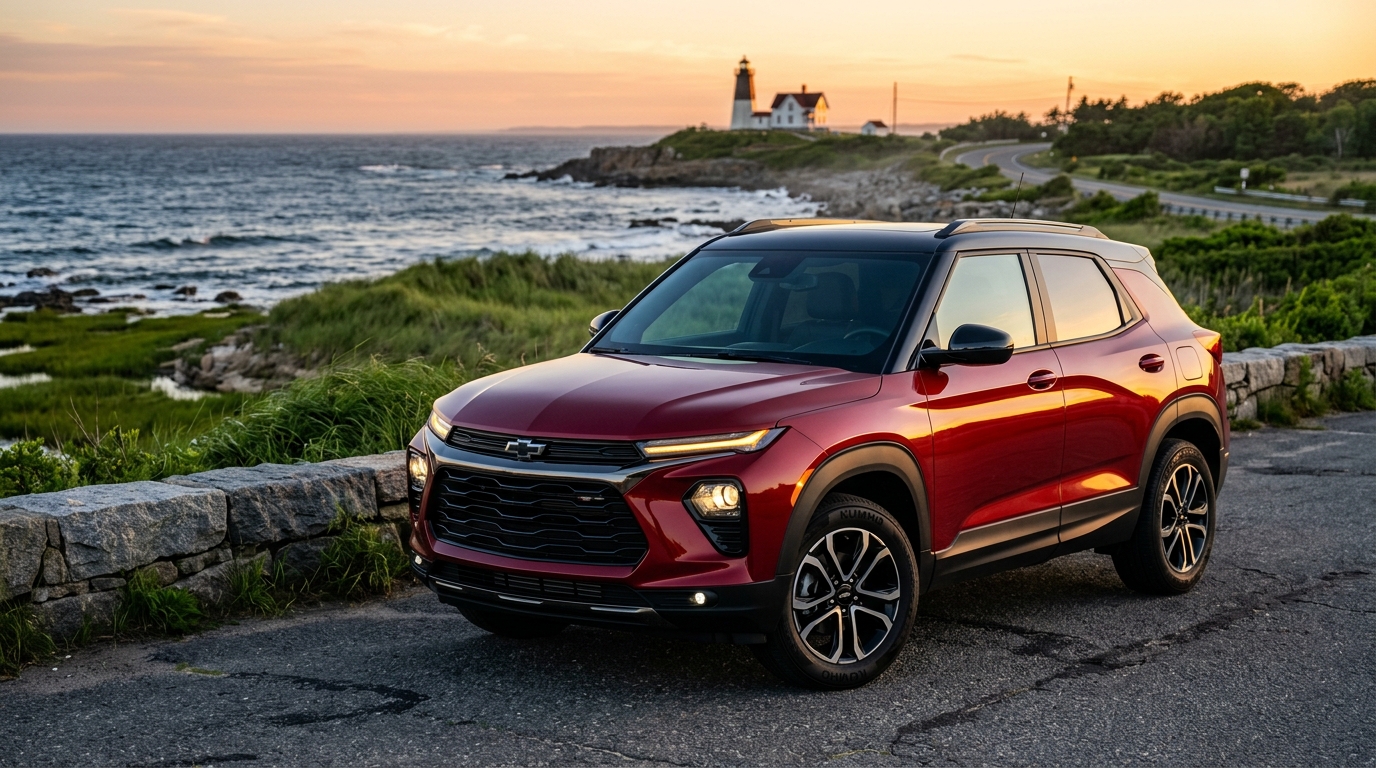
The 2026 Chevrolet Trailblazer arrives as a sophisticated solution for families navigating the unique blend of rural landscapes and coastal corridors. Starting at an MSRP of $26,720, this small SUV balances efficiency and capability with a standard 1.3L I3 engine paired with a 4WD drivetrain. Whether you are managing the 30-mile commute from Rochester or heading to local community events, the Trailblazer delivers a combined 28 MPG, achieving 26 city and 30 highway ratings.
Inside the cabin, there is comfortable seating for 5 passengers, ensuring plenty of room for school runs or weekend trips to the water. To see how this vehicle fits your lifestyle, you can explore the current new Chevrolet inventory at our dealership. Our team at 361 State Rd Rte, 6, North Dartmouth, MA 02747 is ready to assist you; simply find directions to our showroom to get started. For immediate questions about availability, give us (508) 996-6266 a quick call today.
Table of Contents
- Sculpted-lines-ready-for-coastal-escapes-and-sandy-shores
- The Punchy ECOTEC Turbo Engineered for Efficient Commuting
- Smart Cabin Configurations Tailored for Active Lifestyles
- Advanced Screens and Connectivity for Modern Travelers
- Standard Chevy Safety Assist Protecting Every Journey
- Dimensions & Capacity
- Cargo & Utility Essentials
- Weather-Ready Floor Protection
- Trailering & Hauling Support
- Exterior Style & Blackout
- Wheels, Locks & Performance Touches
- Driver Confidence & Convenience
- Adaptive Tech & Connected Services
- Choosing the Right Configuration for Your South Coast Lifestyle
Sculpted Lines Ready for Coastal Escapes and Sandy Shores
The 2026 Chevrolet Trailblazer arrives with a design language that mirrors the maritime aesthetic of Wareham. Its exterior is defined by sharp creases and an athletic stance, measuring 174 inches in total length. For the 2026 model year, Chevrolet introduces Apex Red to the color palette, adding a vibrant option for those who want to stand out at the harbor. The entry-level LS trim sets a solid foundation with standard 17-inch Silver-painted aluminum wheels, while the LT trim steps up the style with 17-inch high-gloss Black machined-aluminum wheels and the availability of a Midnight Edition package.
Moving up the range, the RS and ACTIV trims offer the most visual distinction with available two-tone rooflines. The RS trim emphasizes a street-ready look with massive 19-inch high-gloss Black machined-aluminum wheels and unique RS badging. Conversely, the ACTIV trim is built for those who frequent unpaved paths, featuring a functional skid plate and a dual-outlet exhaust with trapezoidal polished tips. If you are considering a previous model year, you can also explore our current selection of Pre-Owned Inventory to compare these evolving style elements. The 65.7-inch height ensures a commanding view of the road without compromising the vehicle’s compact footprint.
Table Title: 2026 Trailblazer Exterior Dimensions and Wheel Specifications
| Feature | LS Trim | LT Trim | RS Trim | ACTIV Trim |
|---|---|---|---|---|
| Wheel Size | 17-inch | 17-inch | 19-inch | 17-inch |
| Overall Length | 174 inches | 174 inches | 174 inches | 174 inches |
| Overall Height | 65.7 inches | 65.7 inches | 65.7 inches | 65.7 inches |
| Special Finish | Silver Paint | High-Gloss Black | High-Gloss Black | Trapezoidal Tips |
The Punchy ECOTEC Turbo Engineered for Efficient Commuting
Pricing
MSRP and destination charges (source: MarketCheck VIN Decode (consensus))
| Feature | LS | LT | RS | Activ |
|---|---|---|---|---|
| Starting MSRP | $26,720 | $29,744 | $33,393 | $33,435 |
Lowest starting MSRP: LS at $26,720
The mechanical heart of the 2026 Chevrolet Trailblazer Dartmouth is the ECOTEC 1.3L Turbo engine, a three-cylinder powerplant designed to navigate the diverse landscapes of the South Coast with technical precision. This engine provides the necessary responsiveness for those navigating the suburban streets of Wareham. Every trim in the lineup—including the LS, LT, RS, and ACTIV—comes standard with a 4WD drivetrain and an Automatic transmission, prioritizing traction during the unpredictable weather shifts common in New England.
Efficiency serves as a primary pillar for this SUV, which accommodates 5 passengers while achieving an EPA-estimated 26 MPG city, 30 MPG highway, and 28 MPG combined. These ratings provide a practical solution for professionals who require a reliable vehicle for frequent travel while maintaining a Starting MSRP of $26,720. To ensure these mechanical systems continue to operate at peak efficiency, owners can arrange a professional service visit at our facility for routine inspections of the turbocharger and drivetrain components.
For drivers who frequently traverse the gravel roads found in rural Rochester, the ACTIV trim includes specialized hardware like off-road suspension tuning and a functional skid plate. The ACTIV and RS models further distinguish themselves with a dual-outlet exhaust featuring trapezoidal polished tips. Drivers can also modify the vehicle’s dynamics through three available drive modes, which adjust performance characteristics for paved highways or sandier surfaces. This adaptable engineering ensures the Trailblazer remains a versatile partner for local errands and longer journeys.
The following table details the core performance and efficiency specifications for the 2026 Trailblazer:
| Feature | Performance Specification |
|---|---|
| Engine Type | ECOTEC 1.3L Turbo I3 |
| Drivetrain Configuration | 4WD |
| Transmission Type | Automatic |
| City Fuel Economy | 26 MPG |
| Highway Fuel Economy | 30 MPG |
| Combined Fuel Economy | 28 MPG |
| Seating Capacity | 5 Passengers |
| Starting MSRP | $26,720 |
Smart Cabin Configurations Tailored for Active Lifestyles
The interior of the 2026 Chevrolet Trailblazer is engineered to maximize every inch of its 71.2-inch width and 174-inch length, providing a functional environment for up to 5 passengers. In the LS trim, versatility is a primary focus, featuring a standard fold-flat front passenger seat that allows for the transport of longer items that might otherwise require a larger vehicle. This specific configuration is particularly useful for residents in Rochester who may need to haul garden tools or small farm supplies through the town’s rolling agricultural landscapes.
Fuel Economy
| Feature | Standard across all trims |
|---|---|
| City MPG | 26 mpg |
| Highway MPG | 30 mpg |
| Combined MPG | 28 mpg |
| Fuel Type | Unleaded |
Stepping up through the trim levels introduces distinct aesthetic and comfort enhancements. The RS trim emphasizes a performance-inspired atmosphere with unique Red interior accents and a heated, wrapped flat-bottom steering wheel, providing a tactile upgrade for daily commutes. Meanwhile, the LT trim serves as a bridge between utility and premium feel, offering upgrades like keyless open and start to streamline frequent stops. For those planning to upgrade from an older vehicle to accommodate these modern refinements, our team can help you value your trade-in to see how your current car applies toward a new purchase.
The cabin also accommodates seasonal needs with available specialized equipment. The LT Cold Weather Package adds heating elements to keep the cabin comfortable during coastal winters, while the ACTIV trim maintains an outdoor-ready persona that complements its rugged exterior. Throughout the lineup, the 65.7-inch height ensures ample headroom, creating an open feel that remains practical for weekend trips to local wildlife sanctuaries or community events. This interior design prioritizes the daily requirements of active families while maintaining the flexibility needed for spontaneous local travel.
Interior and Exterior Proportions of the 2026 Chevrolet Trailblazer
| Measurement Category | Specification |
|---|---|
| Passenger Capacity | 5 passengers |
| Exterior Length | 174 inches |
| Exterior Width | 71.2 inches |
| Exterior Height | 65.7 inches |
Advanced Screens and Connectivity for Modern Travelers
The 2026 Chevy Trailblazer Dartmouth transforms the daily drive through Rochester or the commute from Wareham with a sophisticated digital cockpit that comes standard even on the entry-level LS trim. Every model features a segment-advancing 11-inch diagonal color touchscreen paired with an 8-inch diagonal Driver Information Center. This dual-screen layout provides a high-definition interface for navigating local landmarks like the Sippican River or managing media during a weekend trip to the coast. The intuitive software ensures that essential vehicle data and entertainment options are always within easy reach, minimizing distractions while maximizing engagement.
Connectivity remains a core strength of this small SUV, offering integrated solutions for the modern mobile lifestyle. Owners can enhance their experience with the 3 Years OnStar One package or enjoy a wide variety of entertainment through 3 Years SiriusXM, both of which are available across the LS, LT, RS, and ACTIV trims. For those who prioritize premium audio and convenience, the ACTIV and RS models offer an available Adaptive Cruise and Sound Package. This upgrade integrates advanced tech features to complement the standard infotainment system, ensuring every passenger stays connected and entertained. To keep your vehicle’s systems running at peak performance, you can explore our latest Service and Parts Specials designed to support your vehicle’s long-term technology health.
The following table outlines the key infotainment and connectivity specifications available for the 2026 Trailblazer lineup.
Table: 2026 Chevrolet Trailblazer Technology and Connectivity Specifications
| Feature | Specification | Availability |
|---|---|---|
| Primary Infotainment Display | 11-inch diagonal color touchscreen | Standard on all trims |
| Driver Information Center | 8-inch diagonal digital display | Standard on all trims |
| OnStar Connectivity | 3 Years OnStar One | Available on all trims |
| Satellite Radio | 3 Years SiriusXM | Available on all trims |
| Specialized Tech Package | Adaptive Cruise and Sound Package | Available on RS and ACTIV |
Standard Chevy Safety Assist Protecting Every Journey
Every 2026 Trailblazer comes equipped with the Chevy Safety Assist suite, a standard collection of six advanced safety and driver-assistance features designed to enhance awareness on the road. This manufacturer-backed package provides a foundational layer of protection for families traveling through the suburban streets of Wareham or the rural routes of Rochester. By integrating mechanical intervention with digital monitoring, the system helps drivers mitigate potential collisions before they occur.
Engine & Performance
| Feature | Standard across all trims |
|---|---|
| Engine | 1.3L I3 |
| Transmission | Automatic |
| Drivetrain | 4WD |
While the core safety suite is included on every model, Chevrolet offers specialized upgrades to further customize your security. The LS trim can be enhanced with the LS Confidence Package for $395. For those choosing the LT, RS, or ACTIV trims, the LT/RS/ACTIV Driver Confidence Package is available at the same $395 MSRP, adding sophisticated monitoring tools like Rear Cross Traffic Alert. These systems are particularly valuable when navigating busy community events or reversing in crowded coastal parking areas.
Advanced speed management is also available through targeted technology bundles. The LT trim offers Adaptive Cruise Control as a standalone option for $495. Meanwhile, drivers of the RS and ACTIV models can opt for the Adaptive Cruise and Sound Package at $995, which integrates cruise management with premium audio upgrades. These additions provide a more relaxed driving experience during long commutes on the South Coast. The Insurance Institute for Highway Safety (IIHS) has performed crashworthiness and avoidance evaluations on the 2026 Trailblazer, confirming its engineering meets modern safety expectations.
Detailed Safety and Awareness Specifications for the 2026 Trailblazer
| Safety Feature or Package | Trim Availability | MSRP |
|---|---|---|
| Chevy Safety Assist (6 Features) | Standard on LS, LT, RS, ACTIV | Included |
| LS Confidence Package | Available on LS | $395 |
| LT/RS/ACTIV Driver Confidence Package | Available on LT, RS, ACTIV | $395 |
| Adaptive Cruise Control | Available on LT | $495 |
| Adaptive Cruise and Sound Package | Available on RS, ACTIV | $995 |
| IIHS Safety Rating | All Trims | 2026 Evaluated |
Dimensions & Capacity
| Feature | Standard across all trims |
|---|---|
| Seating Capacity | 5 |
| Length | 174 |
| Width | 71.2 |
| Height | 65.7 |
Cargo & Utility Essentials
| Feature | Available |
|---|---|
| Cargo Liner | $195 |
| Cargo Area Organizer | $175 |
| Cargo Mat | $125 |
| Cargo Shade | $225 |
| Cargo Net | $95 |
Weather-Ready Floor Protection
| Feature | Available |
|---|---|
| Winter/Summer Floor Mat Package | $675 |
| Weather Floor Liners | $265 |
| Weather Floor Mats | $240 |
Trailering & Hauling Support
| Feature | Available |
|---|---|
| Trailering Package | $1,025 |
| Roof Rack Cross Rails | $575 |
| Front and Rear Splash Guards | $275 |
| 16" Compact Spare Tire | $195 |
| Engine Block Heater | $100 |
Exterior Style & Blackout
Exterior Style & Blackout — available options with MSRP pricing
| Package | LS | LT | RS | Activ |
|---|---|---|---|---|
| Blackout Package | $1,050 | $1,050 | — | — |
| Black Nameplate | $150 | $150 | — | — |
| Black Grille Bar | $500 | $500 | — | — |
| Black Bowties | $275 | $275 | — | — |
| Black wheel center caps | — | $160 | — | — |
| Silver wheel center caps | $160 | — | — | — |
| Midnight Edition | — | $895 | — | — |
| Iridescent Pearl Tricoat | — | — | $645 | $645 |
Available across all trims:
| Feature | Available |
|---|---|
| Marina Blue Metallic | $395 |
| Front License Plate Bracket | $40 |
Wheels, Locks & Performance Touches
Wheels, Locks & Performance Touches — available options with MSRP pricing
| Package | LS | LT | RS | Activ |
|---|---|---|---|---|
| 18" Aluminum Wheel | — | $495 | — | — |
Available across all trims:
| Feature | Available |
|---|---|
| Wheel Locks | $125 |
| Sport Pedal Kit | $195 |
Driver Confidence & Convenience
Driver Confidence & Convenience — available options with MSRP pricing
| Package | LS | LT | RS | Activ |
|---|---|---|---|---|
| LS Convenience Package | $495 | — | — | — |
| LS Confidence Package | $395 | — | — | — |
| Convenience Package | — | $1,495 | $1,495 | $1,495 |
| LT Cold Weather Package | — | $595 | — | — |
| LT/RS/ACTIV Driver Confidence Package | — | $395 | $395 | $395 |
| Power Panoramic Sunroof | — | $1,495 | $1,495 | $1,495 |
Available across all trims: Keyless Entry Keypad $325
Adaptive Tech & Connected Services
Adaptive Tech & Connected Services — available options with MSRP pricing
| Package | LS | LT | RS | Activ |
|---|---|---|---|---|
| Adaptive Cruise Control | — | $495 | — | — |
| Adaptive Cruise and Sound Package | — | — | $995 | $995 |
Available across all trims:
| Feature | Available |
|---|---|
| 3 Years OnStar One | $800 |
| 3 Years SiriusXM | $299 |
| Mobile Service Plus | $599 |
| Mobile Service Plus – 1 Year | $199 |
Finding Your Perfect Match Among Four Distinct Trims
Choosing the Right Configuration for Your South Coast Lifestyle
Selecting the ideal 2026 Chevrolet Trailblazer involves matching your daily driving requirements with the specific hardware and aesthetics offered across four unique trim levels. Whether you prioritize foundational value or specialized performance for exploring the unpaved paths near Rochester, each model provides a distinct personality. The lineup begins at a Starting MSRP of $26,720, and every variant features 4WD capability and an Automatic transmission as standard equipment.
The Essential Value of the LS and LT Trims
The LS trim serves as the entry point, priced at $26,720. It focuses on core essentials, providing 5-passenger seating and the 1.3L I3 engine that achieves a Combined 28 MPG. Notable standard features include 17-inch Silver-painted aluminum wheels and the highly versatile fold-flat front passenger seat, which allows for hauling longer items like fishing rods or small kayaks.
Step up to the LT trim at $29,744 for enhanced convenience. This model introduces keyless open and start along with a remote vehicle starter system, perfect for warming up the cabin before a winter morning commute. Visually, the LT is distinguished by 17-inch high-gloss Black machined-aluminum wheels and offers the exclusive Midnight Edition package for a darkened, sophisticated appearance.
Specialized Performance: RS and ACTIV
For those seeking a more aggressive presence, the RS trim, starting at $33,393, features 19-inch high-gloss Black machined-aluminum wheels and Red interior accents. It emphasizes a sportier feel with a heated, wrapped flat-bottom steering wheel and unique RS badging.
Conversely, the ACTIV trim, priced at $33,435, is engineered for the outdoor enthusiast. It includes off-road suspension tuning and a functional skid plate to protect the underbody during weekend excursions. This trim also features a dual-outlet exhaust with trapezoidal polished tips, blending rugged capability with premium styling.
To see which of these models fits your driveway best, you can Get Directions to Colonial South Chevrolet and find our North Dartmouth showroom easily. Our team is ready to help you compare these trims in person, or you can Call us at (508) 996-6266 to discuss current availability.
| Trim Level | Starting MSRP | Key Differentiating Feature |
|---|---|---|
| LS | $26,720 | 11-inch touchscreen & fold-flat front seat |
| LT | $29,744 | Remote start & keyless open/start |
| RS | $33,393 | 19-inch wheels & Red interior accents |
| ACTIV | $33,435 | Off-road suspension & functional skid plate |
2026 Chevrolet Trailblazer Frequently Asked Questions
How many passengers can the Trailblazer accommodate?
Every trim level of the 2026 Trailblazer is designed to seat 5 passengers comfortably, making it a practical choice for small families or groups.
What is the fuel economy for the 4WD models?
The 1.3L I3 engine paired with 4WD delivers an efficient 26 city / 30 highway MPG, resulting in a Combined 28 MPG rating.
Does the Trailblazer come with a spare tire?
For the 2026 model year, a tire inflator kit is standard equipment. However, a 16-inch compact spare tire is available as an option across all four trims.
Which trim is best for light off-road use?
The ACTIV trim is specifically tuned for diverse terrain, featuring off-road suspension and a functional skid plate to handle unpaved surfaces with more confidence.
What safety features are standard?
Every 2026 Trailblazer includes the Chevy Safety Assist suite, which provides six advanced driver-assistance technologies to help protect you on every journey.
© 2026 Colonial South Chevrolet. All rights reserved.
The Anatomy of a Modern Chevrolet Exhaust System
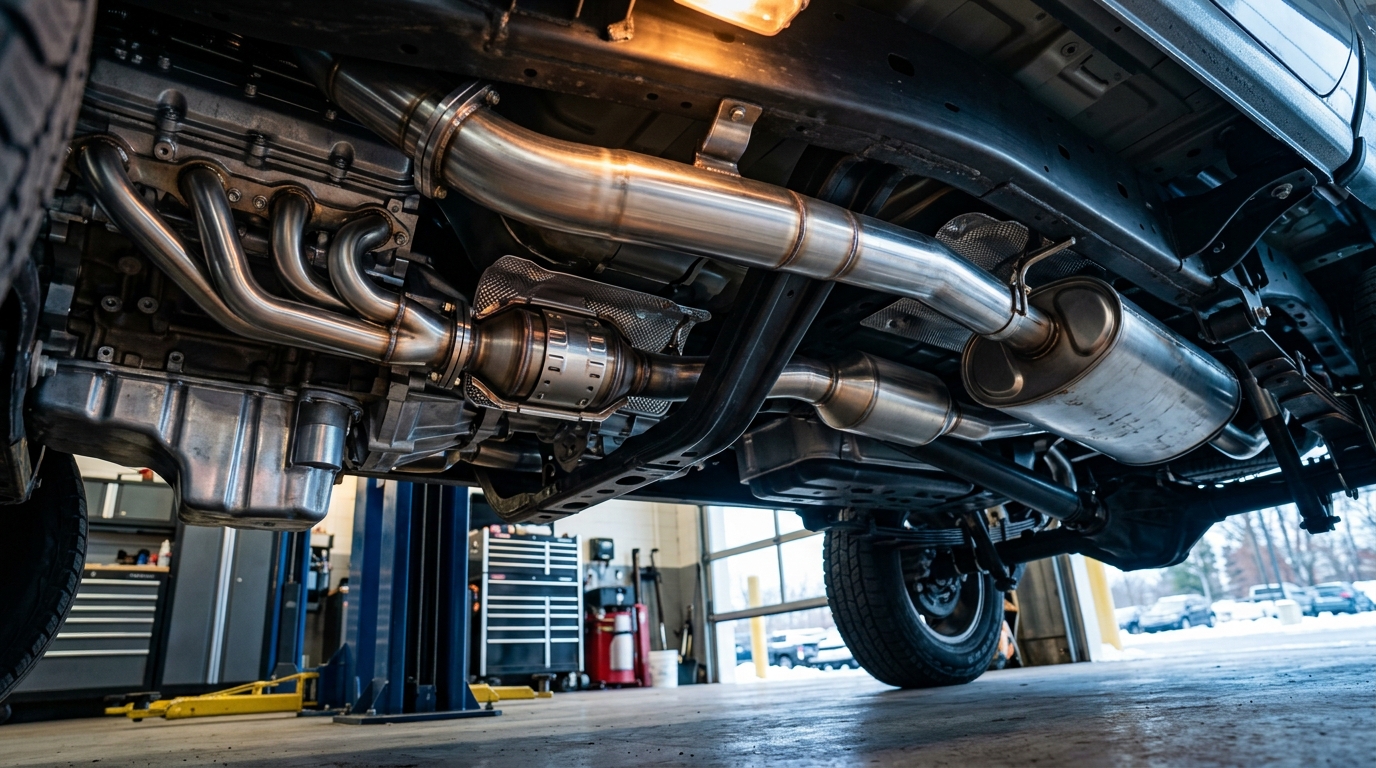
The exhaust system in a vehicle like the 2026 Chevrolet Silverado 1500 serves as a sophisticated filtration and acoustic management network. It begins at the exhaust manifold, where stainless steel or cast iron headers collect combustion gases from the 5.3L V8 engine cylinders. These gases are then directed through the catalytic converter, which utilizes precious metals to trigger chemical reactions that neutralize carbon monoxide and nitrogen oxides. From there, the system utilizes oxygen sensors to provide real-time data to the engine computer, ensuring the air-fuel mixture remains optimal for both performance and emissions compliance.
In rural areas like Rochester, where vehicles often traverse open farmland and unpaved paths, the exhaust system is exposed to unique environmental stressors. Fine dust and agricultural debris can accumulate around hangers and heat shields, potentially leading to premature wear if not inspected regularly. The system also includes a resonator and a muffler, which work in tandem to cancel out specific sound frequencies. This prevents the “drone” often associated with high-displacement engines, maintaining a quiet cabin environment even when the truck is under a heavy load.
Maintaining the integrity of these components is vital for preserving the 5 years / 60,000 miles powertrain warranty coverage on your vehicle. If you notice a change in the exhaust note or a drop in fuel efficiency, our team at our North Dartmouth service center can perform a full system evaluation. For immediate assistance regarding specific symptoms, you can reach our service advisors by giving us a quick call to discuss the best course of action.
Table of Contents
- Why Driving with a Chevy Exhaust Leak is a Serious Hazard
- Deciphering Catalytic Converter Rattles and Engine Performance Risks
- How Professional Diagnostics Pinpoint Exhaust and Emissions Failures
- The Risks of Temporary Patching Versus Professional Replacement
- Common Questions About Chevrolet Exhaust Service
- Protecting Your Chevrolet with Certified Exhaust Care
Why Driving with a Chevy Exhaust Leak is a Serious Hazard
An exhaust leak is more than a noise nuisance; it is a critical safety issue that can compromise the air quality inside the passenger cabin. When a leak occurs in the manifold or the front pipe sections of a 2026 Chevrolet Equinox, harmful gases like carbon monoxide can enter the HVAC system. Because carbon monoxide is colorless and odorless, drivers may not realize they are being exposed until they experience headaches or dizziness. This risk is particularly high in the salt belt conditions of Wareham, where coastal moisture and road salt can cause pinhole leaks in the exhaust piping long before the muffler shows visible damage.
Beyond the safety risks to occupants, a leak disrupts the backpressure required for the 1.5L I4 engine to operate at peak efficiency. Modern Chevrolet engines rely on precise pressure levels to manage the scavenging process, which clears exhaust from the combustion chamber. A leak allows gases to escape prematurely, causing the engine to work harder and run hotter. This extra heat can degrade engine oil faster and put unnecessary strain on the cooling system, leading to a cascade of mechanical issues if the leak is left unaddressed.
Leaking exhaust also interferes with the accuracy of the oxygen sensors. These sensors expect to measure the oxygen content of the exhaust stream at a specific velocity; when a leak introduces outside air into the pipe, the sensor sends incorrect data to the Powertrain Control Module. The computer may then overcompensate by injecting more fuel, which can reduce your fuel economy by a significant margin. This rich fuel mixture can eventually “poison” the catalytic converter, turning a relatively simple pipe repair into a much more expensive emissions system replacement.
Deciphering Catalytic Converter Rattles and Engine Performance Risks
A metallic rattling sound coming from under a 2026 Chevrolet Silverado 1500 often indicates that the internal ceramic honeycomb structure of the catalytic converter has fractured. This typically happens due to physical impact from road debris or “thermal shock” caused by unburned fuel entering the exhaust stream and igniting. When these ceramic pieces break loose, they bounce around inside the metal housing, creating a distinct noise at idle or during acceleration. Over time, these fragments can shift and block the exit of the converter, creating a massive restriction in the exhaust flow.
A blocked or restricted converter acts like a “plug” in the engine’s throat. Drivers might notice that their vehicle feels sluggish or struggles to maintain highway speeds, even when the throttle is pressed firmly. In severe cases, the backpressure can become so high that the engine stalls shortly after starting or fails to start entirely. Because the 5.3L V8 depends on a clear path for spent gases to exit, a restriction can cause internal engine temperatures to spike, potentially damaging valves or head gaskets if the vehicle continues to be driven in this state.
A failing converter also triggers a specific check engine light code, usually indicating that the catalyst efficiency is below the required threshold. This means the vehicle is no longer effectively scrubbing pollutants, which will result in a failed emissions inspection. While some may consider using fuel additives to “clean” a converter, these products cannot repair physical damage like melted or shattered ceramic internals. Replacing a damaged converter with a genuine Chevrolet part ensures that the backpressure remains within factory specifications and that the vehicle meets all environmental standards.
How Professional Diagnostics Pinpoint Exhaust and Emissions Failures
Modern Chevrolet diagnostics involve much more than just listening for a loud muffler. When a technician evaluates a 2026 Chevrolet Traverse, they begin by connecting a scan tool to the onboard diagnostic port to analyze “live data” from the oxygen sensors. By comparing the readings from the upstream sensor (before the converter) and the downstream sensor (after the converter), they can determine exactly how well the catalyst is performing. If the two sensors show nearly identical wave patterns, it confirms the converter is no longer chemically processing the exhaust gases.
To confirm a physical blockage, technicians often perform a backpressure test by removing an oxygen sensor and installing a specialized pressure gauge. A healthy system should show very low pressure at idle; a high reading confirms a restriction in the muffler or catalytic converter. We also use infrared thermometers to check the temperature at the inlet and outlet of the converter. In a functioning system, the outlet should be significantly hotter than the inlet because of the exothermic chemical reaction occurring inside. If the temperatures are the same or the inlet is hotter, the part is likely defective.
When I walk owners through the diagnostic process, they often ask how we know the converter is the root cause rather than a symptom. I tell them that we always check the “upstream” components first—such as spark plugs and fuel injectors—because an engine misfire is often what kills a converter by sending raw fuel into the exhaust. By identifying the primary failure, we ensure that a new exhaust component won’t suffer the same fate. This comprehensive approach is the only way to guarantee a long-lasting repair that restores the 20 city / 27 hwy efficiency ratings of the vehicle.
The Risks of Temporary Patching Versus Professional Replacement
In the salt-heavy environment of the Northeast, it is common to see surface rust on exhaust components, but deep corrosion requires a permanent fix. Patching a small hole in a heavily rusted pipe on a 2026 Chevrolet Equinox is often a losing battle. The metal surrounding a rust hole is typically thin and brittle; the heat and vibration of daily driving will quickly cause new cracks to form right at the edge of the patch. While a temporary wrap might quiet the noise for a few days, it does not restore the structural integrity of the system or stop the spread of oxidation.
Using non-OEM or “universal” exhaust parts can also lead to fitment issues and performance degradation. Genuine Chevrolet exhaust components are engineered specifically for each model’s wheelbase and engine configuration. A universal muffler might have a different internal baffle design that increases backpressure, which can negatively impact the power delivery of the 1.5L I4 engine. Furthermore, specific hangers and mounting points are designed to allow the exhaust to expand and contract as it heats up; incorrect hardware can put stress on the exhaust manifold, leading to much more expensive repairs.
Chevrolet provides a robust warranty for corrosion, including 3 years / 36,000 miles for standard corrosion and a 6 years / 100,000 miles rust-through protection. Choosing professional replacement with certified parts ensures that these warranty standards are maintained. For families who rely on the 98 cu ft of cargo space in a 2026 Chevrolet Traverse for long road trips, the peace of mind that comes from a factory-spec exhaust system is invaluable. A professional repair ensures that the vehicle remains quiet, safe, and efficient for the long haul.
Common Questions About Chevrolet Exhaust Service
Q: How long should a Chevrolet exhaust system typically last? Most modern exhaust components are designed to last roughly 100,000 miles or ten years, though this can vary based on driving habits. Frequent short trips where the engine doesn’t reach full operating temperature can allow moisture to collect in the muffler, leading to internal rot. Regular highway driving helps “burn off” this condensation, extending the life of the metal.
Q: Can a failing exhaust system cause my engine to overheat? Yes, a severely clogged catalytic converter can trap hot exhaust gases inside the engine’s combustion chambers and manifold. This heat buildup can eventually cause the engine temperature gauge to climb into the danger zone. If you notice a loss of power accompanied by rising engine temperatures, you should have the system inspected immediately to avoid major engine damage.
Q: What is the role of the resonator in my Chevy truck? The resonator is a secondary acoustic chamber that works alongside the muffler to “tune” the sound of the exhaust. It is specifically engineered to eliminate harsh frequencies and cabin drone. If the resonator is removed or replaced with an incorrect part, you may notice an annoying buzzing or humming sound inside the vehicle at certain highway speeds.
Q: Is it reasonable for me to attempt my own exhaust repairs? While an experienced DIY owner might be able to handle bolt-on components like a simple muffler swap or a tailpipe clamp, most modern exhaust work is complex. Emissions components and manifold bolts often require specialized heat induction tools or welding to remove without damaging the engine block. For these reasons, we recommend professional service to ensure the system is leak-free and properly aligned.
To help manage the cost of these essential maintenance items, we encourage you to browse our current service and parts specials before your visit. When you are ready to have your system evaluated by a certified technician, you can easily schedule a service appointment through our online portal to find a time that fits your calendar.
Protecting Your Chevrolet with Certified Exhaust Care
The maritime environment in Marion, with its salt marshes and humid coastal air, makes underbody maintenance a top priority for local Chevrolet owners. The constant exposure to moisture can accelerate the oxidation of exhaust hangers and flange bolts, which are the “skeleton” of your exhaust system. When these supports fail, the heavy pipes can sag, putting immense leverage on the exhaust manifold and potentially snapping the studs that hold it to the engine. Routine inspections allow our technicians to catch these weakened supports before they cause a complete system failure.
Whether you are commuting in a 2026 Chevrolet Equinox or utilizing the towing capabilities of a 2026 Chevrolet Silverado 1500, a healthy exhaust system is the silent partner in your vehicle’s reliability. By choosing certified service, you ensure that every gasket, sensor, and pipe meets the exact specifications set by the engineers who built your vehicle. This commitment to quality preserves your fuel economy, protects your family from harmful fumes, and maintains the long-term resale value of your Chevrolet.
If you suspect your vehicle is louder than it used to be or if you have noticed a persistent “rotten egg” smell, do not wait for a total breakdown. Our team is equipped with the latest diagnostic technology to find and fix leaks or restrictions quickly. You can find our North Dartmouth location easily for a walk-around inspection. For more information about our exhaust repair capabilities or to speak with a technician about your vehicle’s symptoms, feel free to give us a quick call today.
© 2026 Colonial South Chevrolet. All rights reserved.
Chevrolet Fluid Top‑Ups and Flushes in Dartmouth
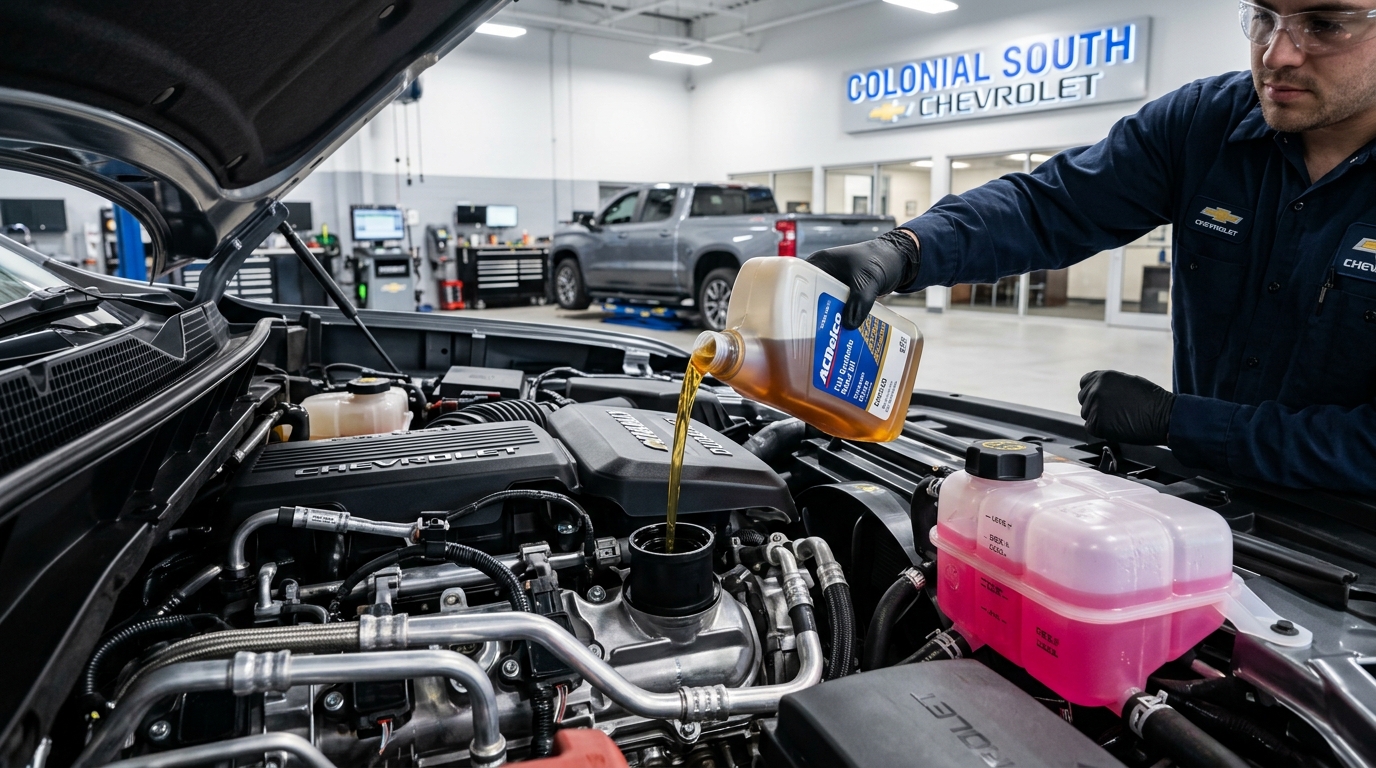
Maintaining Peak Performance with 2026 Chevrolet Fluid Services
As a Chevrolet dealership Service Director, I often tell my customers that proactive fluid management is the single most effective way to protect their investment. For the 2026 lineup, Chevrolet has engineered high-precision systems that rely on specific dexos synthetic oils and advanced coolant formulations to operate at maximum efficiency. When you bring your vehicle to our team in North Dartmouth, we do more than just a quick check; we perform a comprehensive evaluation of every vital reservoir to ensure your car or truck stays as reliable as the day you drove it home.
From my experience, drivers who stay ahead of their maintenance schedule avoid the most expensive repairs down the road. Whether you are navigating the coastal humidity in Wareham or taking long highway trips, your fluids are constantly working to prevent friction and heat buildup. We make it easy to stay on track by offering a variety of service and parts specials designed to keep your maintenance costs manageable. If you are noticing a change in how your vehicle shifts or stops, it is a great time to schedule service with our factory-trained technicians.
If you are nearby and want to stop in for a quick consultation, you can easily find our service center location right on State Road. We pride ourselves on being accessible to our community, and if you have a specific question about your 2026 model, feel free to give us a call at (508) 996-6266 for immediate assistance. Our goal is to ensure that every Chevrolet leaving our bays is prepared for the unique driving conditions we face here in Massachusetts.
Table of Contents
- Understanding Recommended Fluid Change and Top-Up Intervals
- Preventative Maintenance and Long-Term Chevrolet Reliability
- Dashboard Warning Lights That Signal Urgent Fluid Issues
- The Value of Certified Chevrolet Fluid Flushes and Genuine Parts
Understanding Recommended Fluid Change and Top-Up Intervals
One of the first things I show owners is how to read the Engine Oil Life System, which is standard on Chevrolet vehicles like the 2026 Equinox and 2026 Silverado. This system does not just count miles; it monitors engine temperature, revolutions, and driving habits to calculate exactly when your oil and oil filter need replacing. Typically, this occurs around every 7,500 miles, though the system can provide a warning within 600 miles of the required service. Under very light driving conditions, you might even extend this to 12,000 miles or 12 months, whichever comes first.
The intervals for other fluids are just as critical but often operate on longer timelines. For example, the brake fluid flush is a major milestone that usually comes up every 45,000 miles or every 3 years. This is vital because brake fluid is hygroscopic, meaning it absorbs moisture over time, which can lower its boiling point and lead to a “spongy” pedal feel. Similarly, transmission fluid and transfer case fluid for four-wheel-drive models are typically inspected or replaced at the 45,000-mile mark, especially if you use your truck for heavy towing or frequent stop-and-go driving.
I frequently see 2026 Chevrolet owners overlook their engine coolant, which is a mistake given our local temperature swings. Modern DEX-COOL is designed to last up to 150,000 miles or 5 years, but we always check the pH levels and protection strength during your multi-point inspections. Keeping these fluids at the correct levels and concentrations prevents the internal corrosion that can lead to radiator leaks or heater core failures during a cold New England winter.
Preventative Maintenance and Long-Term Chevrolet Reliability
When I am helping a customer plan for the long-term health of their vehicle, I emphasize that “top-ups” are just as important as full “flushes.” A low power steering fluid level or a slightly depleted coolant reservoir can be early indicators of a small leak that hasn’t hit the driveway yet. By catching these during a routine 7,500-mile tire rotation and inspection, we can often save you from a breakdown. This is particularly important for residents in Rochester who might deal with more rural road debris that can occasionally nick a fluid line or cooler.
Long-term reliability is built on consistency. For the 2026 Silverado 1500, for instance, the rear axle fluid replacement at 45,000 miles is a key service that many independent shops might skip. We also pay close attention to the evaporative control system and engine air cleaner filter during these intervals. A clean air filter ensures the engine isn’t working harder than it has to, which in turn keeps the engine oil cleaner for longer by reducing the amount of soot and contaminants entering the combustion chamber.
I always remind my team that a 2026 Chevrolet is a complex machine where the fluids serve as more than just lubricants; they are hydraulic actors and thermal regulators. Using genuine GM parts and the correct DOT 4 brake fluid ensures that the safety systems, like StabiliTrak and Automatic Emergency Braking, function exactly as the engineers intended. This level of precision is what keeps a Chevrolet running strong well past the 100,000-mile mark.
Dashboard Warning Lights That Signal Urgent Fluid Issues
What happens when a light actually pops up on your dash? Modern Chevrolet vehicles are incredibly smart and will often tell you there is a problem before you feel it. The low oil pressure light is the most urgent; if this stays on, it means the engine isn’t getting the lubrication it needs, and you should pull over immediately. Similarly, an engine overheat warning or a low coolant message indicates that your cooling system has lost its ability to regulate temperature, which can lead to warped cylinder heads or a blown head gasket in minutes.
Many of our customers are surprised to learn that a brake system warning can be triggered by low fluid levels. As your brake pads wear down, the calipers extend further, which naturally draws more fluid from the reservoir. If the fluid level drops below the minimum line, the light will trigger. We also watch for transmission overheat messages, which are common if a vehicle is being pushed too hard while towing without the proper fluid cooling capacity.
If you see a Check Engine Light, it could be related to the evaporative control system or even a fluid-related sensor. I tell everyone that these lights are not suggestions; they are your car’s way of asking for help. Ignoring a fluid warning can turn a simple $150 flush into a multi-thousand dollar component replacement. If a light comes on while you are driving, the safest bet is to have it scanned by a professional who understands the specific codes used by Chevrolet’s onboard diagnostics.
The Value of Certified Chevrolet Fluid Flushes and Genuine Parts
Working with the latest 2026 technology requires specialized tools that you simply won’t find at a generic lube shop. When we perform a transmission flush or a coolant exchange, we use equipment designed to remove old, degraded fluid and contaminants without damaging sensitive internal seals. We exclusively use ACDelco and genuine Chevrolet fluids, which are the only products guaranteed to meet the strict dexos specifications required for your powertrain warranty to remain valid.
I have seen plenty of cases where a “universal” fluid used elsewhere caused shifting issues or cooling inefficiencies. A 2026 Chevrolet is tuned for a specific viscosity and chemical makeup. For example, using the wrong brake fluid can actually degrade the rubber components in the braking system over time. When you visit us, you are getting the expertise of technicians who spend all day, every day, working on these specific systems. They know exactly where to look for the common wear patterns we see in the local area.
If you have any concerns about your vehicle’s fluids or if you are approaching a major mileage milestone, I encourage you to reach out. You can get directions to our Dartmouth service center for a walk-in inspection, or if you prefer to chat first, give our service advisors a call at (508) 996-6266. We are here to make sure your Chevrolet stays on the road and performs at its peak for years to come. In the event of a fluid-related breakdown, remember that Chevrolet Roadside Assistance: 800-243-8872 is available to provide manufacturer-backed support and towing to an authorized center like ours.
© 2026 Colonial South Chevrolet. All rights reserved.
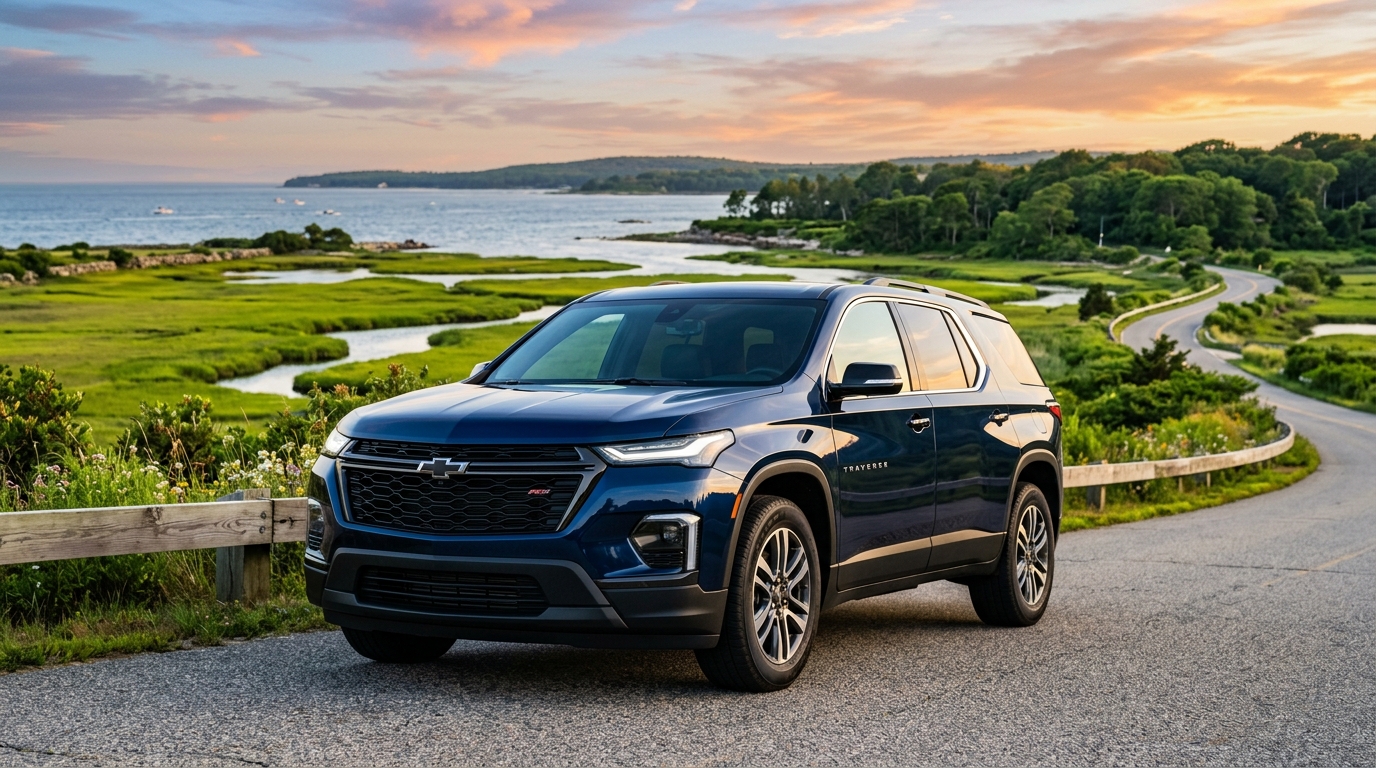
The 2026 Chevrolet Traverse arrives as a premier choice for families who require the interior volume of a full-size SUV without the cumbersome footprint of a truck-based platform. This midsize three-row crossover excels by offering a best-in-class max cargo volume of about 98 cubic feet, providing more utility than many larger competitors. Whether you are navigating the agricultural landscape of Rochester or heading toward the coastal wetlands near Buzzards Bay, the Traverse provides a composed ride and a standard 2.5L I4 turbocharged engine that balances power with efficiency.
Families visiting Colonial South Chevrolet often prioritize interior flexibility, and the Traverse delivers with available seating for up to eight passengers. The standard configuration includes second-row captain’s chairs, but the LT trim offers an optional second-row bench to maximize passenger capacity. For those who frequently have their hands full with gear or groceries, the available AutoSense Power Liftgate uses proximity sensors to open automatically, removing the need for a “kick sensor” or fumbling with a key fob.
If you are ready to see how this SUV fits your lifestyle, you can find our showroom on State Road where we have the latest models ready for a walk-around. We focus on making the purchase process transparent and straightforward, ensuring you find a vehicle that matches your specific towing and seating requirements. For immediate answers regarding current availability or to speak with a specialist, give us a quick call today.
Table of Contents
- Comparing the 2026 Chevy Traverse Trims and Configurations
- Engine Performance and Turbocharged Capability
- Best-in-Class Cargo Space and Interior Technology
- Towing Capacity and Advanced Driver Assistance Systems
- Common Questions for Prospective Traverse Buyers
- Find Your Perfect Family SUV at Colonial South Chevrolet
Comparing the 2026 Chevy Traverse Trims and Configurations
Selecting the right trim level is a critical step in the buying journey, as each version of the 2026 Chevrolet Traverse is tailored toward a different driving priority. The lineup begins with the LT at an MSRP of $46,589, which serves as a value-heavy foundation featuring a 17.7-inch diagonal color touchscreen and Chevy Safety Assist. While the LT is the only trim that can be configured for eight passengers, it remains a sophisticated entry point for those who want modern tech without moving into the higher price brackets.
Pricing
| Feature | LT | Z71 | High Country | RS |
|---|---|---|---|---|
| Starting MSRP | $46,589 | $55,985 | $59,690 | $59,930 |
Lowest starting MSRP: LT at $46,589
Engine & Performance
Powertrain specifications across trim levels
| Feature | LT | Z71 | High Country | RS |
|---|---|---|---|---|
| Drivetrain | FWD | 4WD | 4WD | 4WD |
Standard across all trims:
| Feature | Included |
|---|---|
| Engine | 2.5L I4 |
| Transmission | Automatic |
For drivers who need to tackle more rugged terrain or unpaved paths, the Z71 trim, priced at $55,985, introduces a dedicated Advanced Twin-Clutch AWD System. This model is distinguished by its Special Ride and Handling suspension, skid plates, and all-terrain tires. If luxury is the primary goal, the High Country ($59,690) adds premium touches like leather-appointed seating and Super Cruise hands-free driving technology. The RS trim ($59,930) mirrors much of the luxury of the High Country but pivots toward a “street-style” aesthetic with high-gloss black wheels and dark exterior accents.
Buyers looking for the value found in previous model years or different price points can browse our current pre-owned inventory to see a variety of quality alternatives. Every trim in the 2026 lineup comes backed by a 3-year / 36,000-mile basic warranty and a 5-year / 60,000-mile powertrain warranty, providing long-term peace of mind regardless of which configuration you drive home.
Engine Performance and Turbocharged Capability
Under the hood of every 2026 Chevrolet Traverse sits a high-output 2.5L I4 turbocharged engine. This powerplant produces 328 horsepower and 326 lb-ft of torque, providing more standard torque than the V6 engines found in many older three-row SUVs. This shift to turbocharging allows for better low-end responsiveness, which is particularly useful when the vehicle is fully loaded with passengers. The engine is mated to a smooth-shifting 8-speed automatic transmission that helps the front-wheel-drive models achieve an EPA-estimated 20 city / 27 hwy MPG.
The performance characteristics vary slightly depending on the drivetrain. While the LT comes standard with front-wheel drive, all other trims—the Z71, High Country, and RS—feature standard 4WD or AWD systems. The Z71 specifically utilizes frequency-based dampers to smooth out rougher roads, making it a favorite for those who live in more rural areas where pavement quality can vary. This mechanical setup ensures that the Traverse feels stable and planted, whether you are cruising the highway or navigating a dirt-road driveway.
When you are ready to upgrade to this modern powertrain, our finance team can help you transition from your current vehicle. You can use our online tool to value your trade-in and see how much equity you can apply toward a 2026 model. This turbocharged engine represents a significant step forward in efficiency for the Traverse nameplate, delivering the muscle needed for family hauling without the fuel thirst of a traditional large-displacement engine.
Best-in-Class Cargo Space and Interior Technology
The interior of the 2026 Chevrolet Traverse is dominated by a class-leading 17.7-inch diagonal color touchscreen, which is standard across all trim levels. This massive interface includes Google built-in compatibility, allowing for seamless navigation and voice commands. Complementing the center screen is an 11-inch diagonal Driver Information Center, which provides a fully digital gauge cluster that can be customized to show the most relevant data, from safety alerts to turn-by-turn directions.
Dimensions & Capacity
| Feature | Standard across all trims |
|---|---|
| Seating Capacity | 7 |
| Length | 205.9 |
| Width | 79.6 |
| Height | 72.8 |
Cargo management is where the Traverse truly stands apart from its peers. With the second and third rows folded flat, you have access to about 98 cubic feet of cargo space. Even with the third row in use, there is about 23 cubic feet of space available for groceries or sports gear. For those who choose the RS or High Country trims, the interior experience is further enhanced by One-Touch Fold second-row seats and power-folding third-row seating, making it effortless to switch from carrying people to hauling large items.
To keep your new SUV’s interior in top condition, we offer a variety of protection options, including a Cargo Liner available directly from the dealer. We also encourage you to check our service and parts specials for accessories like all-weather floor mats or roof rack cross rails that can further expand your vehicle’s utility. The combination of high-definition screens and massive physical space makes the Traverse one of the most technologically advanced and practical environments in the midsize SUV segment.
Towing Capacity and Advanced Driver Assistance Systems
When properly equipped with the Advanced Trailering Package, the 2026 Chevrolet Traverse offers a maximum towing capacity of 5,000 lb. This rating is sufficient for hauling a small boat, a pair of jet skis, or a compact camper, making it a versatile tool for weekend getaways. The package includes a heavy-duty cooling system and Hitch Guidance with Hitch View, which uses the rear camera to help you line up the trailer ball with precision.
Safety & Driver Assistance
Safety ratings and driver assistance systems
| Feature | LT | Z71 | High Country | RS |
|---|---|---|---|---|
| IIHS Rating | Acceptable | Acceptable | Acceptable | Acceptable |
Safety is integrated into every mile thanks to the Chevy Safety Assist suite. This standard collection of features includes Automatic Emergency Braking, Front Pedestrian and Bicycle Braking, and Lane Keep Assist with Lane Departure Warning. For those who spend significant time on the highway, the available Super Cruise hands-free driver assistance technology allows for a more relaxed experience on more than 400,000 miles of compatible roads across North America.
Additional safety tech like Blind Zone Steering Assist and Rear Cross Traffic Braking are standard, providing a 360-degree layer of protection. These systems are especially helpful in a vehicle of this size, where visibility can sometimes be a challenge in crowded parking lots. The Traverse uses sensors and cameras to monitor traffic flow and potential obstacles, ensuring that your family remains secure throughout every journey.
Common Questions for Prospective Traverse Buyers
Q: Does the 2026 Chevrolet Traverse offer hands-free driving?
Yes, the Super Cruise hands-free driving system is standard on the RS and High Country trims. It is also available as an option on the LT and Z71 trims when equipped with the Driver Confidence Package. This technology allows for hands-free operation on compatible highways, provided the driver remains attentive to the road.
Q: How many USB ports are available for passengers?
The 2026 Traverse is equipped with six standard USB ports distributed across all three rows. This ensures that everyone from the driver to the passengers in the very back can keep their devices charged during long trips. Wireless charging is also standard on the RS and High Country trims to further reduce cord clutter in the front cabin.
Q: Can the Traverse seat eight people?
The LT trim is the only model in the 2026 lineup that can be configured with eight-passenger seating. This requires selecting the second-row bench seat rather than the standard captain’s chairs. All other trims—the Z71, RS, and High Country—come exclusively with a seven-passenger layout featuring second-row captain’s chairs for easier access to the third row.
Q: What are the main differences in the Z71 trim?
The Z71 is built specifically for off-road capability. It features more ground clearance than the LT, a unique front fascia designed for better approach angles, and red tow hooks. Mechanically, it includes a twin-clutch all-wheel-drive system and a specialized suspension with frequency-based dampers to handle unpaved roads more effectively.
Q: What kind of fuel does the turbocharged engine require?
Despite being a turbocharged engine, the 2.5L I4 in the Traverse is designed to run on regular 87-octane unleaded gasoline. There is no requirement for premium fuel, which helps keep ownership costs lower over time compared to some luxury rivals that mandate higher-octane gas. You can view the specific fuel economy ratings for each model in our new Chevrolet inventory online.
Find Your Perfect Family SUV at Colonial South Chevrolet
At Colonial South Chevrolet, we are dedicated to helping you find a vehicle that simplifies your daily routine and enhances your weekend adventures. The 2026 Chevrolet Traverse stands out as a leader in its segment, offering a rare combination of best-in-class cargo room and cutting-edge safety technology. Whether you are interested in the rugged capability of the Z71 or the refined luxury of the High Country, our team is here to provide a pressure-free environment where you can explore every feature in detail.
We invite you to visit us in person to experience the spacious third row and the impressive 17.7-inch touchscreen for yourself. Our finance experts are ready to walk you through current incentives and help you secure a payment plan that fits your budget. To get started, you can find our dealership address online or reach out to our staff by calling (508) 996-6266. We look forward to helping you drive home in a new Traverse that your whole family will love.
Keep Your Vehicle Running Strong
Keep your Chevy Traverse performing at its best with our service team:
© 2026 Colonial South Chevrolet. All rights reserved.
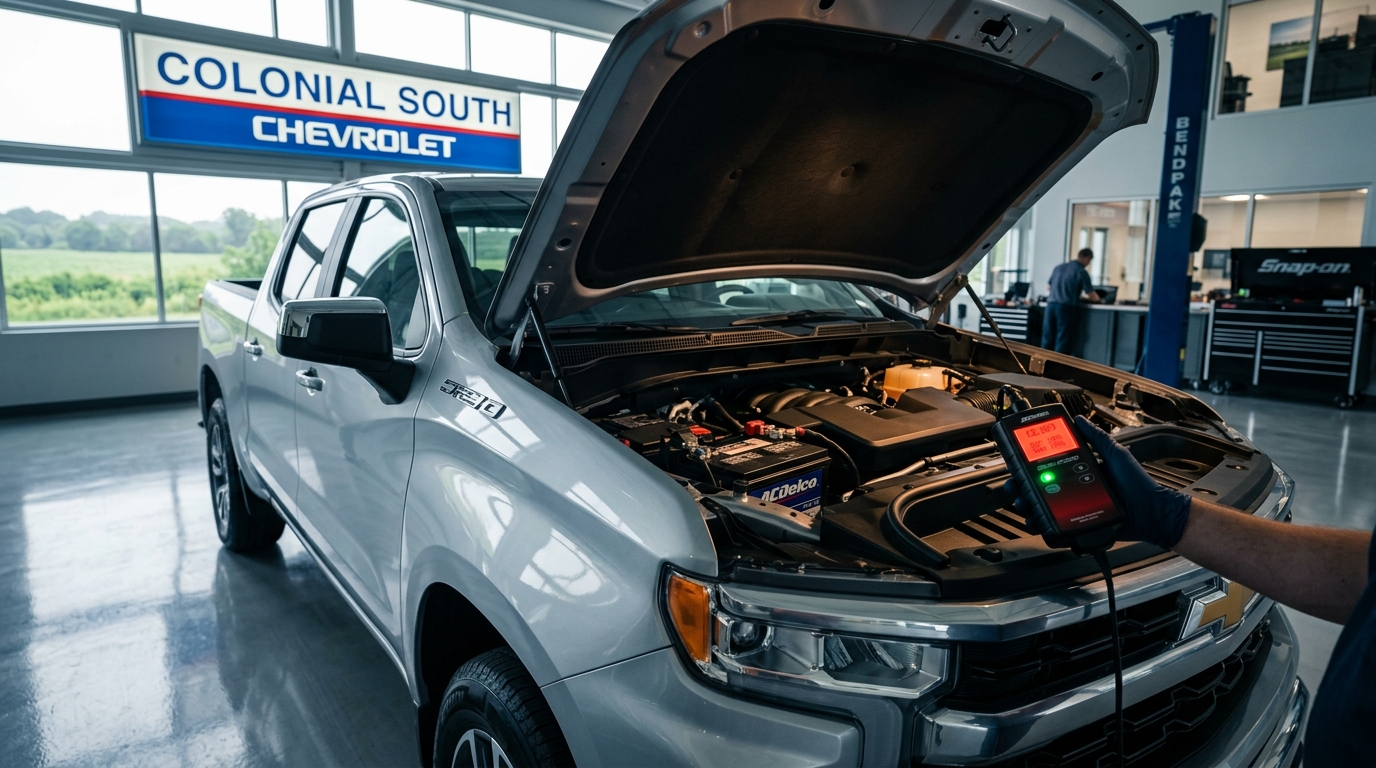
Maintaining the 12-Volt Foundation of Your 2026 Chevrolet
The 12-volt battery remains the heartbeat of every 2026 Chevrolet, serving as the essential power source for everything from the starter motor in a 2026 Chevrolet Silverado 1500 to the complex sensor arrays in electric models. While high-voltage propulsion batteries often get the most attention, the low-voltage 12-volt system is responsible for waking up the vehicle’s computers, engaging safety systems, and powering interior accessories. Without a healthy 12-volt charge, even a fully charged electric vehicle cannot engage its high-voltage contactors to drive.
Our technicians often see how the agricultural demands in Rochester can put unique stress on these systems. When a truck is used for frequent short trips across farmland or left idling with high-draw accessories like strobe lights or winches, the 12-volt battery may not have sufficient time to reach a full state of charge. To ensure your vehicle remains reliable, we recommend a professional inspection of the battery terminals for tightness and the absence of acid-based corrosion. If you have questions about your specific model’s requirements, you can reach our service team at (508) 996-6266 for expert guidance.
Proper care involves more than just checking for a charge; it requires understanding how your specific Chevrolet manages its power. For instance, the 2026 Chevy Silverado 1500 features a basic 3 years / 36,000 miles warranty that covers the original battery against manufacturing defects. Beyond the warranty period, maintaining the battery’s health is a proactive way to avoid being stranded. If you are noticing a slow engine crank or flickering interior lights, visiting our North Dartmouth service center for a load test can provide a definitive look at the battery’s remaining capacity.
Table of Contents
- Understanding Battery Longevity and Environmental Stressors in Massachusetts
- Advanced Health Monitoring and Built-in Diagnostic Systems
- The Critical Role of the 12V Battery in Propulsion and Sensor Accuracy
- Technical Best Practices for Safe Battery Replacement and Cable Management
- Common Technical Questions Regarding Chevrolet Battery Performance
- Professional Battery Testing and Maintenance at Colonial South Chevrolet
Understanding Battery Longevity and Environmental Stressors in Massachusetts
How long should you expect your battery to last? While the industry average for a lead-acid or AGM battery is roughly six years, the reality in New England is often closer to three or four years. This discrepancy is largely due to the “cold-winter” climate zone we inhabit. Prolonged sub-freezing temperatures significantly slow down the chemical reactions inside the battery, reducing its ability to provide the necessary amperage to start a V8 engine like the one found in the 2026 Chevrolet Tahoe.
In coastal areas like Wareham, the combination of humidity and road salt creates a highly corrosive environment for electrical components. Salt air can accelerate the buildup of “white fuzz” or lead-sulfate crystals on battery terminals, which increases electrical resistance and forces the charging system to work harder. To combat these local challenges, we suggest:
- Keeping battery terminals clean and protected with a thin layer of anti-corrosion grease.
- Utilizing a smart maintainer if the vehicle is stored for the winter.
- Checking the battery’s “State of Health” during every oil change or multi-point inspection.
For those looking to stay ahead of seasonal maintenance, checking our current service and parts specials can provide cost-effective opportunities for battery testing and replacement. Whether you are driving a gas-powered 2026 Chevrolet Equinox or a Silverado EV, the 12-volt battery is susceptible to the same environmental degradation. Extreme heat in the summer is actually more damaging to the internal plates than the cold, but it is the winter’s high-torque starting demands that usually reveal the damage done during the warmer months.
Advanced Health Monitoring and Built-in Diagnostic Systems
Modern Chevrolet engineering has moved far beyond simple “idiot lights” on the dashboard. The 2026 lineup features sophisticated Battery Management Systems (BMS) that constantly monitor the “State of Charge” (SOC) and “State of Health” (SOH). These systems track voltage, current flow, and internal temperature to calculate how much life is left in the cells. In many cases, the vehicle can detect a failing cell weeks before it actually fails to start the engine, providing a warning message on the Driver Information Center.
For electric vehicles and hybrids, this monitoring is even more critical. GM’s “Battery Maintenance Mode” or “Enhanced Battery Support Mode” allows the high-voltage battery to automatically top off the 12-volt battery at specific intervals, even when the vehicle is parked. This prevents the low-voltage system from draining due to “parasitic loads”—the small amounts of electricity used by the security system, OnStar, and remote-start receivers. If the system detects that the 12-volt battery cannot hold a charge effectively, it may disable certain non-essential features to preserve enough energy for a safe startup.
When we perform a diagnostic check, our technicians use specialized digital testers that communicate with these on-board modules. These tools can identify if a battery is simply discharged or if it has an internal “short” that requires a full replacement. This level of precision ensures that we aren’t just replacing parts, but actually resolving the root cause of an electrical issue, such as a faulty alternator or a software glitch that is keeping the vehicle’s computers “awake” longer than they should be.
The Critical Role of the 12V Battery in Propulsion and Sensor Accuracy
Does a failing 12-volt battery trigger “Reduced Propulsion Power” messages? The answer is a definitive yes. Because the 12-volt system powers the sensors, control modules, and communication networks that manage the high-voltage drivetrain, any voltage instability can cause these sensors to report “ghost” errors. If the propulsion control module receives a signal that is outside of its expected voltage range, it may put the vehicle into a “limp mode” or display a propulsion error to protect the high-voltage components.
This is particularly relevant for heavy-duty applications. A 2026 Chevrolet Silverado 1500 equipped with the Special Service Package or advanced trailering tech relies on the 12-volt system to power up to 14 different camera views and the In-Vehicle Trailering App. If the battery voltage drops, these high-tech features may glitch or fail to initialize. Maintaining a stable 12-volt foundation ensures that safety features like Lane Keep Assist and Forward Collision Alert function with the precision intended by Chevrolet engineers.
Furthermore, the 12-volt battery acts as a “buffer” for the vehicle’s electrical system, smoothing out voltage spikes from the alternator or DC-to-DC converter. A weak battery loses this buffering capability, which can lead to premature wear on sensitive electronic control units (ECUs). By replacing a weak 12-volt battery before it fails completely, you are essentially protecting the much more expensive computers that run your vehicle’s engine, transmission, and safety suites.
Technical Best Practices for Safe Battery Replacement and Cable Management
When it comes time for a replacement, the order of operations is vital for both safety and the longevity of the vehicle’s electronics. Chevrolet service manuals specify that you should always disconnect the negative (black) cable first. This is because the entire metal frame of the vehicle is connected to the negative terminal. If you were to loosen the positive terminal first and your wrench accidentally touched a metal part of the engine bay, it would create a massive electrical short, potentially causing sparks, burns, or damage to the vehicle’s wiring harness.
For 2026 models, the replacement process often involves more than just a physical swap. Many new Chevrolet vehicles require a “Battery Sensor Reset” or “BMS Relearn” procedure. This tells the vehicle’s computer that a fresh battery has been installed so it can adjust the charging rate accordingly. An old battery requires a higher charging voltage; if the computer doesn’t know the battery is new, it may overcharge it, significantly shortening the life of the new replacement.
Our service team also emphasizes the importance of using the correct battery type. While older vehicles used standard flooded lead-acid batteries, many 2026 models, especially those with Auto Start-Stop technology or electric drivetrains, require Absorbent Glass Mat (AGM) batteries. These are designed to handle more frequent deep cycles and offer higher Cold Cranking Amps—often rated at 800 CCA for trucks—to ensure reliable performance in harsh New England winters. Using a standard battery in a vehicle designed for an AGM can lead to rapid battery failure and charging system errors.
Common Technical Questions Regarding Chevrolet Battery Performance
Q: Does the 2026 Chevrolet have a built-in battery tester? The vehicle features a sophisticated on-board diagnostic system that monitors the battery’s State of Health (SOH). While it doesn’t show a real-time “percentage” like a smartphone, it will trigger a “Service Battery” or “Battery Low” warning on the dashboard if the capacity falls below a threshold that ensures a reliable start.
Q: Can I use a regular 12-volt maintainer on a Chevrolet EV? Yes, a standard smart maintainer compatible with AGM batteries can generally be used. However, it is important to use the designated jump-start or charging points under the hood rather than connecting directly to the battery terminals if the battery is tucked away, as this ensures the current flows through the vehicle’s monitoring sensors.
Q: Why is my battery dying faster even though I don’t drive much? Modern vehicles have “parasitic draws” from security systems and remote connectivity. In a rural setting like Rochester, if a vehicle sits for weeks without being driven, these small draws can deplete the 12-volt battery. We recommend driving the vehicle for at least 20 minutes once a week to allow the charging system to top off the battery.
Q: Is the 12-volt battery covered under the Powertrain Warranty? No, the 12-volt battery is typically considered a wear-and-tear item covered under the basic 3 years / 36,000 miles bumper-to-bumper warranty. The 5 years / 60,000 miles powertrain warranty covers the engine, transmission, and drive systems, but not the accessory battery.
Q: What happens if I disconnect the battery and lose software sync? In some cases, losing 12-volt power for an extended period can cause “volatile memory” to clear, which might require resetting your clock, radio presets, or even window indexing. For EVs, it can sometimes cause a temporary delay in the high-voltage system’s readiness as the modules re-sync.
Professional Battery Testing and Maintenance at Colonial South Chevrolet
Whether you are preparing for a long winter or noticing strange electrical behavior in your vehicle, our certified technicians are here to help. We use factory-grade diagnostic equipment to provide an accurate picture of your battery’s health, ensuring you aren’t caught off guard by a sudden failure. If a replacement is necessary, we stock genuine OEM batteries designed specifically for your model’s electrical load and mounting requirements. To ensure your vehicle is ready for the road, you can schedule a service appointment online or give us a quick call. For those nearby, our North Dartmouth location is conveniently situated to serve all your maintenance needs.
© 2026 Colonial South Chevrolet. All rights reserved.
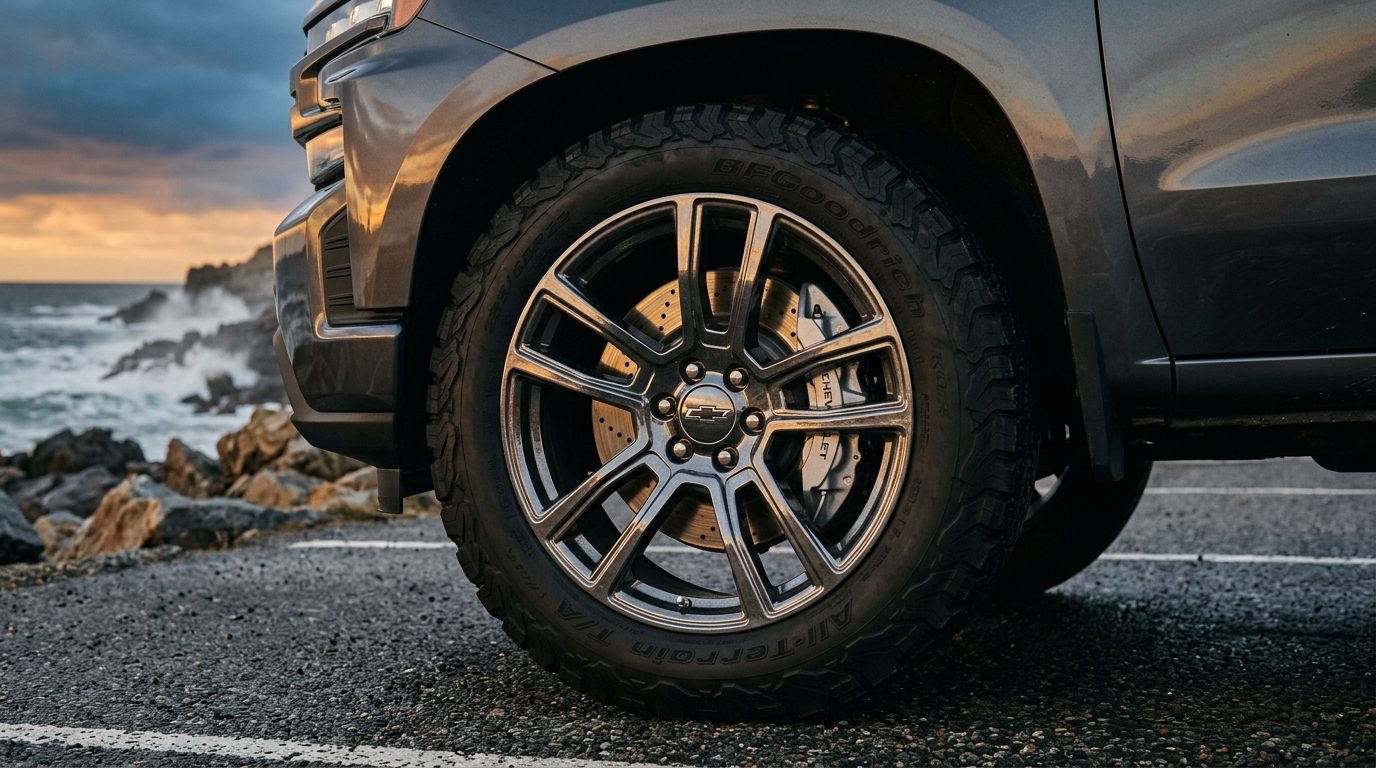
Comprehensive Care for 2026 Chevrolet Braking Systems
Maintaining the stopping power of a 2026 Chevrolet requires a proactive approach to hydraulic health and friction material thickness. Our team focuses on the specific needs of the latest braking architectures, which often integrate complex electronic modules with traditional mechanical components. For drivers navigating the coastal environment around Marion, the salt air and moisture can accelerate the oxidation of brake lines and hardware, making regular visual inspections a critical part of every service visit. We recommend a comprehensive brake system evaluation at least every 7,500 miles, typically coinciding with your oil change and tire rotation.
During these inspections, our certified technicians monitor the condition of the brake fluid. Over time, this fluid naturally absorbs moisture, which can lead to internal corrosion within the master cylinder and calipers. Chevrolet specifies that brake fluid should generally be replaced every 45,000 miles or every 3 years to ensure the boiling point remains high enough for heavy-duty use. If you notice a soft or spongy feeling when pressing the pedal, it often indicates that air or moisture has compromised the hydraulic seal. You can schedule a brake inspection online to have our experts verify the integrity of your lines and fluid levels.
For those who rely on their vehicles for work or recreation, the wear patterns on pads and rotors can vary significantly based on load. A 2026 Chevrolet Silverado 1500 used for hauling heavy equipment will naturally require more frequent pad replacements than a commuter vehicle. If you hear high-pitched squealing or feel a vibration in the steering wheel while slowing down, these are urgent indicators that the friction material has reached its wear limit. To find our service center for a professional diagnostic, you can get directions to our North Dartmouth location. If you have immediate questions about a warning light on your dashboard, feel free to give us a quick call at (508) 996-6266.
Table of Contents
- Essential Maintenance Requirements for the 2026 Silverado 1500
- Advanced Technology in the 2026 Chevrolet Braking Architecture
- Safety and Technical Limitations for DIY Brake Inspections
- Comparing Chevrolet Duralife Rotors to Ford and Ram Systems
- Quick Answers Before Your Visit
Essential Maintenance Requirements for the 2026 Silverado 1500
The 2026 Chevrolet Silverado 1500 utilizes a heavy-duty braking setup designed to manage the torque of the standard TurboMax engine and the available 5.3L V8. Because this truck is often used for towing up to 13,300 lbs when properly equipped, the heat generated during deceleration is substantial. This thermal stress can lead to rotor warping if the brakes are applied aggressively over long descents. We emphasize checking the thickness of the brake pads during every multi-point inspection, as the basic 3 years / 36,000 miles warranty covers manufacturing defects but does not typically include the replacement of friction wear items like pads.
Owners in Rochester often encounter muddy or unpaved back roads where grit and debris can become lodged between the pad and the rotor. This environmental factor can cause premature scoring on the rotor surface. If the 2026 Chevrolet Silverado 1500 is frequently driven in these conditions, we suggest a more rigorous cleaning of the brake assemblies to prevent the “grinding” noise that occurs when debris interferes with the caliper’s movement. It is also vital to monitor the roadside 5 years / 60,000 miles coverage terms, which provide peace of mind should a mechanical failure occur, though regular maintenance is the best defense against being stranded.
Another specific maintenance point for the latest Silverado models is the inspection of the brake hoses. These flexible lines are subject to high pressure and must remain free of cracks or bulges. For trucks equipped with the 4WD system, the front brake lines are also exposed to more suspension travel and potential trail obstacles. Ensuring these lines are routed correctly and show no signs of leakage is a standard part of our service protocol. By sticking to a strict maintenance schedule, you ensure that the high-torque capacity of the TurboMax engine is always balanced by reliable stopping performance.
Advanced Technology in the 2026 Chevrolet Braking Architecture
Chevrolet has transitioned many of its 2026 models to an electro-hydraulic braking system, which replaces the traditional vacuum booster with an electric motor. This technology allows for more precise brake pressure modulation, which is especially noticeable when the Chevy Safety Assist suite engages features like Automatic Emergency Braking. This system can apply the brakes faster than a human driver in a crisis, but it relies on a perfectly functioning electronic control module. Because these systems are so integrated with the vehicle’s computer, a low battery or a software glitch can occasionally trigger a “Service Brake Assist” message.
The 2026 Chevrolet Colorado showcases how this technology benefits off-road enthusiasts. With its best-in-class ground clearance and available 4WD, the Colorado uses electronic brake distribution to manage traction on uneven terrain. When the truck is in specific off-road modes, the braking system can simulate a locking differential by applying brake pressure to a spinning wheel, redirecting torque to the wheel with grip. This level of sophistication means that “bleeding” the brakes is no longer a simple two-person job; it often requires a specialized scan tool to cycle the ABS valves and ensure no air remains trapped in the internal galleries of the modulator.
Furthermore, the integration of regenerative braking in hybrid or electric models adds another layer of complexity. Even in traditional internal combustion models like the 2026 Chevrolet Silverado 1500, the braking system communicates with the transmission to provide engine braking when descending steep grades. This reduces the load on the physical brake pads and helps prevent brake fade. Maintaining these sensors and ensuring the software is up to date is just as important as checking the physical thickness of the pads, as the hardware and software must remain perfectly synchronized for optimal safety.
Safety and Technical Limitations for DIY Brake Inspections
The 2026 Chevrolet lineup features specific technical hurdles that make DIY brake work more difficult than in previous generations. One of the most significant changes is the widespread use of the electric parking brake (EPB). On models like the 2026 Chevy Silverado 1500, the rear calipers are controlled by an electric motor rather than a traditional cable. To replace the rear pads, the vehicle must be placed into a specific “Brake Service Mode” via the infotainment screen or a scan tool. Attempting to manually compress the caliper piston without engaging this mode can cause permanent damage to the expensive internal motor.
For residents in Wareham who may be used to working on older trucks, the torque specifications on a 2026 model are also non-negotiable. For example, the lug nuts on a Silverado must be torqued to exactly 140 lb-ft to ensure even pressure across the rotor hat. Uneven torquing is a leading cause of pedal pulsation, as it creates “hot spots” where the rotor cannot dissipate heat evenly. Additionally, many of the fasteners used in the caliper brackets are “torque-to-yield” bolts, meaning they are designed to stretch slightly when tightened and should be replaced with new OEM hardware every time they are removed.
We also caution against DIY fluid flushes on vehicles equipped with advanced driver-assist technologies. If air enters the ABS or stability control actuator during a manual bleed, it can lead to the failure of safety systems like Lane Keep Assist or Front Pedestrian Braking. These systems rely on consistent hydraulic pressure to function. Without the ability to run a diagnostic “automated bleed” procedure, a home mechanic might leave the vehicle with a pedal that feels firm but a safety system that is effectively disabled. Professional service ensures that every electronic and mechanical fail-safe is verified before the vehicle returns to the road.
Comparing Chevrolet Duralife Rotors to Ford and Ram Systems
Chevrolet uses Duralife FNC (Ferritic Nitro-Carburizing) rotors to provide a significant boost in corrosion resistance. In the salt-heavy winters of the Northeast, standard rotors on many Ford F-150 and Ram 1500 trims can develop a layer of “flake” rust that leads to noisy operation and premature wear. Chevrolet’s Duralife technology helps keep the rotor surface smooth, which typically results in a quieter ride and a longer lifespan for the brake pads.
When comparing the maintenance needs of the 2026 Silverado 1500 to its competitors, the TurboMax engine’s torque delivery also plays a role. With 430 lb-ft of standard torque, the Silverado requires a robust braking system to manage its power. While Ram often focuses on ride comfort with coil-link rear suspensions, Chevrolet prioritizes consistent braking performance under load. The Silverado’s braking hardware is sized to handle the heat of a full payload without the “spongy” feel that can sometimes affect Ford models during prolonged towing.
In terms of serviceability, Chevrolet has streamlined the diagnostic process for its technicians. The onboard computer in the 2026 Chevy Colorado, for instance, provides more granular data regarding brake pad life and system pressure than many midsize rivals. This allows our team to identify a sticking caliper or a restricted hose before it causes a total part failure. While all three major truck brands offer capable braking systems, the combination of FNC-coated rotors and integrated safety software gives Chevrolet owners a distinct advantage in terms of long-term durability and lower total maintenance costs over the life of the vehicle.
Quick Answers Before Your Visit
Q: How often should I replace the brake fluid in my 2026 Chevrolet?
Brake fluid should generally be replaced every 45,000 miles or every 3 years, whichever comes first. In our local climate, moisture can accumulate in the fluid more quickly, so we check the fluid’s clarity during every oil change. If the fluid appears dark or cloudy, it’s a sign that it has absorbed water and needs to be flushed to protect your calipers and master cylinder.
Q: What is the “Brake Service Mode” I see in my truck’s settings?
This is a specialized setting required for vehicles equipped with an electric parking brake, such as the 2026 Chevrolet Silverado 1500. It retracts the electronic calipers so that the brake pads can be safely removed and replaced. You should never attempt to change the rear brakes without engaging this mode, as doing so can break the electronic actuator motor.
Q: Why are my brakes squeaking even though the pads look thick?
Squeaking can be caused by a variety of factors beyond simple wear, including glazed pads from overheating or dust and road salt trapped in the hardware. On a 2026 Chevrolet Colorado, this often happens after driving on gravel roads or through heavy snow. A professional cleaning and lubrication of the caliper slide pins can often resolve the noise without needing full pad replacement.
Q: Is it safe to drive if my brake warning light is on but the car stops fine?
No, you should have the vehicle inspected immediately. A brake warning light can indicate low fluid levels, a hydraulic leak, or a failure in the electronic brake booster. Even if the car feels normal now, the system may be operating on a secondary fail-safe that could result in significantly longer stopping distances in an emergency. You can check our current service and parts specials for discounts on diagnostic inspections.
Q: Do Chevrolet brake pads have a specific break-in period?
Yes, new pads and rotors require a “burnishing” or bedding-in process to transfer a thin layer of friction material to the rotor surface. For the first 200 miles after service, we recommend avoiding extremely heavy braking or panic stops whenever possible. This helps ensure the brakes operate quietly and provide maximum stopping power for the long haul. To get your vehicle in for a professional pad replacement, you can (508) 996-6266 or find our service center address to drop off your vehicle.
© 2026 Colonial South Chevrolet. All rights reserved.
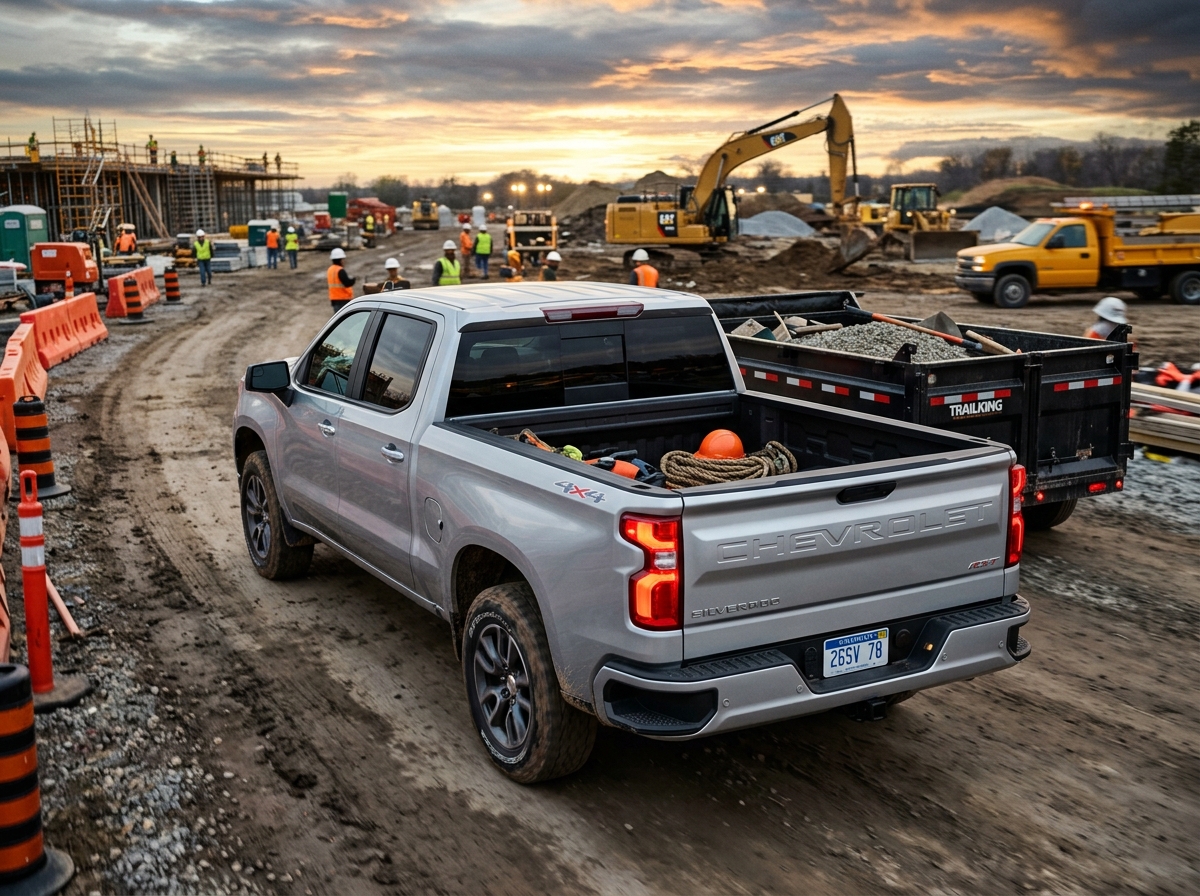
Exploring the 2026 Chevrolet Silverado 1500 Lineup: Interior Features, Bed Sizes and Towing Capability
The 2026 Chevrolet Silverado 1500 lineup showcases a remarkable blend of power, advanced technology, and versatile design, setting a new benchmark for truck drivers in Dartmouth, Rochester, and surrounding areas. Whether you are navigating urban streets or tackling demanding work tasks, the latest Silverado 1500 configurations offer tailored solutions that adapt to a broad spectrum of needs. From specialized off-road trims to luxurious cruisers, the 2026 model year emphasizes pickup innovation without compromising on performance or reliability.
Chevrolet’s commitment to delivering industry-leading truck powertrains is evident throughout the 1500 series. The 2026 Silverado 1500 offers multiple engine options including a robust V8 and a fuel-efficient turbocharged inline-four, allowing drivers to balance power and economy based on their specific applications. These powertrain choices are engineered with advanced technologies such as Dynamic Fuel Management and cylinder deactivation, optimizing fuel consumption while maintaining impressive towing and payload capabilities. This makes the Silverado 1500 a highly adaptable option for those in Wareham or Fall River who need a reliable workhorse for hauling and towing.
Beyond raw power, the 2026 Silverado 1500 integrates cutting-edge driver-assistance and connectivity features that enhance safety and convenience. This truck continues to impress with a spacious cabin, state-of-the-art infotainment systems, and comprehensive safety suites that include automatic emergency braking and lane-keeping assist. These features are designed to provide peace of mind on the road, especially in busy areas like New Bedford or Providence where safety and driver awareness are paramount.
The 2026 Silverado 1500 lineup also highlights Chevrolet’s advancements in efficiency and hybrid-adjacent technologies, reflecting a push toward more sustainable capability. By offering optimized powertrains alongside the heavy-duty and electric variants, the Silverado 1500 delivers the durability and performance expected from the brand while meeting modern environmental priorities. This diversity in the lineup ensures there is a Silverado 1500 suited for every driver’s specific hauling and lifestyle requirements.
For drivers in Dartmouth and nearby communities seeking the best combination of innovation, strength, and comfort, Colonial South Chevrolet offers an extensive selection of the new 2026 Silverado 1500. You can explore the full range of trims in our New Inventory and experience firsthand the advancements that make the 2026 Silverado 1500 stand out. To visit us and see these trucks in person, get directions to Colonial South Chevrolet or (508) 996-6266 to speak with a knowledgeable sales representative. The 2026 Silverado 1500 is engineered to deliver exceptional capability and modern innovation to meet the diverse demands of truck owners throughout Massachusetts.
Table of Contents
- Inside the 2026 Silverado 1500: Advanced Interior Features for Comfort and Connectivity
- Versatile Bed Size Options for the 2026 Silverado 1500: Tailoring Utility to Your Needs
- Superior Towing Capabilities of the 2026 Silverado: Why It Outperforms Competitors
- Integrated Trailer Brake Controller in the 2026 Silverado 1500: Enhancing Safety and Control
Inside the 2026 Silverado 1500: Advanced Interior Features for Comfort and Connectivity
The 2026 Chevrolet Silverado 1500 offers a thoughtfully designed interior that blends rugged utility with modern comfort and cutting-edge technology, making it an exceptional choice for drivers around Dartmouth and Rochester. The cabin is spacious, featuring high-quality materials and ergonomic layouts aimed at enhancing both driver and passenger experiences during long hauls or daily commutes.
One standout feature in the Silverado 1500 is the available 13.4-inch touchscreen infotainment system on higher trims. This large, vivid display integrates seamlessly with Google Built-In, providing native access to Google Maps, voice commands, and the Google Play Store without needing a smartphone connection. For drivers in Wareham or Marion who rely on accurate navigation, especially in areas with changing traffic patterns, this system offers real-time updates and hands-free control to keep focus on the road.
Connectivity extends further with wireless Apple CarPlay and Android Auto, allowing effortless smartphone integration. Multiple USB-A and USB-C ports are strategically placed throughout the cabin, ensuring all passengers can charge devices conveniently. Wireless charging pads available in select trims reduce cable clutter, adding to the interior’s clean and functional design.
Comfort features include available leather-appointed seats, heated and ventilated front seats, and a heated steering wheel, ideal for chilly mornings in Fall River or Acushnet. The crew cab layout maximizes legroom and storage space, accommodating work tools or recreational gear with ease. An optional heads-up display projects key driving information onto the windshield, helping drivers maintain awareness without glancing away.
For those interested in pre-owned Silverado 1500 models with these advanced interior features, browse our Pre-Owned Inventory to find the perfect fit tailored to your lifestyle and needs. The Silverado’s interior setup is designed to keep drivers connected, comfortable, and prepared whether navigating urban streets or rural roads.
Versatile Bed Size Options for the 2026 Silverado 1500: Tailoring Utility to Your Needs
The 2026 Chevrolet Silverado 1500 offers multiple bed lengths, allowing drivers to select the ideal size for their specific hauling requirements. These options enable customization based on how the truck will be used, whether for professional work in Dartmouth, MA, or weekend projects in Rochester, MA. The available bed sizes typically include a standard short bed measuring approximately 5 feet 8 inches, a versatile standard bed of about 6 feet 6 inches, and a long bed reaching around 8 feet.
Each bed size provides distinct advantages. The shorter bed enhances maneuverability in tighter spaces, which can be beneficial for drivers navigating urban areas or construction sites in Wareham, MA. Meanwhile, the longer beds maximize cargo capacity, perfect for transporting larger materials or equipment. Silverado’s bed also incorporates practical features like integrated tie-downs, LED lighting, and an available spray-on bedliner, ensuring cargo stays secure and protected during transit.
Choosing the right bed length impacts how the truck balances payload and overall length, so considering your daily tasks and parking conditions is essential. For Silverado owners in Dartmouth and nearby areas, these options provide flexibility that adapts to both work and leisure needs. To explore how your current vehicle’s trade-in value can help upgrade to a Silverado with the ideal bed size, use our Value Trade tool today.
Superior Towing Capabilities of the 2026 Silverado: Why It Outperforms Competitors
The 2026 Chevrolet Silverado sets a new benchmark in towing performance, making it a top choice for drivers in Rochester, Wareham, and Dartmouth who demand reliability and strength. Its robust engine options, including a powerful turbocharged V6 and an available V8, deliver exceptional torque and horsepower tailored for heavy-duty hauling tasks. This translates to impressive maximum towing capacities that often exceed those of rival full-size pickups, providing the muscle needed for demanding jobs or recreational hauling.
Beyond raw power, the Silverado integrates advanced towing technologies that enhance control and safety. Features like trailer sway control and hitch guidance assist drivers in maintaining stability and precision during hitching and towing maneuvers. These systems actively monitor trailer behavior and vehicle dynamics, automatically applying corrective measures when necessary, which is crucial for maintaining control on winding roads or uneven terrain common in the Fall River and New Bedford areas.
Additionally, the Silverado’s chassis and suspension are engineered for optimized load distribution and durability, reducing trailer bounce and improving ride comfort even under heavy loads. This sophisticated setup allows for better handling compared to many competitors, especially when towing large trailers or heavy equipment.
For those in the region seeking to maximize their towing experience, the Silverado’s combination of power, technology, and engineering excellence ensures confidence and capability in every haul. To maintain peak towing performance, consider taking advantage of our Service and Parts Specials for regular maintenance and upgrades tailored to your Silverado’s needs.
Integrated Trailer Brake Controller in the 2026 Silverado 1500: Enhancing Safety and Control
The 2026 Chevrolet Silverado 1500 takes towing safety to a new level by including a standard integrated trailer brake controller across all trims. This system allows drivers to precisely manage electric trailer brakes directly from the dashboard, providing both in-cab gain adjustment and manual override capabilities. This integration eliminates the need for aftermarket controllers, streamlining trailer management and enhancing driver confidence.
By controlling trailer braking force from the truck’s interface, the trailer brake controller helps maintain better stability and shorter stopping distances, especially when towing heavy loads. This is particularly valuable for drivers around New Bedford or Wareham, where road conditions can vary, requiring precise trailer control for safe maneuvering.
Additionally, the integrated controller works seamlessly with the Silverado’s advanced towing features, such as trailer sway control and hitch guidance, creating a comprehensive trailering system designed to reduce accidents and improve handling. For Silverado owners, this means less stress during hookups and safer, smoother trips.
For expert assistance or to experience the Silverado’s trailering technology firsthand, visit Colonial South Chevrolet. You can get directions to Colonial South Chevrolet, call us at (508) 996-6266, or schedule service for more information and to schedule a test drive.
© 2026 Colonial South Chevrolet. All rights reserved.
Connect with us

