





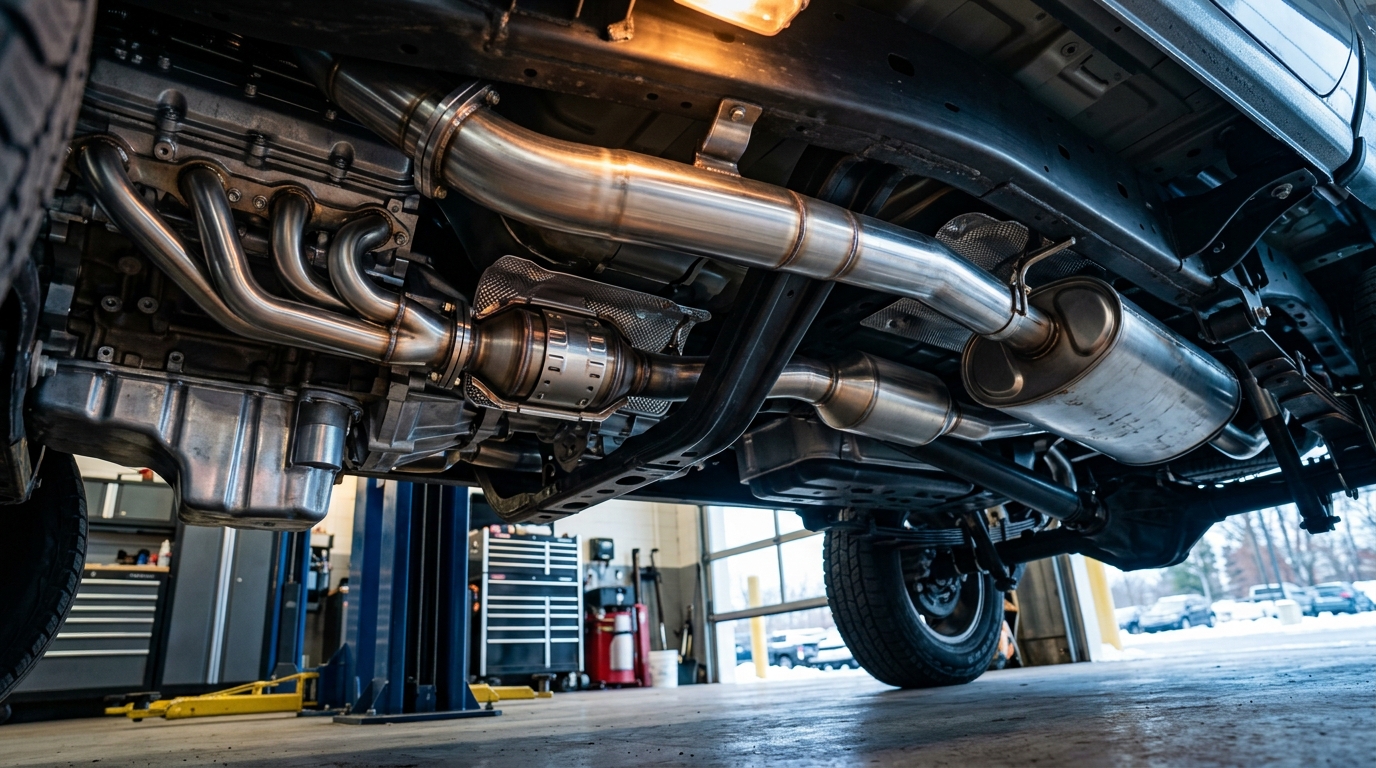
The exhaust system in a vehicle like the 2026 Chevrolet Silverado 1500 serves as a sophisticated filtration and acoustic management network. It begins at the exhaust manifold, where stainless steel or cast iron headers collect combustion gases from the 5.3L V8 engine cylinders. These gases are then directed through the catalytic converter, which utilizes precious metals to trigger chemical reactions that neutralize carbon monoxide and nitrogen oxides. From there, the system utilizes oxygen sensors to provide real-time data to the engine computer, ensuring the air-fuel mixture remains optimal for both performance and emissions compliance.
In rural areas like Rochester, where vehicles often traverse open farmland and unpaved paths, the exhaust system is exposed to unique environmental stressors. Fine dust and agricultural debris can accumulate around hangers and heat shields, potentially leading to premature wear if not inspected regularly. The system also includes a resonator and a muffler, which work in tandem to cancel out specific sound frequencies. This prevents the “drone” often associated with high-displacement engines, maintaining a quiet cabin environment even when the truck is under a heavy load.
Maintaining the integrity of these components is vital for preserving the 5 years / 60,000 miles powertrain warranty coverage on your vehicle. If you notice a change in the exhaust note or a drop in fuel efficiency, our team at our North Dartmouth service center can perform a full system evaluation. For immediate assistance regarding specific symptoms, you can reach our service advisors by giving us a quick call to discuss the best course of action.
Table of Contents
- Why Driving with a Chevy Exhaust Leak is a Serious Hazard
- Deciphering Catalytic Converter Rattles and Engine Performance Risks
- How Professional Diagnostics Pinpoint Exhaust and Emissions Failures
- The Risks of Temporary Patching Versus Professional Replacement
- Common Questions About Chevrolet Exhaust Service
- Protecting Your Chevrolet with Certified Exhaust Care
Why Driving with a Chevy Exhaust Leak is a Serious Hazard
An exhaust leak is more than a noise nuisance; it is a critical safety issue that can compromise the air quality inside the passenger cabin. When a leak occurs in the manifold or the front pipe sections of a 2026 Chevrolet Equinox, harmful gases like carbon monoxide can enter the HVAC system. Because carbon monoxide is colorless and odorless, drivers may not realize they are being exposed until they experience headaches or dizziness. This risk is particularly high in the salt belt conditions of Wareham, where coastal moisture and road salt can cause pinhole leaks in the exhaust piping long before the muffler shows visible damage.
Beyond the safety risks to occupants, a leak disrupts the backpressure required for the 1.5L I4 engine to operate at peak efficiency. Modern Chevrolet engines rely on precise pressure levels to manage the scavenging process, which clears exhaust from the combustion chamber. A leak allows gases to escape prematurely, causing the engine to work harder and run hotter. This extra heat can degrade engine oil faster and put unnecessary strain on the cooling system, leading to a cascade of mechanical issues if the leak is left unaddressed.
Leaking exhaust also interferes with the accuracy of the oxygen sensors. These sensors expect to measure the oxygen content of the exhaust stream at a specific velocity; when a leak introduces outside air into the pipe, the sensor sends incorrect data to the Powertrain Control Module. The computer may then overcompensate by injecting more fuel, which can reduce your fuel economy by a significant margin. This rich fuel mixture can eventually “poison” the catalytic converter, turning a relatively simple pipe repair into a much more expensive emissions system replacement.
Deciphering Catalytic Converter Rattles and Engine Performance Risks
A metallic rattling sound coming from under a 2026 Chevrolet Silverado 1500 often indicates that the internal ceramic honeycomb structure of the catalytic converter has fractured. This typically happens due to physical impact from road debris or “thermal shock” caused by unburned fuel entering the exhaust stream and igniting. When these ceramic pieces break loose, they bounce around inside the metal housing, creating a distinct noise at idle or during acceleration. Over time, these fragments can shift and block the exit of the converter, creating a massive restriction in the exhaust flow.
A blocked or restricted converter acts like a “plug” in the engine’s throat. Drivers might notice that their vehicle feels sluggish or struggles to maintain highway speeds, even when the throttle is pressed firmly. In severe cases, the backpressure can become so high that the engine stalls shortly after starting or fails to start entirely. Because the 5.3L V8 depends on a clear path for spent gases to exit, a restriction can cause internal engine temperatures to spike, potentially damaging valves or head gaskets if the vehicle continues to be driven in this state.
A failing converter also triggers a specific check engine light code, usually indicating that the catalyst efficiency is below the required threshold. This means the vehicle is no longer effectively scrubbing pollutants, which will result in a failed emissions inspection. While some may consider using fuel additives to “clean” a converter, these products cannot repair physical damage like melted or shattered ceramic internals. Replacing a damaged converter with a genuine Chevrolet part ensures that the backpressure remains within factory specifications and that the vehicle meets all environmental standards.
How Professional Diagnostics Pinpoint Exhaust and Emissions Failures
Modern Chevrolet diagnostics involve much more than just listening for a loud muffler. When a technician evaluates a 2026 Chevrolet Traverse, they begin by connecting a scan tool to the onboard diagnostic port to analyze “live data” from the oxygen sensors. By comparing the readings from the upstream sensor (before the converter) and the downstream sensor (after the converter), they can determine exactly how well the catalyst is performing. If the two sensors show nearly identical wave patterns, it confirms the converter is no longer chemically processing the exhaust gases.
To confirm a physical blockage, technicians often perform a backpressure test by removing an oxygen sensor and installing a specialized pressure gauge. A healthy system should show very low pressure at idle; a high reading confirms a restriction in the muffler or catalytic converter. We also use infrared thermometers to check the temperature at the inlet and outlet of the converter. In a functioning system, the outlet should be significantly hotter than the inlet because of the exothermic chemical reaction occurring inside. If the temperatures are the same or the inlet is hotter, the part is likely defective.
When I walk owners through the diagnostic process, they often ask how we know the converter is the root cause rather than a symptom. I tell them that we always check the “upstream” components first—such as spark plugs and fuel injectors—because an engine misfire is often what kills a converter by sending raw fuel into the exhaust. By identifying the primary failure, we ensure that a new exhaust component won’t suffer the same fate. This comprehensive approach is the only way to guarantee a long-lasting repair that restores the 20 city / 27 hwy efficiency ratings of the vehicle.
The Risks of Temporary Patching Versus Professional Replacement
In the salt-heavy environment of the Northeast, it is common to see surface rust on exhaust components, but deep corrosion requires a permanent fix. Patching a small hole in a heavily rusted pipe on a 2026 Chevrolet Equinox is often a losing battle. The metal surrounding a rust hole is typically thin and brittle; the heat and vibration of daily driving will quickly cause new cracks to form right at the edge of the patch. While a temporary wrap might quiet the noise for a few days, it does not restore the structural integrity of the system or stop the spread of oxidation.
Using non-OEM or “universal” exhaust parts can also lead to fitment issues and performance degradation. Genuine Chevrolet exhaust components are engineered specifically for each model’s wheelbase and engine configuration. A universal muffler might have a different internal baffle design that increases backpressure, which can negatively impact the power delivery of the 1.5L I4 engine. Furthermore, specific hangers and mounting points are designed to allow the exhaust to expand and contract as it heats up; incorrect hardware can put stress on the exhaust manifold, leading to much more expensive repairs.
Chevrolet provides a robust warranty for corrosion, including 3 years / 36,000 miles for standard corrosion and a 6 years / 100,000 miles rust-through protection. Choosing professional replacement with certified parts ensures that these warranty standards are maintained. For families who rely on the 98 cu ft of cargo space in a 2026 Chevrolet Traverse for long road trips, the peace of mind that comes from a factory-spec exhaust system is invaluable. A professional repair ensures that the vehicle remains quiet, safe, and efficient for the long haul.
Common Questions About Chevrolet Exhaust Service
Q: How long should a Chevrolet exhaust system typically last? Most modern exhaust components are designed to last roughly 100,000 miles or ten years, though this can vary based on driving habits. Frequent short trips where the engine doesn’t reach full operating temperature can allow moisture to collect in the muffler, leading to internal rot. Regular highway driving helps “burn off” this condensation, extending the life of the metal.
Q: Can a failing exhaust system cause my engine to overheat? Yes, a severely clogged catalytic converter can trap hot exhaust gases inside the engine’s combustion chambers and manifold. This heat buildup can eventually cause the engine temperature gauge to climb into the danger zone. If you notice a loss of power accompanied by rising engine temperatures, you should have the system inspected immediately to avoid major engine damage.
Q: What is the role of the resonator in my Chevy truck? The resonator is a secondary acoustic chamber that works alongside the muffler to “tune” the sound of the exhaust. It is specifically engineered to eliminate harsh frequencies and cabin drone. If the resonator is removed or replaced with an incorrect part, you may notice an annoying buzzing or humming sound inside the vehicle at certain highway speeds.
Q: Is it reasonable for me to attempt my own exhaust repairs? While an experienced DIY owner might be able to handle bolt-on components like a simple muffler swap or a tailpipe clamp, most modern exhaust work is complex. Emissions components and manifold bolts often require specialized heat induction tools or welding to remove without damaging the engine block. For these reasons, we recommend professional service to ensure the system is leak-free and properly aligned.
To help manage the cost of these essential maintenance items, we encourage you to browse our current service and parts specials before your visit. When you are ready to have your system evaluated by a certified technician, you can easily schedule a service appointment through our online portal to find a time that fits your calendar.
Protecting Your Chevrolet with Certified Exhaust Care
The maritime environment in Marion, with its salt marshes and humid coastal air, makes underbody maintenance a top priority for local Chevrolet owners. The constant exposure to moisture can accelerate the oxidation of exhaust hangers and flange bolts, which are the “skeleton” of your exhaust system. When these supports fail, the heavy pipes can sag, putting immense leverage on the exhaust manifold and potentially snapping the studs that hold it to the engine. Routine inspections allow our technicians to catch these weakened supports before they cause a complete system failure.
Whether you are commuting in a 2026 Chevrolet Equinox or utilizing the towing capabilities of a 2026 Chevrolet Silverado 1500, a healthy exhaust system is the silent partner in your vehicle’s reliability. By choosing certified service, you ensure that every gasket, sensor, and pipe meets the exact specifications set by the engineers who built your vehicle. This commitment to quality preserves your fuel economy, protects your family from harmful fumes, and maintains the long-term resale value of your Chevrolet.
If you suspect your vehicle is louder than it used to be or if you have noticed a persistent “rotten egg” smell, do not wait for a total breakdown. Our team is equipped with the latest diagnostic technology to find and fix leaks or restrictions quickly. You can find our North Dartmouth location easily for a walk-around inspection. For more information about our exhaust repair capabilities or to speak with a technician about your vehicle’s symptoms, feel free to give us a quick call today.
© 2026 Colonial South Chevrolet. All rights reserved.
Connect with us

