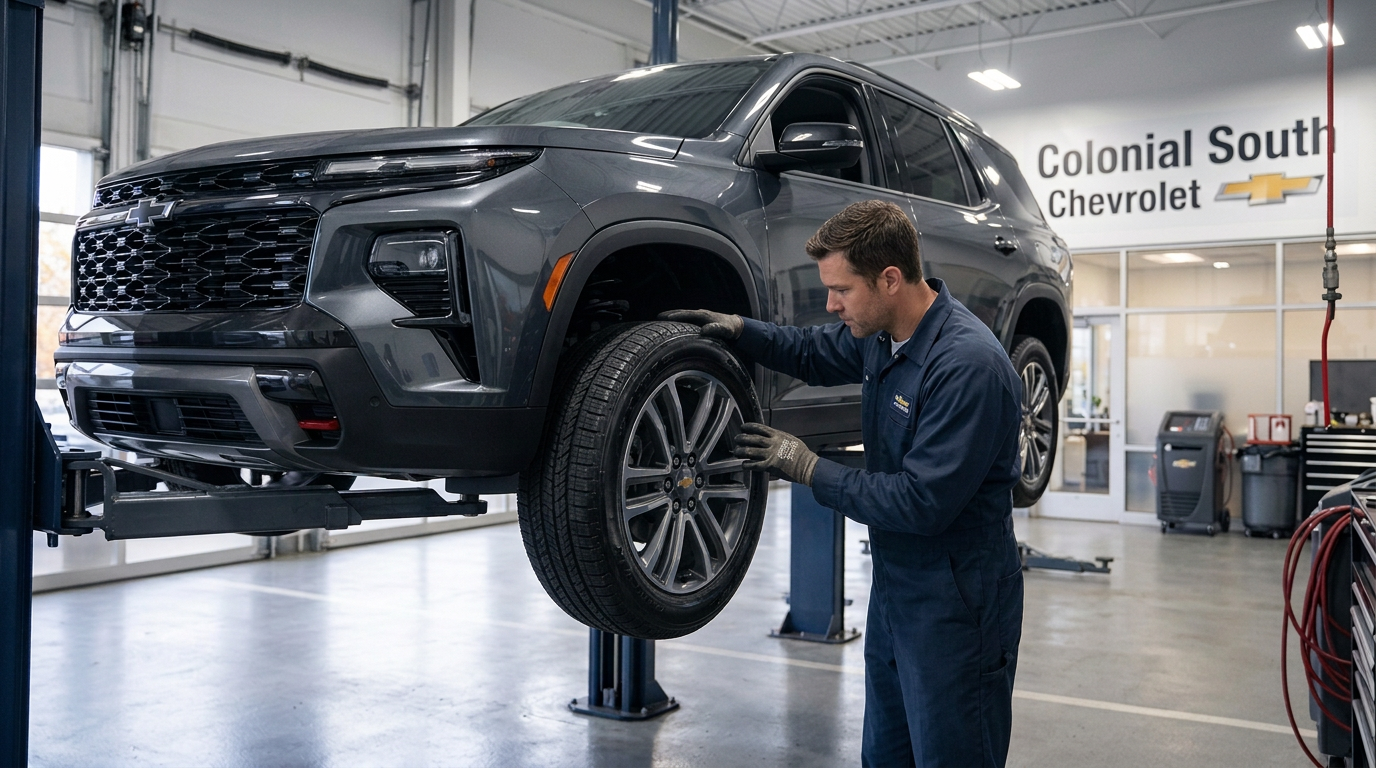





The best replacement tires for a Chevrolet Traverse balance high load capacity, low road noise, and dependable all-weather traction. Premium crossover and SUV touring tires like the Bridgestone Alenza AS Ultra, Continental CrossContact LX25, or Goodyear Assurance MaxLife match the chassis weight and handling demands of the Traverse, while all-weather models like the Michelin CrossClimate2 provide enhanced winter grip. Selecting a tire with a heavy-duty load index ensures stable highway tracking and responsive braking, especially when carrying a full load of seven passengers or towing trailer weights up to 5,000 pounds. The Chevrolet Traverse relies on its tires to maintain precise steering geometry and power delivery from its 2.5L turbocharged engine, which produces 328 hp and 326 lb-ft of torque through an 8-speed automatic transmission. Midsize crossover tires must maintain structural rigidity under cornering stress while absorbing pavement harshness. Standard highway all-season tires emphasize tread longevity and lower rolling resistance, helping maintain factory fuel economy ratings around 20 mpg city / 24 hwy. When evaluating tire options, consider how your vehicle is used day to day. Touring all-season models feature optimized tread pitch patterns that minimize interior cabin noise on long trips. All-terrain options designed specifically for crossovers offer reinforced sidewalls and broader shoulder blocks, which improve traction on unpaved surfaces without causing excessive highway vibration. Choosing tires with a treadwear rating of 600 or higher provides lasting performance across multi-year maintenance cycles. Our certified technicians evaluate tread depth, wear patterns, and load ratings to recommend replacement options tailored to your driving habits. To consult with our team or schedule a comprehensive tire inspection, reach out by calling (508) 996-6266 or visit our North Dartmouth service location. Table of Contents What Sizes, Wheel Dimensions, and Tire Pressures Come Standard on the Chevrolet Traverse? What Happens If You Replace Only One Tire on an AWD Chevrolet Traverse? Are All-Weather Tires Better Than Standard All-Season Tires for Massachusetts Driving? How Often Should You Perform a Wheel Alignment on a Chevrolet Traverse? Which Nearby Chevrolet Service Center Can Traverse Owners Contact for Tire Service? Common Questions About Chevrolet Traverse Tires and Service Schedule Professional Chevrolet Traverse Tire Care at Colonial South Chevrolet What Sizes, Wheel Dimensions, and Tire Pressures Come Standard on the Chevrolet Traverse? Original equipment tire sizes on the Chevrolet Traverse range from 255/65R18 on standard trims to 255/55R20, 265/65R18, and 275/45R22 on sport and off-road packages, using a 6x120 mm wheel bolt pattern and a factory recommended cold tire pressure of 35 PSI. You can verify your vehicle's specific tire size, speed rating, and inflation pressure by checking the tire information label located on the driver-side door jamb. Trim Level Standard Tire Size Rim Diameter Factory Recommended Cold Pressure LS / LT 255/65R18 18-inch 35 PSI Z71 265/65R18 18-inch 35 PSI RS 275/45R22 22-inch 35 PSI High Country / Premier 255/55R20 20-inch 35 PSI Wheel dimensions for the Chevrolet Traverse feature rim widths from 7.5 inches to 8.5 inches depending on the trim configuration. The 255/65R18 size provides a tall sidewall profile that absorbs impacts from potholes and broken pavement, delivering maximum ride comfort. Upgrading to 20-inch or 22-inch wheels shortens the sidewall profile, which quickens steering response during lane changes at the expense of a firmer ride over expansion joints. Maintaining proper tire pressure is essential for even treadwear and accurate safety system readings. Under-inflating tires by just 5 PSI increases rolling resistance, degrades fuel efficiency, and causes premature wear along the outer tire shoulders. Over-inflating creates a stiff center contact patch, reducing overall grip and increasing stopping distances. Tire pressure should always be adjusted when tires are cold, as highway driving elevates internal air pressure by 3 to 5 PSI during normal thermal expansion. The Tire Pressure Monitoring System (TPMS) tracks air pressure at all four positions using wireless rim-mounted sensors. When rotating tires or installing new rubber, the TPMS system must be recalibrated so the vehicle driver display accurately reports pressure positions. Standard sensor relearn procedures sync each sensor's radio frequency to the vehicle's onboard computer during routine tire rotations. What Happens If You Replace Only One Tire on an AWD Chevrolet Traverse? Replacing only a single tire on an all-wheel-drive 2027 Chevrolet Traverse creates a circumference mismatch between wheels, causing the AWD transfer case and differential assemblies to experience continuous mechanical friction and heat buildup. Because the new tire has a full tread depth while the remaining three tires are partially worn, the newest tire rotates at a slightly slower speed than the rest. The intelligent all-wheel-drive system relies on wheel speed sensors to detect loss of traction. When tread depth variance across axles exceeds 2/32 of an inch, the wheel speed sensors transmit conflicting rotational data to the AWD control module. The system interprets this rotational speed difference as ongoing wheel slip, improperly engaging internal clutch packs and subjecting the drivetrain components to premature wear. Mechanical consequences of mismatched tire tread depths include: Binding and thermal stress inside the front transfer unit and rear drive module. Excessive friction across internal differential pinion and ring gears. Erroneous engagement of electronic traction control and stability management systems. Uneven tire scrub that accelerates wear on remaining tires and steering linkages. When an unrepairable puncture occurs on one tire, replacing tires in matching pairs across the same axle is the absolute minimum requirement, provided the opposing axle tires retain substantial tread. The recommended practice for all-wheel-drive vehicles is replacing all four tires simultaneously. If single-tire replacement is unavoidable due to an emergency, specialized tire shaving services can reduce a new tire's tread depth to match the remaining three tires exactly. Are All-Weather Tires Better Than Standard All-Season Tires for Massachusetts Driving? All-weather tires are superior to standard all-season tires for regional winter driving because they feature the Three-Peak Mountain Snowflake (3PMSF) emblem and flexible tread compounds engineered for freezing temperatures. Standard all-season tires carry an M+S (Mud and Snow) designation, but their rubber compounds harden when ambient temperatures drop below 45 degrees Fahrenheit, reducing traction on cold asphalt. In coastal New England, weather conditions swing rapidly between freezing rain, slush, black ice, and dry pavement. All-weather tires utilize advanced silica-enriched rubber formulations that remain pliable down to sub-zero temperatures. Their tread blocks incorporate high-density directional sipes that bite into packed snow while clearing standing water through slush evacuation channels. The rural setting in Rochester features open farmland and unpaved back roads where winter snow and mud season create slick, rutted driving conditions that quickly overpower conventional all-season tread patterns. Unlike dedicated winter tires that require removal in spring to prevent heat damage on warm pavement, all-weather tires are designed for year-round service. They resist tread squirm and rapid wear during hot summer driving, eliminating the labor and storage costs associated with twice-yearly tire swaps. For Traverse owners seeking maximum winter traction without maintaining two sets of wheels, all-weather tires deliver the ideal balance of safety, longevity, and convenience. How Often Should You Perform a Wheel Alignment on a Chevrolet Traverse? A wheel alignment on a Chevrolet Traverse should be performed once a year or every 12,000 to 15,000 miles, as well as whenever new tires are installed or suspension components are replaced. Regular alignment verifications prevent premature tire scrubbing, maintain straight-line tracking, and protect steering linkage components from asymmetric load forces. Traverse commuters in Wareham who travel daily along coastal routes encounter frost heaves, bridge expansion joints, and road construction seams that gradually shift camber and toe angles out of factory specification. Common indicators that your vehicle requires an alignment inspection include: The steering wheel rests off-center while driving on a straight, level road. The vehicle drifts or pulls toward one side when releasing steering wheel pressure. Accelerated tread wear appears along the inner or outer shoulder of a tire. The steering wheel exhibits an abnormal vibration or feathered tread edges develop across tire blocks. Alignment Maintenance Schedule Checklist: ├── Every 7,500 Miles: Perform tire rotation and inspect tread wear pattern. ├── Every 12,000–15,000 Miles: Conduct a 4-wheel alignment check. ├── At New Tire Installation: Perform full 4-wheel alignment to protect warranty. └── Post-Impact Event: Check alignment immediately after hitting severe potholes or curb hazards. The Chevrolet Traverse utilizes an independent front and rear suspension architecture. A complete service requires a four-wheel alignment to adjust front toe, front camber, rear toe, and rear camber to factory settings. Aligning only the front wheels leaves the rear thrust angle uncorrected, causing the vehicle to dog-track and forcing the electronic stability control system to make continuous steering corrections. Which Nearby Chevrolet Service Center Can Traverse Owners Contact for Tire Service? Traverse owners in North Dartmouth and surrounding South Coast communities can rely on Colonial South Chevrolet for factory-approved tire replacement, four-wheel alignment, and complete suspension maintenance. Located at 361 State Rd Rte, 6, North Dartmouth, MA 02747, our facility features computerized wheel alignment bays, high-speed road-force balancers, and GM-certified technicians specialized in Chevrolet crossover utility vehicles. Our service department carries original equipment tires designed specifically for the Traverse chassis, as well as recommended all-weather and all-terrain options from leading tire manufacturers. Every tire installation includes new valve stems, precision balancing, TPMS sensor recalibration, and an inspection of brake pads and suspension bushings. To schedule your vehicle for tire mounting, wheel alignment, or routine tire rotation, contact our service advisors by calling (508) 996-6266 or submit your request through our online tool by scheduling a service appointment online. If you are visiting our dealership for the first time, map your route directly to our North Dartmouth service center address. Common Questions About Chevrolet Traverse Tires and Service Q: Can incorrect tire pressure trigger false TPMS warnings on the Chevrolet Traverse? Ambient temperature drops of 10 degrees Fahrenheit lower tire inflation pressure by approximately 1 PSI. During overnight freezes, cold temperatures often drop tire pressure below the TPMS threshold, lighting the dashboard warning indicator even when tires have no punctures. Adjusting cold pressure to the factory 35 PSI setting clears the warning light after driving a short distance. Q: Does the Chevrolet Traverse require special equipment for tire mounting and balancing? Due to large wheel diameters up to 22 inches and integrated TPMS sensors, mounting Traverse tires requires touchless tire levers and rim clamps that protect aluminum alloy finishes. Road-force balancers apply a roller against the spinning tire to simulate vehicle weight, identifying internal tread stiff spots and rim runout that standard spin balancers miss. Q: How does tire tread depth affect electronic driver-assist safety systems? Systems like Forward Automatic Braking and Lane Keep Assist rely on predictable tire traction to calculate stopping distances and stability interventions. Severely worn tires increase anti-lock braking system (ABS) stopping distances on wet roads, altering vehicle pitch and interfering with radar and camera calibration timing. Q: Are tire rotations included during standard Chevrolet Traverse oil change services? Tire rotations are recommended every 7,500 miles, aligning directly with engine oil and filter change intervals. Performing rotations at every oil service swaps front drive tires to the rear axle, evening out front-wheel cornering wear and maximizing tread life across all four positions. Q: What causes feathering wear across the tread blocks of a Traverse tire? Feathered tread blocks—where one edge of each tread rib feels smooth while the opposite edge feels sharp—indicate incorrect toe alignment. Excessive toe-in or toe-out forces the tire to scrub sideways across the pavement while rolling forward, wearing down tread blocks unevenly and generating excessive road noise. Schedule Professional Chevrolet Traverse Tire Care at Colonial South Chevrolet Maintaining proper tire tread depth, correct inflation pressures, and precise wheel alignment preserves the smooth ride quality, fuel economy, and safety of your Chevrolet Traverse. Neglecting tire maintenance accelerates tread wear, strains all-wheel-drive components, and compromises stopping power during critical winter driving situations. Our service department provides comprehensive chassis inspections, factory recall verifications, and professional tire installations tailored to your vehicle's specific trim requirements. Trust our factory-trained technicians to keep your crossover running at peak safety and efficiency season after season. Reach out to our team today to confirm fitment details, discuss seasonal tire choices, or arrange your next maintenance service. © 2026 Colonial South Chevrolet. All rights reserved.