




Blog / Tires

Which Replacement Tires Work Best on a Chevrolet Traverse?

Which Replacement Tires Work Best on a Chevrolet Traverse

The best replacement tires for a Chevrolet Traverse balance high load capacity, low road noise, and dependable all-weather traction. Premium crossover and SUV touring tires like the Bridgestone Alenza AS Ultra, Continental CrossContact LX25, or Goodyear Assurance MaxLife match the chassis weight and handling demands of the Traverse, while all-weather models like the Michelin CrossClimate2 provide enhanced winter grip. Selecting a tire with a heavy-duty load index ensures stable highway tracking and responsive braking, especially when carrying a full load of seven passengers or towing trailer weights up to 5,000 pounds.

The Chevrolet Traverse relies on its tires to maintain precise steering geometry and power delivery from its 2.5L turbocharged engine, which produces 328 hp and 326 lb-ft of torque through an 8-speed automatic transmission. Midsize crossover tires must maintain structural rigidity under cornering stress while absorbing pavement harshness. Standard highway all-season tires emphasize tread longevity and lower rolling resistance, helping maintain factory fuel economy ratings around 20 mpg city / 24 hwy.

When evaluating tire options, consider how your vehicle is used day to day. Touring all-season models feature optimized tread pitch patterns that minimize interior cabin noise on long trips. All-terrain options designed specifically for crossovers offer reinforced sidewalls and broader shoulder blocks, which improve traction on unpaved surfaces without causing excessive highway vibration. Choosing tires with a treadwear rating of 600 or higher provides lasting performance across multi-year maintenance cycles.

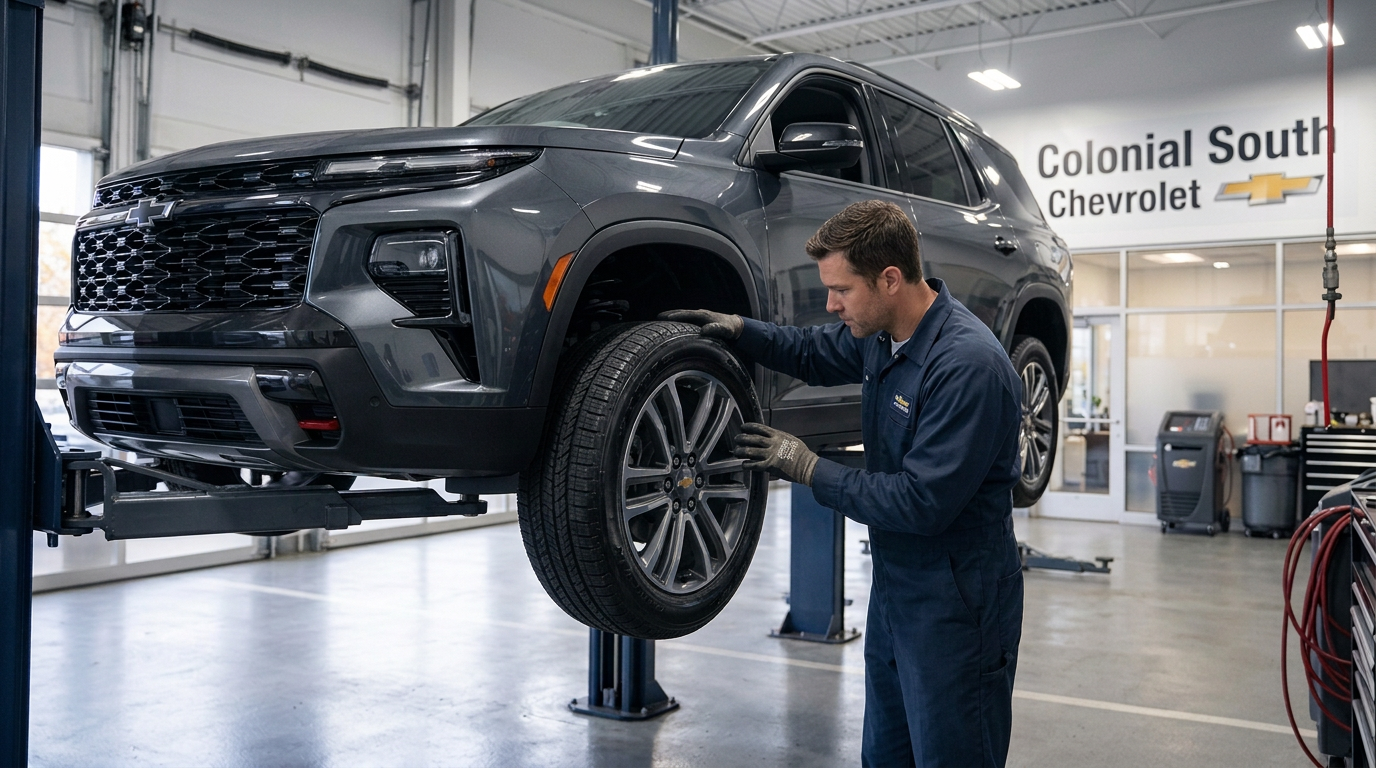
Our certified technicians evaluate tread depth, wear patterns, and load ratings to recommend replacement options tailored to your driving habits. To consult with our team or schedule a comprehensive tire inspection, reach out by calling (508) 996-6266 or visit our North Dartmouth service location.

Table of Contents


What Sizes, Wheel Dimensions, and Tire Pressures Come Standard on the Chevrolet Traverse?

Original equipment tire sizes on the Chevrolet Traverse range from 255/65R18 on standard trims to 255/55R20, 265/65R18, and 275/45R22 on sport and off-road packages, using a 6x120 mm wheel bolt pattern and a factory recommended cold tire pressure of 35 PSI. You can verify your vehicle's specific tire size, speed rating, and inflation pressure by checking the tire information label located on the driver-side door jamb.

Trim Level Standard Tire Size Rim Diameter Factory Recommended Cold Pressure
LS / LT 255/65R18 18-inch 35 PSI
Z71 265/65R18 18-inch 35 PSI
RS 275/45R22 22-inch 35 PSI
High Country / Premier 255/55R20 20-inch 35 PSI

Wheel dimensions for the Chevrolet Traverse feature rim widths from 7.5 inches to 8.5 inches depending on the trim configuration. The 255/65R18 size provides a tall sidewall profile that absorbs impacts from potholes and broken pavement, delivering maximum ride comfort. Upgrading to 20-inch or 22-inch wheels shortens the sidewall profile, which quickens steering response during lane changes at the expense of a firmer ride over expansion joints.

Maintaining proper tire pressure is essential for even treadwear and accurate safety system readings. Under-inflating tires by just 5 PSI increases rolling resistance, degrades fuel efficiency, and causes premature wear along the outer tire shoulders. Over-inflating creates a stiff center contact patch, reducing overall grip and increasing stopping distances. Tire pressure should always be adjusted when tires are cold, as highway driving elevates internal air pressure by 3 to 5 PSI during normal thermal expansion.

The Tire Pressure Monitoring System (TPMS) tracks air pressure at all four positions using wireless rim-mounted sensors. When rotating tires or installing new rubber, the TPMS system must be recalibrated so the vehicle driver display accurately reports pressure positions. Standard sensor relearn procedures sync each sensor's radio frequency to the vehicle's onboard computer during routine tire rotations.


What Happens If You Replace Only One Tire on an AWD Chevrolet Traverse?

Replacing only a single tire on an all-wheel-drive 2027 Chevrolet Traverse creates a circumference mismatch between wheels, causing the AWD transfer case and differential assemblies to experience continuous mechanical friction and heat buildup. Because the new tire has a full tread depth while the remaining three tires are partially worn, the newest tire rotates at a slightly slower speed than the rest.

The intelligent all-wheel-drive system relies on wheel speed sensors to detect loss of traction. When tread depth variance across axles exceeds 2/32 of an inch, the wheel speed sensors transmit conflicting rotational data to the AWD control module. The system interprets this rotational speed difference as ongoing wheel slip, improperly engaging internal clutch packs and subjecting the drivetrain components to premature wear.

Mechanical consequences of mismatched tire tread depths include:

  • Binding and thermal stress inside the front transfer unit and rear drive module.
  • Excessive friction across internal differential pinion and ring gears.
  • Erroneous engagement of electronic traction control and stability management systems.
  • Uneven tire scrub that accelerates wear on remaining tires and steering linkages.

When an unrepairable puncture occurs on one tire, replacing tires in matching pairs across the same axle is the absolute minimum requirement, provided the opposing axle tires retain substantial tread. The recommended practice for all-wheel-drive vehicles is replacing all four tires simultaneously. If single-tire replacement is unavoidable due to an emergency, specialized tire shaving services can reduce a new tire's tread depth to match the remaining three tires exactly.


Are All-Weather Tires Better Than Standard All-Season Tires for Massachusetts Driving?

All-weather tires are superior to standard all-season tires for regional winter driving because they feature the Three-Peak Mountain Snowflake (3PMSF) emblem and flexible tread compounds engineered for freezing temperatures. Standard all-season tires carry an M+S (Mud and Snow) designation, but their rubber compounds harden when ambient temperatures drop below 45 degrees Fahrenheit, reducing traction on cold asphalt.

In coastal New England, weather conditions swing rapidly between freezing rain, slush, black ice, and dry pavement. All-weather tires utilize advanced silica-enriched rubber formulations that remain pliable down to sub-zero temperatures. Their tread blocks incorporate high-density directional sipes that bite into packed snow while clearing standing water through slush evacuation channels.

The rural setting in Rochester features open farmland and unpaved back roads where winter snow and mud season create slick, rutted driving conditions that quickly overpower conventional all-season tread patterns.

Unlike dedicated winter tires that require removal in spring to prevent heat damage on warm pavement, all-weather tires are designed for year-round service. They resist tread squirm and rapid wear during hot summer driving, eliminating the labor and storage costs associated with twice-yearly tire swaps. For Traverse owners seeking maximum winter traction without maintaining two sets of wheels, all-weather tires deliver the ideal balance of safety, longevity, and convenience.


How Often Should You Perform a Wheel Alignment on a Chevrolet Traverse?

A wheel alignment on a Chevrolet Traverse should be performed once a year or every 12,000 to 15,000 miles, as well as whenever new tires are installed or suspension components are replaced. Regular alignment verifications prevent premature tire scrubbing, maintain straight-line tracking, and protect steering linkage components from asymmetric load forces.

Traverse commuters in Wareham who travel daily along coastal routes encounter frost heaves, bridge expansion joints, and road construction seams that gradually shift camber and toe angles out of factory specification.

Common indicators that your vehicle requires an alignment inspection include:

  • The steering wheel rests off-center while driving on a straight, level road.
  • The vehicle drifts or pulls toward one side when releasing steering wheel pressure.
  • Accelerated tread wear appears along the inner or outer shoulder of a tire.
  • The steering wheel exhibits an abnormal vibration or feathered tread edges develop across tire blocks.
Alignment Maintenance Schedule Checklist:
├── Every 7,500 Miles: Perform tire rotation and inspect tread wear pattern.
├── Every 12,000–15,000 Miles: Conduct a 4-wheel alignment check.
├── At New Tire Installation: Perform full 4-wheel alignment to protect warranty.
└── Post-Impact Event: Check alignment immediately after hitting severe potholes or curb hazards.

The Chevrolet Traverse utilizes an independent front and rear suspension architecture. A complete service requires a four-wheel alignment to adjust front toe, front camber, rear toe, and rear camber to factory settings. Aligning only the front wheels leaves the rear thrust angle uncorrected, causing the vehicle to dog-track and forcing the electronic stability control system to make continuous steering corrections.


Which Nearby Chevrolet Service Center Can Traverse Owners Contact for Tire Service?

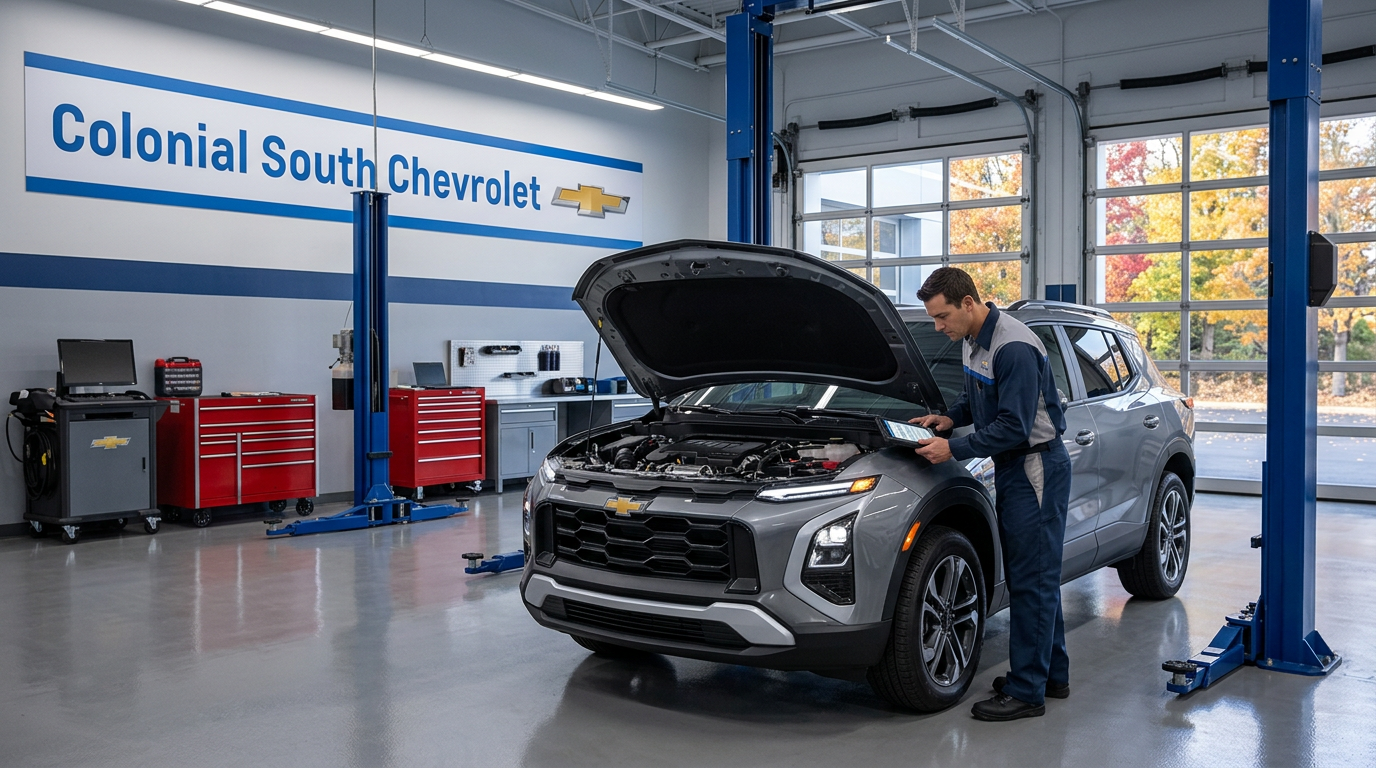
Traverse owners in North Dartmouth and surrounding South Coast communities can rely on Colonial South Chevrolet for factory-approved tire replacement, four-wheel alignment, and complete suspension maintenance. Located at 361 State Rd Rte, 6, North Dartmouth, MA 02747, our facility features computerized wheel alignment bays, high-speed road-force balancers, and GM-certified technicians specialized in Chevrolet crossover utility vehicles.

Our service department carries original equipment tires designed specifically for the Traverse chassis, as well as recommended all-weather and all-terrain options from leading tire manufacturers. Every tire installation includes new valve stems, precision balancing, TPMS sensor recalibration, and an inspection of brake pads and suspension bushings.

To schedule your vehicle for tire mounting, wheel alignment, or routine tire rotation, contact our service advisors by calling (508) 996-6266 or submit your request through our online tool by scheduling a service appointment online. If you are visiting our dealership for the first time, map your route directly to our North Dartmouth service center address.


Common Questions About Chevrolet Traverse Tires and Service

Q: Can incorrect tire pressure trigger false TPMS warnings on the Chevrolet Traverse?

Ambient temperature drops of 10 degrees Fahrenheit lower tire inflation pressure by approximately 1 PSI. During overnight freezes, cold temperatures often drop tire pressure below the TPMS threshold, lighting the dashboard warning indicator even when tires have no punctures. Adjusting cold pressure to the factory 35 PSI setting clears the warning light after driving a short distance.

Q: Does the Chevrolet Traverse require special equipment for tire mounting and balancing?

Due to large wheel diameters up to 22 inches and integrated TPMS sensors, mounting Traverse tires requires touchless tire levers and rim clamps that protect aluminum alloy finishes. Road-force balancers apply a roller against the spinning tire to simulate vehicle weight, identifying internal tread stiff spots and rim runout that standard spin balancers miss.

Q: How does tire tread depth affect electronic driver-assist safety systems?

Systems like Forward Automatic Braking and Lane Keep Assist rely on predictable tire traction to calculate stopping distances and stability interventions. Severely worn tires increase anti-lock braking system (ABS) stopping distances on wet roads, altering vehicle pitch and interfering with radar and camera calibration timing.

Q: Are tire rotations included during standard Chevrolet Traverse oil change services?

Tire rotations are recommended every 7,500 miles, aligning directly with engine oil and filter change intervals. Performing rotations at every oil service swaps front drive tires to the rear axle, evening out front-wheel cornering wear and maximizing tread life across all four positions.

Q: What causes feathering wear across the tread blocks of a Traverse tire?

Feathered tread blocks—where one edge of each tread rib feels smooth while the opposite edge feels sharp—indicate incorrect toe alignment. Excessive toe-in or toe-out forces the tire to scrub sideways across the pavement while rolling forward, wearing down tread blocks unevenly and generating excessive road noise.


Schedule Professional Chevrolet Traverse Tire Care at Colonial South Chevrolet

Maintaining proper tire tread depth, correct inflation pressures, and precise wheel alignment preserves the smooth ride quality, fuel economy, and safety of your Chevrolet Traverse. Neglecting tire maintenance accelerates tread wear, strains all-wheel-drive components, and compromises stopping power during critical winter driving situations.

Our service department provides comprehensive chassis inspections, factory recall verifications, and professional tire installations tailored to your vehicle's specific trim requirements. Trust our factory-trained technicians to keep your crossover running at peak safety and efficiency season after season. Reach out to our team today to confirm fitment details, discuss seasonal tire choices, or arrange your next maintenance service.


© 2026 Colonial South Chevrolet. All rights reserved.
Posted in:

Recommended Posts

What Coverage Is Included in the Chevrolet Equinox Factory Warranty

What Coverage Is Included in the Chevrolet Equinox Factory Warranty?

Every new Chevrolet Equinox comes from the factory with a 3-year/36,000-mile bumper-to-bumper limited warranty, a 5-year/60,000-mile powertrain limited warranty, 5 years or 60,000 miles of roadside assistance, 6 years or 100,000 miles of rust-through corrosion protection, and one complimentary maintenance visit within the first 12 months or 12,000 miles. Factory warranty coverage guarantees that any defect in factory materials or workmanship is repaired at zero cost to the owner for parts and labor. The factory coverage structure protects your crossover from the moment you take delivery. The bumper-to-bumper limited coverage acts as a broad safety net for virtually all mechanical, electrical, and electronic components, resolving issues ranging from infotainment screen faults to power window regulator failures. Meanwhile, the powertrain coverage extends further in time and mileage to protect the core mechanical components that propel the vehicle. Owners also receive long-term corrosion safeguard coverage. Chevrolet includes sheet-metal corrosion protection for 3 years or 36,000 miles, which expands to 6 years or 100,000 miles of rust-through protection if metal perforates due to corrosion. This long-term protection is vital for vehicle longevity, especially during winter months when road salt and brine are applied heavily to local roadways. To keep these comprehensive factory coverage plans fully intact, factory repairs must be performed by certified technicians using OEM parts. Drivers looking to verify their remaining warranty window or schedule a diagnostic check can drop by our North Dartmouth service center or give our service department a quick call at (508) 996-6266 to speak directly with an advisor. Table of Contents What Specific Repairs Are Covered Under Chevrolet Bumper-to-Bumper and Powertrain Warranties? Does Chevrolet Include Complimentary Maintenance and What Is the Recommended Equinox Schedule? How Do Equinox Engine Options, ACTIV Trim Equipment, and Fuel Economy Impact Service Needs? Where Can Bristol County Drivers Get Authorized Chevrolet Equinox Warranty Service? Common Questions About Chevrolet Equinox Warranty Repairs and Maintenance Schedule Your Authorized Chevrolet Equinox Warranty Service What Specific Repairs Are Covered Under Chevrolet Bumper-to-Bumper and Powertrain Warranties? The Chevrolet Bumper-to-Bumper Limited Warranty covers repairs on the entire vehicle to correct defects in materials or workmanship, while the Powertrain Limited Warranty specifically covers internal mechanical engine components, the transmission, and drive axle assemblies. Standard wear-and-tear items such as brake pads, wiper blades, and tire tread are excluded from warranty coverage, but unexpected electrical, mechanical, or structural component failures within the specified time and mileage limits are fully covered. Under the 3-year/36,000-mile bumper-to-bumper limited warranty, covered items include: Audio, infotainment, and display systems, including the 11.3-inch diagonal touchscreen and instrument cluster screens Heating, ventilation, and air conditioning (HVAC) compressors, blower motors, and automatic climate control modules Electrical wiring harnesses, power seat motors, window regulators, and door lock actuators Driver-assist hardware, including Chevy Safety Assist cameras, radar sensors, and Blind Zone Alert Steering Assist modules Exterior lighting assemblies, including LED headlamp modules and taillamps Under the 5-year/60,000-mile powertrain limited warranty, covered components include: The 1.5L turbocharged engine block, cylinder head, turbocharger assembly, oil pump, water pump, and internal valvetrain components The eight-speed automatic transmission or CVT, including internal gears, torque converter, transmission control module, and valve body All-wheel-drive transfer case, front and rear drive axles, constant-velocity (CV) joints, and differential assemblies In addition to mechanical repairs, Chevrolet includes 24/7 emergency support through its factory roadside assistance program for 5 years or 60,000 miles. If a vehicle experiences a flat tire, dead battery, unexpected mechanical breakdown, or lock-out on the road, owners can call Chevrolet Roadside Assistance at (800) 243-8872. Services provided include emergency towing to the nearest authorized Chevrolet service center, battery jump-starts, flat tire changes using the vehicle spare, lockout assistance, and emergency fuel delivery. Does Chevrolet Include Complimentary Maintenance and What Is the Recommended Equinox Schedule? Chevrolet includes one complimentary maintenance visit for every new Equinox within the first 12 months or 12,000 miles of ownership, covering a factory oil and filter change, tire rotation, and a comprehensive multi-point vehicle inspection. Following this initial visit, Chevrolet recommends bringing the Equinox in for service every 7,500 miles to maintain engine health and protect factory warranty eligibility. Adhering to factory-specified maintenance intervals prevents premature component wear and provides documented service history, which is critical if a major warranty claim ever arises. Our service department follows this official Chevrolet maintenance schedule for the Equinox: Every 7,500 miles or 6 months: Change engine oil and replace the engine oil filter, rotate all four tires, inspect tire tread wear and inflation pressures, test the 12-volt battery, and perform a multi-point inspection of brake pads, rotors, wiper blades, and fluid levels. Every 22,500 miles: Replace the cabin air filter to ensure clean airflow through the heating and air conditioning systems and prevent dust buildup on evaporator coils. Every 45,000 miles: Replace the engine air filter element to preserve optimal air-to-fuel ratios and protect the turbocharger, inspect evaporative control systems, and check automatic transmission fluid condition. Every 75,000 to 100,000 miles: Replace spark plugs, inspect fuel injection systems, flush engine coolant, and perform detailed driveline inspections on all-wheel-drive components. When bringing your crossover in for scheduled visits, our factory-trained technicians complete a digital multi-point inspection report. This complimentary assessment evaluates brake pad thickness, suspension joint tightness, underbody condition, and tire tread depth, letting you know exactly what requires immediate attention and what can be monitored for future service. How Do Equinox Engine Options, ACTIV Trim Equipment, and Fuel Economy Impact Service Needs? The 2027 Chevrolet Equinox in Dartmouth, MA, comes equipped with a 1.5L turbocharged engine generating 175 horsepower, paired with an eight-speed automatic transmission or CVT depending on the drivetrain, requiring specific synthetic oil formulations and routine drivetrain maintenance. Front-wheel-drive configurations achieve an EPA-estimated 26 mpg city / 29 mpg highway, while all-wheel-drive models deliver 24 mpg city / 29 mpg highway, making consistent tire rotations and air filter maintenance essential to preserving factory fuel economy numbers. Drivetrain and trim choices create distinct maintenance considerations over the life of the vehicle: Front-Wheel Drive vs. All-Wheel Drive: Front-wheel-drive models send power exclusively through the front transaxle, whereas all-wheel-drive variants add a transfer case, rear driveshaft, and rear differential module yielding up to 203 lb-ft of torque. All-wheel-drive transfer case and rear axle fluids require periodic inspection and replacement according to factory guidelines to ensure smooth torque distribution. ACTIV Trim Equipment: The trail-ready ACTIV trim features 17-inch dark aluminum wheels mounted with all-terrain tires, a uniquely-tuned suspension setup, and Evotex synthetic leather seating. All-terrain tires feature deeper tread blocks that benefit from strict 7,500-mile rotation intervals to prevent irregular heel-and-toe wear patterns. Turbocharger Service Considerations: Turbocharged engines place higher thermal demands on engine oil. Using Dexos-approved full synthetic oil protects turbocharger bearings from heat breakdown and carbon buildup. Driving conditions around coastal environments like Wareham subject undercarriage components, brake calipers, and exhaust hardware to constant salt air exposure. Routine underbody washing and regular brake slider lubrication prevent salt-induced corrosion and sticky brake calipers. Drivers looking to maintain their vehicle can explore our current service and parts coupons to save on routine maintenance items like synthetic oil changes and cabin air filters. Where Can Bristol County Drivers Get Authorized Chevrolet Equinox Warranty Service? Authorized Chevrolet Equinox warranty service must be performed at a certified Chevrolet dealership service center to ensure repairs are fully covered by General Motors and completed using genuine OEM parts. Independent repair shops can perform routine maintenance such as oil changes and tire rotations, but they cannot submit factory warranty claims or complete covered component replacements at zero cost to the vehicle owner. Bringing your Equinox to Colonial South Chevrolet for warranty repairs offers key technical advantages: Factory-Certified Technicians: Our service technicians undergo rigorous GM training programs specifically covering Chevrolet electrical architecture, turbocharged powertrains, and advanced driver-assist systems like Chevy Safety Assist. Genuine GM OEM Parts: All warranty repairs utilize genuine General Motors replacement components that match original factory specifications and come backed by factory parts warranty coverage. Specialized Diagnostic Tools: Our service bays are equipped with GM Multiple Diagnostic Interface (MDI) scanners and Techline software, enabling technicians to read proprietary trouble codes, perform module re-flashes, and execute technical service bulletins accurately. Direct Warranty Processing: Our service advisors process warranty claims directly through GM, eliminating out-of-pocket expenses for covered repairs and handling all documentation seamlessly. Living near rural agricultural areas around Rochester means commuting over unpaved access roads and gravel routes, which puts added stress on suspension bushings, ball joints, and wheel alignments. Our factory-equipped alignment racks and chassis diagnostic equipment allow our team to identify and resolve suspension wear or steering drift quickly under factory repair guidelines. Common Questions About Chevrolet Equinox Warranty Repairs and Maintenance Q: What preliminary factory warranty periods are listed for a new Chevrolet Equinox? New Chevrolet Equinox crossovers come with a 3-year or 36,000-mile bumper-to-bumper limited warranty alongside a 5-year or 60,000-mile powertrain limited warranty. Additional preliminary factory protections include 5 years or 60,000 miles of 24/7 roadside assistance, 6 years or 100,000 miles of rust-through corrosion coverage, and one complimentary initial maintenance visit within the first 12 months or 12,000 miles. Q: Does the Chevrolet Bumper-to-Bumper Limited Warranty cover infotainment software glitches? Yes, the bumper-to-bumper warranty covers factory-installed electronic systems, including software diagnostics and hardware replacements for the 11.3-inch diagonal touchscreen, Bluetooth connectivity modules, and digital instrument displays. If your touchscreen experiences freezing, rebooting, or wireless Apple CarPlay connectivity issues within 3 years or 36,000 miles, our service team will perform official software re-flashes or module replacements at no charge. Q: Will taking my Equinox to an independent shop void my factory warranty? No, routine scheduled maintenance performed by an independent repair facility will not void your Chevrolet factory warranty. However, any actual warranty repairs, recall fixes, or technical service bulletin updates must be performed by an authorized Chevrolet dealer. You must also keep detailed receipts for all outside maintenance services to prove that required oil changes and fluid services were completed on schedule if a related engine claim occurs. Q: How long does the Chevrolet Powertrain Warranty cover the turbocharger and all-wheel-drive system? The factory powertrain warranty protects the 1.5L turbocharged engine, turbocharger housing, internal bearings, all-wheel-drive transfer case, and rear axle assemblies for 5 years or 60,000 miles, whichever comes first. If a mechanical component failure occurs within this window, parts and labor costs are completely covered when repaired by an authorized Chevrolet service department. Q: What should I bring with me when dropping off my Equinox for warranty service? When bringing your vehicle in for warranty inspection, bring your vehicle registration, current mileage reading, driver's license, and any previous maintenance documentation if the repair relates to a serviced component. Providing clear details regarding when the issue occurs—such as during cold starts or highway braking—helps our service advisors log accurate diagnostic notes for technician troubleshooting. To reserve a convenient appointment slot, you can easily book service online prior to visiting. Schedule Your Authorized Chevrolet Equinox Warranty Service Maintaining your Equinox with certified factory care ensures your crossover delivers reliable performance, optimal fuel economy, and maximum resale value over the long haul. Whether your vehicle requires a routine 7,500-mile synthetic oil change, a multi-point safety inspection, or specialized diagnostic troubleshooting under your bumper-to-bumper or powertrain warranty, our service team in North Dartmouth is fully equipped to help. Our modern service facility features state-of-the-art GM diagnostic equipment, comfortable customer waiting lounges with Wi-Fi, and a dedicated team of certified technicians focused on getting you back on the road safely. To confirm your existing warranty coverage limits or schedule your next maintenance visit, navigate to our Dartmouth service department location or call our team directly at (508) 996-6266 today. © 2026 Colonial South Chevrolet. All rights reserved.
2027 Chevrolet Tahoe: Trims, Towing, and Family Capability

2027 Chevrolet Tahoe: Trims, Towing, and Family Capability

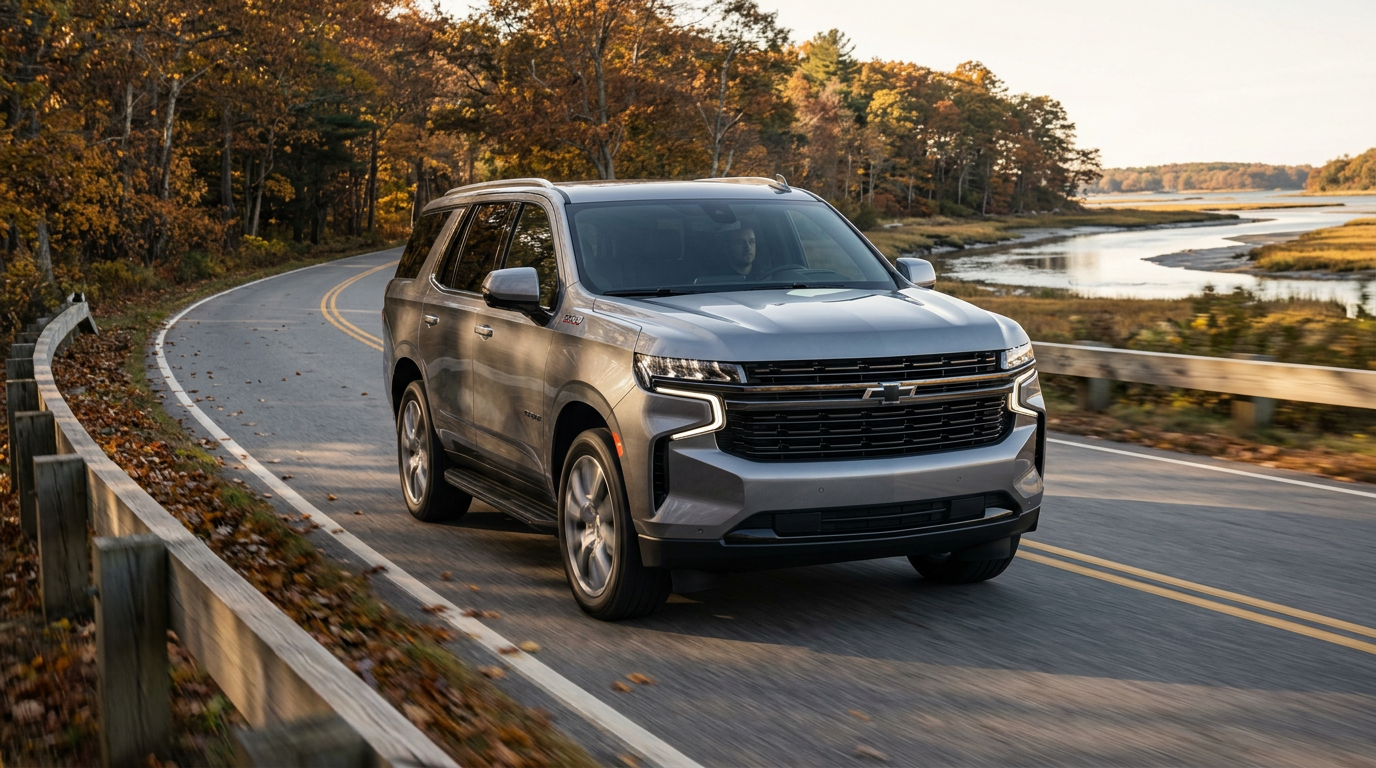
The 2027 Chevrolet Tahoe is the right choice for families who need a full-size SUV that can tow up to 7,900 lbs, seat up to 8 passengers, and handle everything from Rochester's gravel back roads to Marion's coastal drives. Eleven trim levels span from the LS 2WD at $61,500 to the High Country 4WD at $84,500, and every one pairs a proven EcoTec3 V8 with a 10-speed automatic. The 17 mpg combined rating and standard OnStar connectivity round out a capable, well-connected package. Table of Contents How Well Does the 2027 Chevrolet Tahoe Serve Rochester Families and Outdoor Enthusiasts? Exterior Design and Rugged Styling of the 2027 Chevrolet Tahoe Power and Towing Performance of the 2027 Chevrolet Tahoe Adventures Interior Comfort and Space in the 2027 Chevrolet Tahoe Tailored for Families Infotainment and Connectivity Features That Enhance the 2027 Chevrolet Tahoe Experience Safety and Driver Assistance Systems Built for Peace of Mind Comprehensive Pricing Breakdown of All 2027 Chevrolet Tahoe Trims Warranty Coverage and Maintenance Services for 2027 Chevrolet Tahoe Owners Awards, Expert Reviews, and Recognition Highlighting the 2027 Chevrolet Tahoe's Strengths Frequently Asked Questions About Owning and Driving the 2027 Chevrolet Tahoe How Well Does the 2027 Chevrolet Tahoe Serve Rochester Families and Outdoor Enthusiasts? The 2027 Tahoe is purpose-built for exactly the kind of life that plays out across southeastern Massachusetts — rural commutes, weekend outdoor trips, boat launches, and family errands — making it one of the most practical choices in the full-size SUV segment. With four-wheel drive available on nine of the eleven trims, a maximum towing rating of 7,900 lbs on rear-wheel-drive configurations, and seating for up to 8 people, the Tahoe can carry a family and their gear without compromise. Rochester residents who navigate the gently rolling farmland and woodland trails around the Sippican River will appreciate the Autotrac four-wheel-drive system on 4WD trims, which allows both automatic and manual selection of drive modes. The LS 4WD and LT 4WD trims bring that capability at price points that make sense for families balancing a mortgage, school activities, and the occasional weekend adventure to Allens Pond Wildlife Sanctuary. Families who want to explore our current new-vehicle Tahoe inventory will find trims configured for nearly every use case — from the work-ready 4WD Fleet to the luxury-focused High Country 4WD. The Tahoe competes directly with the Ford Expedition and Toyota Sequoia, but its body-on-frame construction and broad trim ladder give it flexibility those competitors don't always match at comparable price points. Three-zone automatic climate control is standard across the lineup, a practical feature for families where front-seat adults and back-row kids rarely agree on temperature. The 17.7-inch touchscreen infotainment display — standard on all trims — keeps navigation and entertainment accessible without requiring a tech tutorial. For a family that spends real time in their vehicle, these aren't luxury extras; they're daily-use necessities that the Tahoe delivers as standard equipment. Exterior Design and Rugged Styling of the 2027 Chevrolet Tahoe The 2027 Tahoe wears a squared-off, purposeful silhouette that reads as both capable and refined — a combination that suits the varied landscapes of southeastern Massachusetts well. At 211.3 inches long, 81 inches wide, and with a 120.9-inch wheelbase, the Tahoe has genuine physical presence without crossing into the oversized territory of a three-quarter-ton truck. LED projector-beam headlights are standard across the lineup, providing sharp illumination on unlit rural roads after dark. Daytime running lights and LED rear and brake lights complete a full LED exterior lighting package that improves visibility in the coastal fog and rain common to this region. Painted bumpers front and rear give the standard trims a clean, cohesive look, while the High Country 4WD adds chrome trim around the windows and on the bumpers for a more upscale presentation. Roof spoiler, platform running boards, and black roof rails are standard on the 4WD Fleet, while chrome/silver roof rails appear on the LS, LT, Premier, RST, and Z71 trims. For buyers who prefer a blacked-out aesthetic, the Dark Essentials Package and Dark Essentials Plus Package are available on select trims and swap contrasting-color mirrors and 22-inch alloy wheels into the build. The Z71 4WD gets its own visual identity through trim-specific badging and wheel choices suited to buyers who want the off-road look to match the vehicle's capability. Shoppers interested in a pre-owned Tahoe can browse our pre-owned SUV inventory for additional options at various price points. Feature 4WD Fleet High Country 4WD LS 2WD LS 4WD LT 2WD LT 4WD Premier 2WD Premier 4WD RST 2WD RST 4WD Z71 4WD Engine 5.3L 6.2L 5.3L 5.3L 5.3L 5.3L 5.3L 5.3L 5.3L 5.3L 5.3L Horsepower 355 hp 420 hp 355 hp 355 hp 355 hp 355 hp 355 hp 355 hp 355 hp 355 hp 355 hp Torque 383 lb-ft 460 lb-ft 383 lb-ft 383 lb-ft 383 lb-ft 383 lb-ft 383 lb-ft 383 lb-ft 383 lb-ft 383 lb-ft 383 lb-ft Drivetrain Four-wheel drive Four-wheel drive Rear-wheel drive Four-wheel drive Rear-wheel drive Four-wheel drive Rear-wheel drive Four-wheel drive Rear-wheel drive Four-wheel drive Four-wheel drive Transmission 10-speed auto 10-speed auto 10-speed auto 10-speed auto 10-speed auto 10-speed auto 10-speed auto 10-speed auto 10-speed auto 10-speed auto 10-speed auto The High Country 4WD is the only trim that steps up to the 6.2L EcoTec3 V8, producing 420 hp and 460 lb-ft of torque — a meaningful jump over the 355 hp / 383 lb-ft output of the 5.3L engine that powers every other trim. All eleven trims share the same 10-speed automatic transmission, which keeps power delivery smooth across the full rev range whether you're merging onto a highway or crawling a muddy two-track. Power and Towing Performance of the 2027 Chevrolet Tahoe Adventures The 2027 Tahoe's towing capability is the headline number for buyers who need to haul boats, trailers, or equipment — and the numbers are genuinely useful in real-world applications. Rear-wheel-drive trims ( LS 2WD, LT 2WD, Premier 2WD, RST 2WD) reach a maximum braked towing capacity of 7,900 lbs, while four-wheel-drive trims rate at 7,700 lbs, with the High Country 4WD rated at 7,600 lbs due to its heavier curb weight. For the boating community around Marion's Sippican Harbor and Wareham's waterfront, a 7,700 lb or 7,900 lb tow rating handles most recreational boats — a 22-foot center console or a mid-size sailboat on a trailer falls comfortably within those limits. The Sun-and-Tow Package, available on the LT 2WD, LT 4WD, Premier 2WD, Premier 4WD, High Country 4WD, and RST trims, adds a trailer hitch assist and integrated trailer brake control, which simplify the process of backing a boat trailer down a ramp or managing a loaded equipment trailer on an incline. The Max-Trailering Package is available on LS and LT trims and similarly bundles trailer hitch assist with brake control for buyers who want that functionality without stepping up the trim ladder. Payload capacity across the lineup runs from 1,823 lbs on the High Country 4WD to 1,895 lbs on most four-wheel-drive trims, giving the Tahoe meaningful hauling ability beyond its towing rating. If you're planning to trade in your current vehicle before moving into a Tahoe, you can get a head start by using our online tool to value your trade-in before visiting the showroom. Feature 4WD Fleet High Country 4WD LS 2WD LS 4WD LT 2WD LT 4WD Premier 2WD Premier 4WD RST 2WD RST 4WD Z71 4WD Seating 6 7 8 8 8 8 7 7 8 8 8 Cargo (all seats up) 15.3 cu ft 25.5 cu ft 25.5 cu ft 25.5 cu ft 25.5 cu ft 25.5 cu ft 25.5 cu ft 25.5 cu ft 25.5 cu ft 25.5 cu ft 25.5 cu ft Curb Weight 5,705 lbs 5,877 lbs 5,509 lbs 5,705 lbs 5,509 lbs 5,705 lbs 5,509 lbs 5,705 lbs 5,509 lbs 5,705 lbs 5,705 lbs Towing 7,700 lbs 7,600 lbs 7,900 lbs 7,700 lbs 7,900 lbs 7,700 lbs 7,900 lbs 7,700 lbs 7,900 lbs 7,700 lbs 7,700 lbs Payload 1,895 lbs 1,823 lbs 1,891 lbs 1,895 lbs 1,891 lbs 1,895 lbs 1,891 lbs 1,895 lbs 1,891 lbs 1,895 lbs 1,895 lbs One notable observation: the 4WD Fleet trim's about 15 cu ft of cargo space with all seats in place reflects its 6-passenger seating configuration rather than a smaller cargo hold — the physical dimensions of the cargo area itself are consistent across the body. The High Country 4WD 's 7-passenger layout and about 25.5 cu ft cargo figure confirm that stepping down from 8 to 7 seats does not reduce cargo volume in that trim. The front suspension uses an independent double-wishbone setup with coil springs, while the rear runs a multi-link independent configuration on most trims — an arrangement that delivers a noticeably more car-like ride than the solid rear axle found in older body-on-frame SUVs. The High Country 4WD adds an electronically controlled responsive suspension as standard equipment, further smoothing the ride on variable road surfaces. Interior Comfort and Space in the 2027 Chevrolet Tahoe Tailored for Families Front headroom measures 42.3 inches across all trims, rear headroom is 38.9 inches, and third-row headroom comes in at 38.2 inches — figures that accommodate adults in all three rows without the cramped posture that plagues some competitors. Front shoulder room of 65.6 inches and rear shoulder room of 64.6 inches mean three adults across the second row is a realistic proposition, not just a spec-sheet claim. Front legroom of 44.5 inches and second-row legroom of 42 inches are generous by any measure. Third-row legroom of 34.9 inches is more modest but workable for children and shorter adults on trips to Onset Village or the Marion Town Pier. Third-row shoulder room of 62.7 inches helps offset the tighter legroom, giving rear passengers enough lateral space to sit comfortably. Seating material varies by trim. The LS 2WD and LS 4WD come standard with cloth upholstery in Jet Black or Gideon/Very Dark Atmosphere. The LT 2WD and LT 4WD step up to standard leather, while the Premier, RST, High Country, and Z71 trims also come with leather as standard. The High Country 4WD offers perforated leather in Jet Black or Jet Black/Mocha two-tone, adding a premium texture that suits the trim's positioning. Three-zone automatic climate control is standard across all trims, with rear climate controls accessible to second-row passengers — a practical detail for families with kids who want independent temperature settings. The Comfort Package available on LT trims upgrades the driver's seat to memory positioning, adds heated front and rear seats, a heated steering wheel, and a 10-speaker Bose audio system. The fuel economy picture is consistent across most of the lineup. The 5.3L EcoTec3 V8 returns 17 mpg combined on rear-wheel-drive trims and 17 mpg combined on four-wheel-drive trims as well — the difference shows up on the highway, where 2WD trims earn 20 mpg versus 19 mpg for 4WD trims. The High Country 4WD 's larger 6.2L engine trades one mpg in each category, returning 14 city / 18 highway / 16 combined. With a 24-gallon fuel tank standard across the lineup, the calculated range on the 5.3L trims reaches approximately 408 miles per tank — enough to make a round trip to Cape Cod without stopping. Fuel Economy Fuel economy and range by trim Trim MPG 4WD Fleet 15 city / 19 hwy / 17 combined High Country 4WD 14 city / 18 hwy / 16 combined LS 2WD 15 city / 20 hwy / 17 combined LS 4WD 15 city / 19 hwy / 17 combined LT 2WD 15 city / 20 hwy / 17 combined LT 4WD 15 city / 19 hwy / 17 combined Premier 2WD 15 city / 20 hwy / 17 combined Premier 4WD 15 city / 19 hwy / 17 combined RST 2WD 15 city / 20 hwy / 17 combined RST 4WD 15 city / 19 hwy / 17 combined Z71 4WD 15 city / 19 hwy / 17 combined Infotainment and Connectivity Features That Enhance the 2027 Chevrolet Tahoe Experience Every 2027 Tahoe ships with a 17.7-inch diagonal touchscreen as the centerpiece of the dashboard — a display large enough to serve as a genuine navigation and entertainment hub rather than an afterthought. Alongside it sits an 11-inch digital instrument cluster that replaces traditional analog gauges with a reconfigurable TFT display. Wireless Apple CarPlay and wireless Android Auto are standard across all trims, eliminating the cable clutter that frustrates daily users. Bluetooth connectivity, voice activation via Amazon Alexa, and a built-in Wi-Fi hotspot via embedded SIM card come standard on every trim. The OnStar telematics system — branded as OnStar on most trims — provides advanced automatic collision notification, breakdown assistance, remote lock/unlock, remote start, theft alert, tow-away alert, vehicle diagnostics, and driving history analysis. Over-the-air software updates keep the system current without requiring a dealership visit. USB charging is distributed throughout the cabin: 2 USB connections at the front on LS and 4WD Fleet trims, stepping up to 4 front USB charging ports on LT, Premier, RST, and High Country trims, plus 2 rear USB charging ports and 2 third-row USB charging ports on all trims. A 12V outlet in the cargo area and two front 12V outlets add further flexibility for charging and powering accessories. The High Country 4WD 's Technology and Entertainment Package upgrades the audio system to a 10-speaker Bose setup with a subwoofer and surround sound, adds a head-up display, and includes a rear-view camera integrated into the rearview mirror. The LT trims can access similar upgrades through the Comfort Package, which bundles the 10-speaker Bose system with memory seat settings and heated surfaces. The Advanced Technology Package on LT, Premier, and RST trims adds Super Cruise hands-free highway driving capability, a head-up display, traffic sign recognition, and Enhanced Automatic Emergency Braking — a meaningful step up in tech sophistication for buyers who spend time on longer highway runs. Navigation data is fed via internet connection, and map updates and traffic information subscriptions run for 96 months on all trims — eight years of current mapping without an additional subscription cost. Safety and Driver Assistance Systems Built for Peace of Mind The 2027 Tahoe earns a 5-star overall NHTSA safety rating, with 5-star scores in frontal crash and side impact testing. IIHS results show Good ratings in side impact and small overlap front-driver tests; the moderate overlap front test returns a Poor rating, which is a known characteristic of this generation's body-on-frame architecture and worth factoring into a purchase decision. Seven airbags are standard across the lineup: driver and passenger front airbags, front center airbag, front side airbags, and side curtain airbags covering all three rows. Front seatbelts include pre-tensioners and height adjustment on both driver and passenger positions; rear and third-row center positions use 3-point belts. LATCH child seat anchor points earn a Good IIHS rating. Standard active safety on every trim includes Automatic Emergency Braking (activates from 5 mph and operates at both low and higher speeds), Blind Zone Steering Assist, Rear Cross-Traffic Alert with radar sensing, Lane Keep Assist with Lane Departure Warning, HD Surround Vision with front, rear, and side cameras, rear parking sensors, and a semi-automatic perpendicular parking assist. Roll stability control, electronic traction control, and a trailer stability program are also standard. The High Country 4WD steps up to Enhanced Automatic Emergency Braking as standard, which adds pedestrian detection and expanded operating parameters. This same Enhanced AEB is available on LT, Premier, and RST trims through the Advanced Technology Package, which also enables Super Cruise — Chevrolet's hands-free highway driving system that uses map data, GPS, and a driver attention monitor to manage speed and steering on compatible roads. Adaptive cruise control with stop-and-go functionality is standard on the High Country 4WD and available on LT, Premier, and RST trims through the Advanced Technology Package. The LS trims include standard adaptive cruise control as well, giving buyers at that price point a meaningful driver assistance feature without needing an upgrade package. Comprehensive Pricing Breakdown of All 2027 Chevrolet Tahoe Trims The 2027 Tahoe's eleven-trim lineup covers a wide price range, from the fleet-oriented entry point up to a fully equipped luxury configuration. Every trim carries a $2,795 destination charge on top of the base MSRP shown below. Trim Base MSRP LS 2WD $61,500 4WD Fleet $62,200 LS 4WD $64,500 LT 2WD $64,500 LT 4WD $67,500 RST 2WD $69,900 Z71 4WD $71,500 RST 4WD $72,900 Premier 2WD $76,400 Premier 4WD $79,400 High Country 4WD $84,500 The LS 2WD at $61,500 is the most accessible entry point and delivers the highest towing rating in the lineup at 7,900 lbs — a practical starting point for buyers whose primary need is hauling capacity over four-wheel-drive capability. The LS 4WD and LT 2WD both land at $64,500, offering buyers a choice between drivetrain and interior refinement at the same price. The RST 2WD at $69,900 and RST 4WD at $72,900 occupy a sport-oriented position in the lineup with styling packages that lean toward a blacked-out aesthetic. The Z71 4WD at $71,500 sits between the two RST configurations and targets buyers who want genuine off-road credentials — approach angle of 15.5 degrees and departure angle of 23.2 degrees (from the 4WD Fleet data, which applies to four-wheel-drive configurations) — without the full luxury tier pricing. The Premier 2WD at $76,400 and Premier 4WD at $79,400 represent the upper-mid tier, adding standard leather seating, ventilated front seats, memory driver's seat, heated steering wheel, and a more premium interior finish. The High Country 4WD at $84,500 is the top of the range and the only trim with the 6.2L EcoTec3 engine, 22-inch two-tone alloy wheels, a 10-speaker Bose system, and the High Country Deluxe Package available as an upgrade adding air suspension and power running boards. The 4WD Fleet at $62,200 is purpose-built for commercial or fleet buyers and differs from retail trims in its 6-passenger seating configuration and about 15 cu ft cargo capacity — a reflection of its different interior layout rather than a smaller physical cargo area. Warranty Coverage and Maintenance Services for 2027 Chevrolet Tahoe Owners Chevrolet backs the 2027 Tahoe with a warranty package that provides meaningful coverage across the vehicle's most critical systems. The bumper-to-bumper limited warranty covers 3 years or 36,000 miles. The powertrain warranty extends to 5 years or 60,000 miles, protecting the engine, transmission, and drivetrain components. Corrosion protection runs for 6 years or 100,000 miles. Paint coverage matches the bumper-to-bumper term at 3 years or 36,000 miles. Roadside assistance coverage runs for 5 years or 60,000 miles — the same term as the powertrain warranty. This means Chevrolet roadside assistance is available for the first five years of ownership, covering towing, flat tire assistance, and emergency fuel delivery through the manufacturer's program. OnStar's telematics breakdown assistance feature supplements this by enabling the vehicle to communicate its location and status automatically in certain emergency situations. The full-service maintenance coverage period is 2 years or 24,000 miles, which covers scheduled maintenance visits during the early ownership period. Owners can use the OnStar remote diagnostics feature to monitor vehicle health between service visits, receiving alerts for issues before they become larger problems. Colonial South Chevrolet's service team is equipped to handle all Tahoe maintenance and warranty work. Owners can book a service appointment online to arrange oil changes, tire rotations, and any warranty-related repairs at a time that fits their schedule. The 5-year roadside assistance coverage provides added confidence for buyers who use their Tahoe on rural roads or coastal areas where help may be farther away. Awards, Expert Reviews, and Recognition Highlighting the 2027 Chevrolet Tahoe's Strengths The 2027 Chevy Tahoe's 5-star overall NHTSA safety rating is the most concrete third-party validation in the data, reflecting strong performance in both frontal crash and side impact testing. This rating is relevant for families who prioritize occupant protection as a primary purchase criterion. The Tahoe's competitive set — Ford Expedition, Toyota Sequoia — confirms its position as a mainstream full-size SUV with broad appeal rather than a niche product. Within that segment, the Tahoe's body-on-frame construction gives it towing and payload figures that monocoque crossovers cannot match, while its independent rear suspension separates it from older truck-based SUVs that used solid rear axles. The availability of Super Cruise on LT, Premier, RST, and High Country trims through the Advanced Technology Package places the Tahoe in a small group of vehicles offering hands-free highway driving at this price point. That system's integration with HD mapping data and a driver attention monitor represents a meaningful level of autonomous driving capability — Level 2 partial automation — that reviewers across the automotive press have noted as a differentiating feature for the full-size SUV segment. The EcoTec3 engine family's combination of direct injection, variable valve timing, and active fuel management (cylinder deactivation) has been recognized across multiple model years as a durable, well-calibrated powertrain that balances performance with reasonable fuel economy for a vehicle of this size and weight. Frequently Asked Questions About Owning and Driving the 2027 Chevrolet Tahoe Q: Which 2027 Tahoe trim has the highest towing capacity? The rear-wheel-drive trims — LS 2WD, LT 2WD, Premier 2WD, and RST 2WD — each carry a maximum braked towing capacity of 7,900 lbs, the highest in the lineup. Four-wheel-drive trims rate at 7,700 lbs, and the High Country 4WD rates at 7,600 lbs. If maximum towing is your top priority and four-wheel drive is not required, the LS 2WD at $61,500 delivers that 7,900 lb rating at the lowest price in the lineup. Adding the Max Trailering Package on LS or LT trims bundles trailer hitch assist and integrated brake control for more complete towing capability. Q: Does the 2027 Tahoe have four-wheel drive, and which trims offer it? Nine of the eleven trims are available with four-wheel drive: 4WD Fleet, High Country 4WD, LS 4WD, LT 4WD, Premier 4WD, RST 4WD, and Z71 4WD. The system uses Autotrac with both automatic and manual selection modes, and supports both full-time and part-time operation. The LS 2WD, LT 2WD, Premier 2WD, and RST 2WD are rear-wheel drive only. For buyers who navigate Rochester's rural roads or encounter winter conditions along the coast, any of the 4WD trims provide the traction confidence that rear-wheel drive alone cannot. Q: How much cargo space does the 2027 Tahoe have? All trims except the 4WD Fleet offer about 25.5 cu ft of cargo space with all seats in place, expanding to about 123 cu ft with the rear seats folded. The 4WD Fleet trim's different interior configuration results in about 15 cu ft behind the rear seats. Cargo area dimensions measure 79.9 inches in length, 49.5 inches wide between the wheelhouses, and 33.9 inches in height, with a loading floor height of 35.9 inches. Q: What is the fuel economy of the 2027 Chevrolet Tahoe? The 5.3L EcoTec3 V8 returns 15 mpg city / 20 mpg highway / 17 mpg combined on rear-wheel-drive trims, and 15 mpg city / 19 mpg highway / 17 mpg combined on four-wheel-drive trims. The High Country 4WD 's 6.2L engine returns 14 mpg city / 18 mpg highway / 16 mpg combined. All trims use a 24-gallon fuel tank, giving the 5.3L trims a calculated range of 408 miles per tank. Q: Where can I see the 2027 Tahoe in person or ask specific questions? Colonial South Chevrolet is located at 361 State Rd Rte 6, North Dartmouth, MA 02747. You can get directions to our showroom or reach our team directly at (508) 996-6266 to check availability, discuss trim options, or schedule a test drive at a time that works for you. © 2026 Colonial South Chevrolet. All rights reserved.
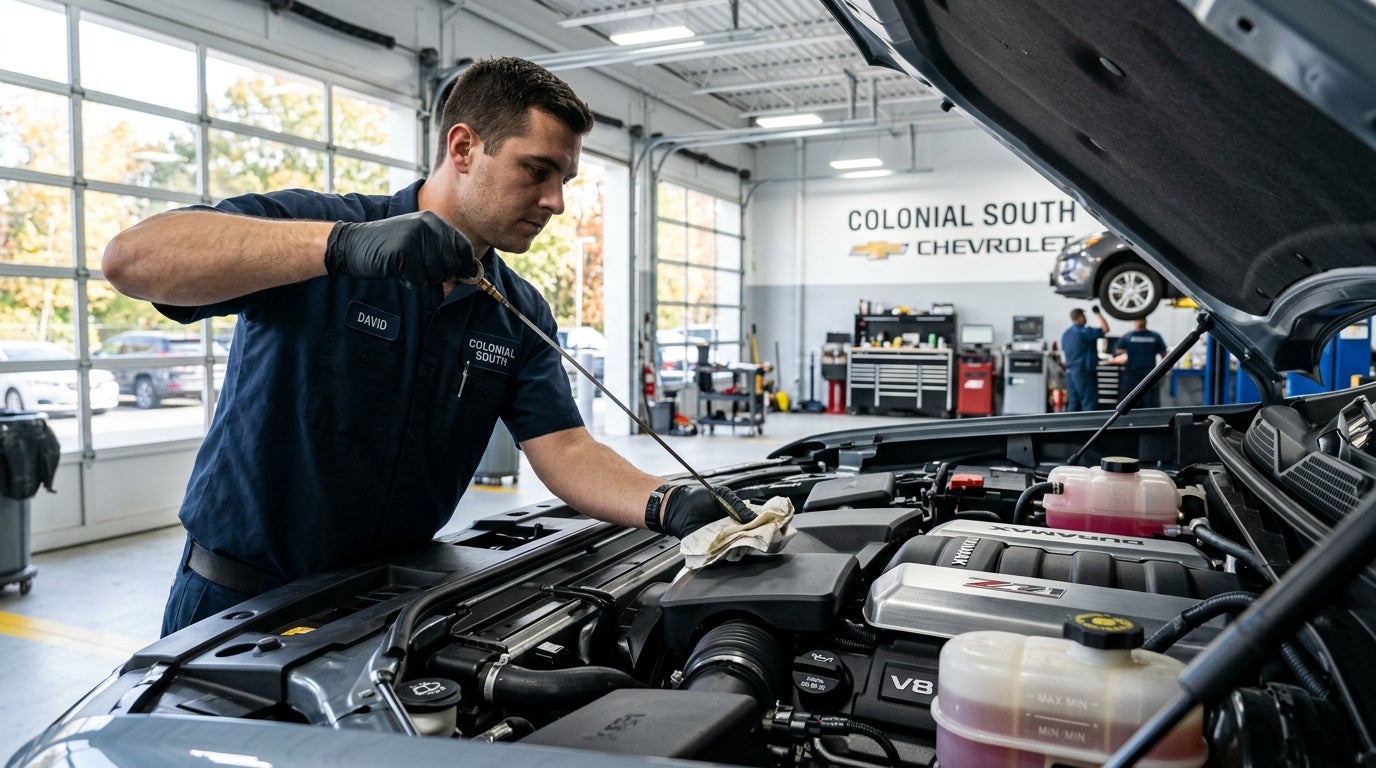
What Fluid Maintenance Does a 2026 Chevrolet Require

What Fluid Maintenance Does a 2026 Chevrolet Require?

A 2026 Chevrolet requires six primary operational fluids: engine oil ( dexos certified), Dex-Cool engine coolant, DEXRON-VI or DEXRON ULV automatic transmission fluid, DOT 3 or DOT 4 brake fluid, hydraulic power steering fluid (on select equipped models), and freeze-resistant windshield washer fluid. Comprehensive fluid maintenance involves monitoring fluid levels, inspecting for thermal or chemical degradation, topping off depleted reservoirs, and performing full system flushes according to factory-specified maintenance schedules. Modern vehicles monitor routine service needs through automated onboard systems such as the Engine Oil Life System. Rather than relying strictly on fixed mileage intervals, this system calculates oil breakdown based on engine revolutions, operating temperatures, and driving patterns. However, secondary fluids like brake fluid, coolant, and transmission fluid still require routine manual inspections and periodic service to maintain hydraulic pressure, prevent mechanical wear, and guard against internal corrosion. Environmental conditions across New England directly influence how rapidly vehicle fluids degrade. Sub-zero winter temperatures, frequent stop-and-go driving, short trips that prevent engines from reaching full operating temperature, and exposure to corrosive road salt all contribute to severe operating conditions. In agricultural and rural settings around Rochester, unpaved back roads and dusty farm routes create fine particulate buildup that can contaminate engine oil and air filtration systems faster than standard highway driving. Under these severe service guidelines, fluid exchange intervals must be accelerated to protect internal engine and drivetrain components. Maintaining correct fluid levels and scheduled flushes protects your vehicle warranty and maximizes long-term reliability. Vehicle owners can visit our North Dartmouth service center for a complete fluid health check or speak with our certified technical team directly by giving us a quick call at (508) 996-6266. Table of Contents What Types of Fluids Does a 2026 Chevrolet Vehicle Require for Routine Maintenance? What Color Is Chevrolet Dex-Cool Coolant and How Often Should It Be Flushed? What Brake Fluid Specification Does Chevrolet Use and When Should It Be Serviced? How Much Does a Chevrolet Transmission Fluid Flush Cost on Average? Should Chevrolet Fluid Top-Ups and Flushes Be Done at a Dealer or an Independent Shop? Common Questions About Chevrolet Fluid Top-Ups and Flushes What Types of Fluids Does a 2026 Chevrolet Vehicle Require for Routine Maintenance? Routine maintenance for a 2026 Chevrolet relies on factory-approved fluid formulations specifically engineered to withstand precise thermal and mechanical thresholds. General Motors mandates strict fluid standards, including dexos1 Full Synthetic motor oil, Dex-Cool extended-life coolant, and DEXRON automatic transmission fluid, to protect close-tolerance engine and transmission assemblies. Every fluid serves a specialized functional role within the vehicle: Engine Oil: Lubricates moving internal parts, reduces friction, and carries heat away from the engine block. Modern gasoline engines require full synthetic oils meeting the dexos1 Gen 3 standard, while diesel variants require dexosD formulations. Engine Coolant: Manages engine operating temperatures and protects internal metal passages from rust and cavitation. Chevrolet uses silicate-free Dex-Cool organic acid technology coolant. Transmission Fluid: Acts as a hydraulic fluid to power gear shifts, cool planetary gear sets, and lubricate internal clutches. Modern multi-speed transmissions utilize synthetic DEXRON-VI or ultra-low viscosity DEXRON ULV. Brake Fluid: Transfers physical pedal pressure into hydraulic force to activate brake calipers and wheel cylinders. Vehicles use heavy-duty DOT 3 or DOT 4 specifications depending on trim and braking system design. Power Steering Fluid: Provides hydraulic assistance on models fitted with hydraulic steering pumps. Many late-model vehicles use electric power steering ( EPS), which eliminates hydraulic steering fluid entirely. Windshield Washer Fluid: Clears road grime, salt spray, and debris from the windshield. Winter formulations must contain freeze-inhibiting agents capable of remaining liquid down to -20°F. Our technicians note that checking engine oil on level ground after the engine has been switched off for several minutes allows the oil to drain back into the pan, providing the most accurate dipstick reading. Neglecting fluid levels or utilizing non-compliant formulations can result in accelerated component wear, reduced fuel efficiency, and internal mechanical damage. What Color Is Chevrolet Dex-Cool Coolant and How Often Should It Be Flushed? Chevrolet Dex-Cool coolant is bright orange in color, distinguishing it from conventional green ethylene glycol coolants. Under normal operating conditions, General Motors recommends flushing and replacing Dex-Cool every 5 years / 150,000 miles, whichever comes first. Mixing traditional green coolant with orange Dex-Cool is extremely harmful to the cooling system. The chemical interaction between conventional silicates and organic acid technology causes the fluid to gel, creating thick blockages inside radiator cores, heater cores, and engine water jackets. This gelling starves the engine of proper coolant flow, leading to rapid overheating, blown head gaskets, and cracked engine blocks. Severe driving conditions require more frequent cooling system inspections and potential fluid exchanges. Commuters and outdoor enthusiasts towing boat trailers near coastal launching ramps in Wareham subject their engines to sustained high loads under humid, salty ambient conditions. Heavy trailering, prolonged idling, and stop-and-go traffic increase thermal stress, causing anti-corrosion additives in the coolant to break down faster. Routine coolant flushes remove accumulated scale, neutralise acid buildup, and replace depleted corrosion inhibitors. A complete flush ensures the water pump, thermostat, and radiator remain clear of obstructions, preserving optimal operating temperatures year-round. What Brake Fluid Specification Does Chevrolet Use and When Should It Be Serviced? Chevrolet vehicles use DOT 3 or DOT 4 heavy-duty brake fluid, depending on the model, engine package, and performance braking options. GM guidelines recommend replacing brake fluid every 2 years / 45,000 miles or whenever testing reveals elevated moisture content. Brake fluid is naturally hygroscopic, meaning it continually absorbs moisture from the surrounding air through microscopic pores in brake hoses and reservoir seals. As water accumulates in the hydraulic system, it lowers the boiling point of the fluid. Under heavy braking, the heat generated by the pads and rotors can cause contaminated fluid to boil, creating vapor pockets that result in a spongy brake pedal, increased stopping distances, or total loss of hydraulic braking pressure. Moisture buildup also causes internal corrosion within expensive braking components, including ABS hydraulic control modules, master cylinders, and brake calipers. Rather than simply adding fresh fluid when the reservoir level drops, technicians must inspect the system for pad wear or hydraulic leaks. Owners can maintain braking safety by scheduling a routine service appointment for a complete system test and fluid exchange. How Much Does a Chevrolet Transmission Fluid Flush Cost on Average? A Chevrolet transmission fluid flush costs between $180 and $350 on average, depending on fluid capacity, filter design, and specific transmission architecture. This service covers draining old fluid, flushing internal passages and torque converters, installing fresh synthetic DEXRON fluid, replacing pan gaskets or internal filters where applicable, and resetting transmission adaptive software. Several technical factors influence the total cost of a transmission fluid exchange: Cost Factor Operational Impact Technical Details -- -- -- Fluid Type & Volume Multi-speed automatics require 8 to 12 quarts of full synthetic fluid. Uses licensed DEXRON-VI or DEXRON ULV formulations [2, 3]. Filter & Gasket Design Pan removal requires fresh seals and internal filter replacements. Sealed units utilize internal strainers or drop-pan filter kits [3]. Labor & Fluid Leveling Specialized scan tools verify fluid level at precise operating temperatures. Requires fluid temperature monitoring between 160°F and 200°F [2]. Service Procedure Simple drain-and-fill services cost less than full machine exchanges. Fluid exchanges replace 100% of contaminated fluid in lines and cooler [3]. Transmissions are complex, high-pressure hydraulic systems that rely on clean fluid to cool clutch packs and enable crisp gear engagement. Operating with burnt or oxidized fluid leads to harsh shifting, delayed engagement, slipping clutches, and premature transmission failure. Performing scheduled fluid flushes prevents expensive mechanical overhauls and keeps power delivery smooth. Should Chevrolet Fluid Top-Ups and Flushes Be Done at a Dealer or an Independent Shop? Having fluid services performed at an authorized Chevrolet dealership ensures your vehicle receives factory-approved ACDelco and dexos formulations applied by factory-trained technicians. Dealership service departments utilize specialized diagnostic equipment, such as GM GDS2 scan tools, to perform precise fluid level checks and computer adaptations that independent shops may lack. Independent repair shops often offer convenience and competitive labor rates, but they frequently use generic, multi-vehicle fluids. Using non-compliant fluid in modern Chevrolet transmissions, engines, or cooling systems can void manufacturer warranty coverage on affected components if a failure occurs. GM engine warranties strictly require oils that display the official dexos licensing seal on the container. Dealership service visits also ensure that all completed maintenance is logged into GM’s centralized vehicle service history database. This documented service history supports factory warranty claims, preserves resale value, and integrates directly with pre-paid maintenance programs and owner rewards structures. Common Questions About Chevrolet Fluid Top-Ups and Flushes Q: Does Chevrolet offer pre-paid maintenance plans that cover fluid flushes? Yes, Chevrolet offers Pre-Paid Maintenance and Pre-Paid Maintenance Plus plans that cover scheduled factory services, including oil changes, fluid flushes, and filter replacements. These plans allow owners to lock in routine maintenance costs in advance using genuine GM parts and certified service standards. Q: How can I confirm an independent shop uses GM-compliant fluid? Request an itemized written estimate prior to service that explicitly details the exact fluid specification, such as dexos1 Gen 3, DEXRON-VI, or Dex-Cool. Verify that the technician uses unopened, factory-licensed containers displaying official GM approval symbols rather than bulk universal fluids. Q: What fluid brands are officially approved by General Motors for Chevrolet maintenance? General Motors officially approves ACDelco fluids and specific Mobil 1 synthetic formulations that carry official dexos, DEXRON, or Dex-Cool licensing. These products are engineered and tested specifically to meet GM material standards and seal compatibility requirements. Q: Why does my modern Chevrolet vehicle not have a transmission fluid dipstick? Many modern Chevrolet automatic transmissions use sealed cases to prevent external dirt and moisture contamination. Fluid levels in these units must be verified by a technician using a level plug on the side of the transmission casing while monitoring live fluid temperature data with a diagnostic scan tool. To keep your vehicle operating at peak efficiency, trust your maintenance needs to certified technicians who know your powertrain best. Stop by our North Dartmouth location for a fluid inspection, or give our service team a call at (508) 996-6266 to schedule your next fluid exchange today. © 2026 Colonial South Chevrolet. All rights reserved.